
SAIC Infrastructure
33 East Washington
services performed at Eastlake Studio
A Building Within a Building
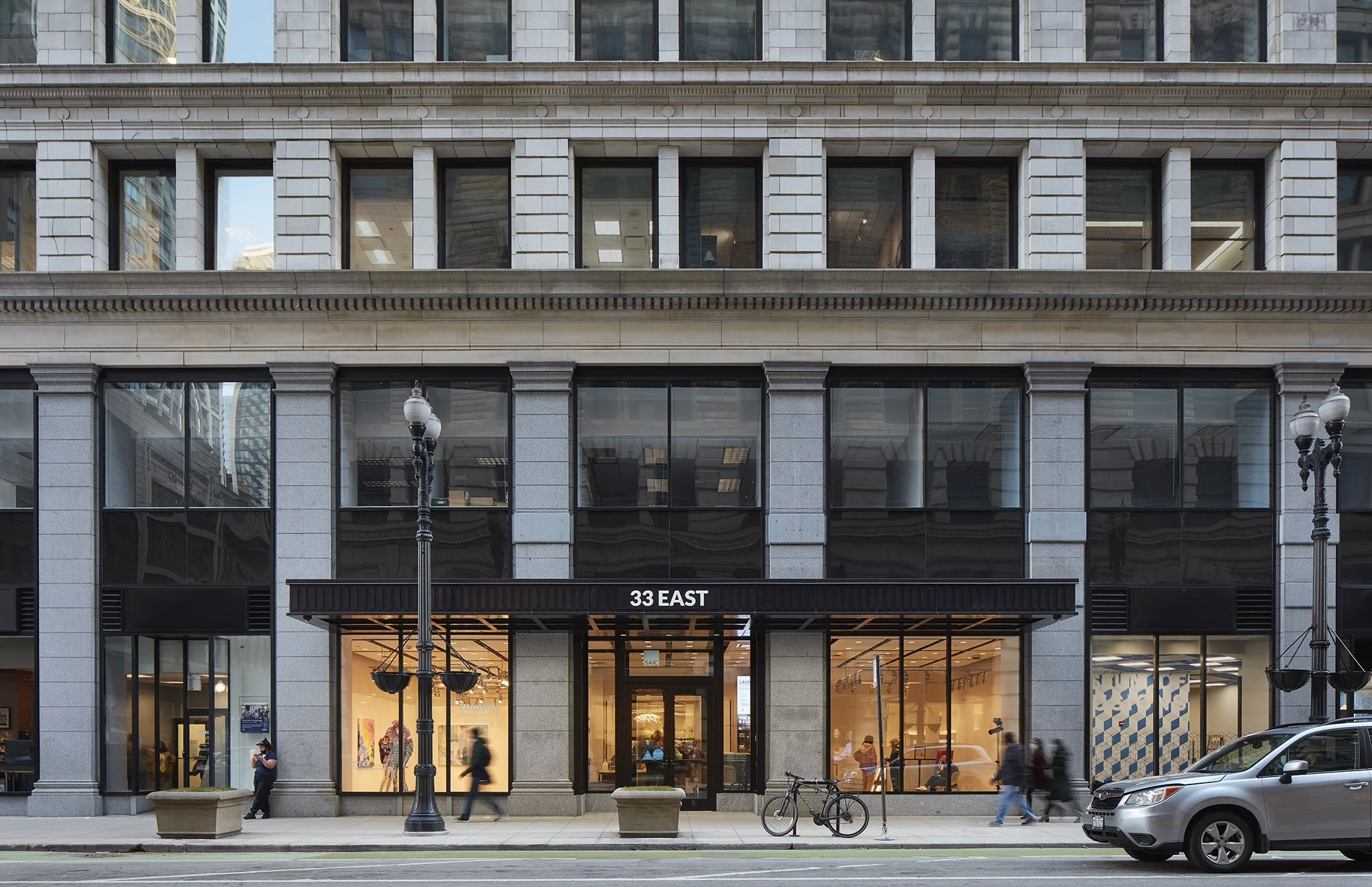
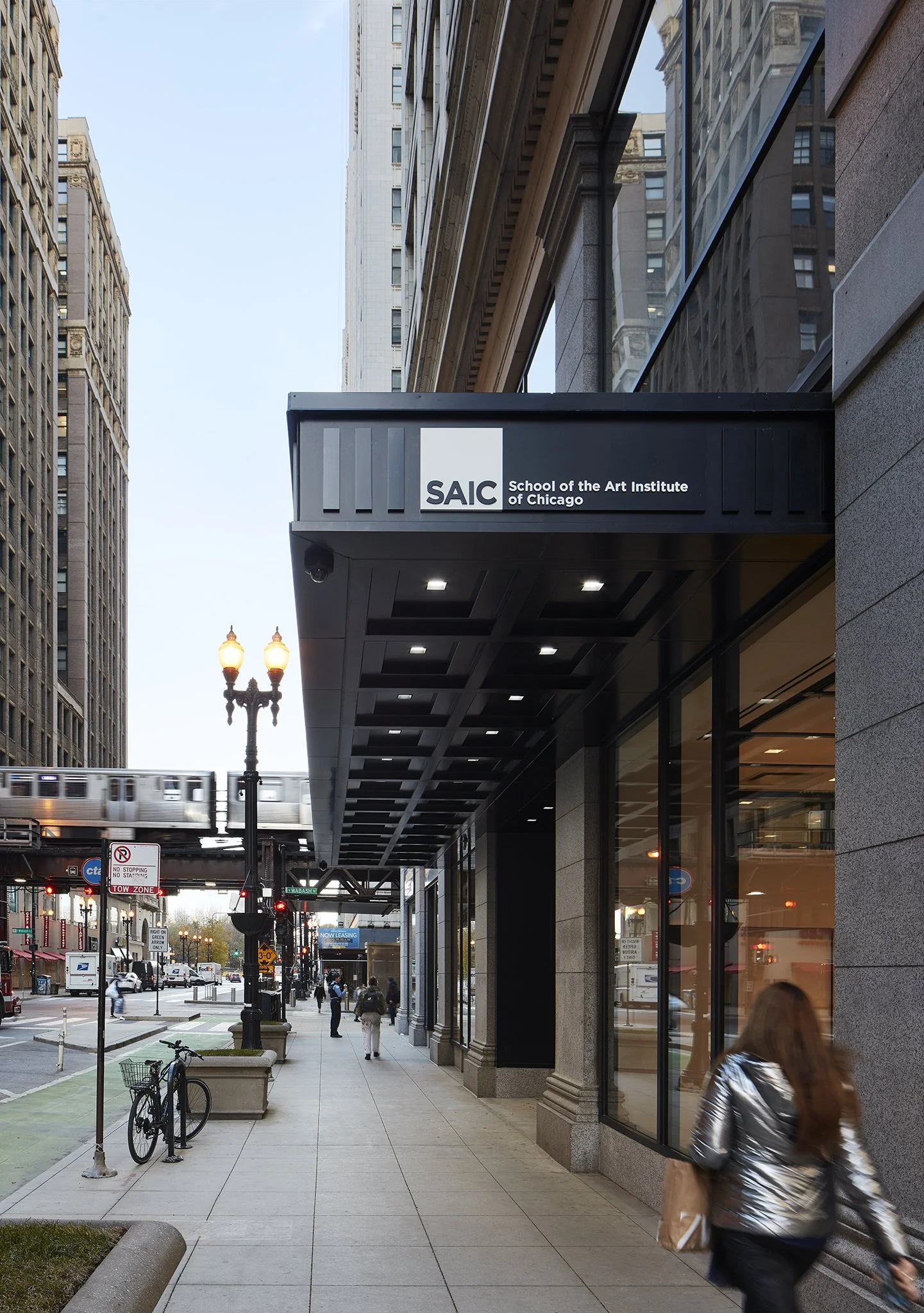
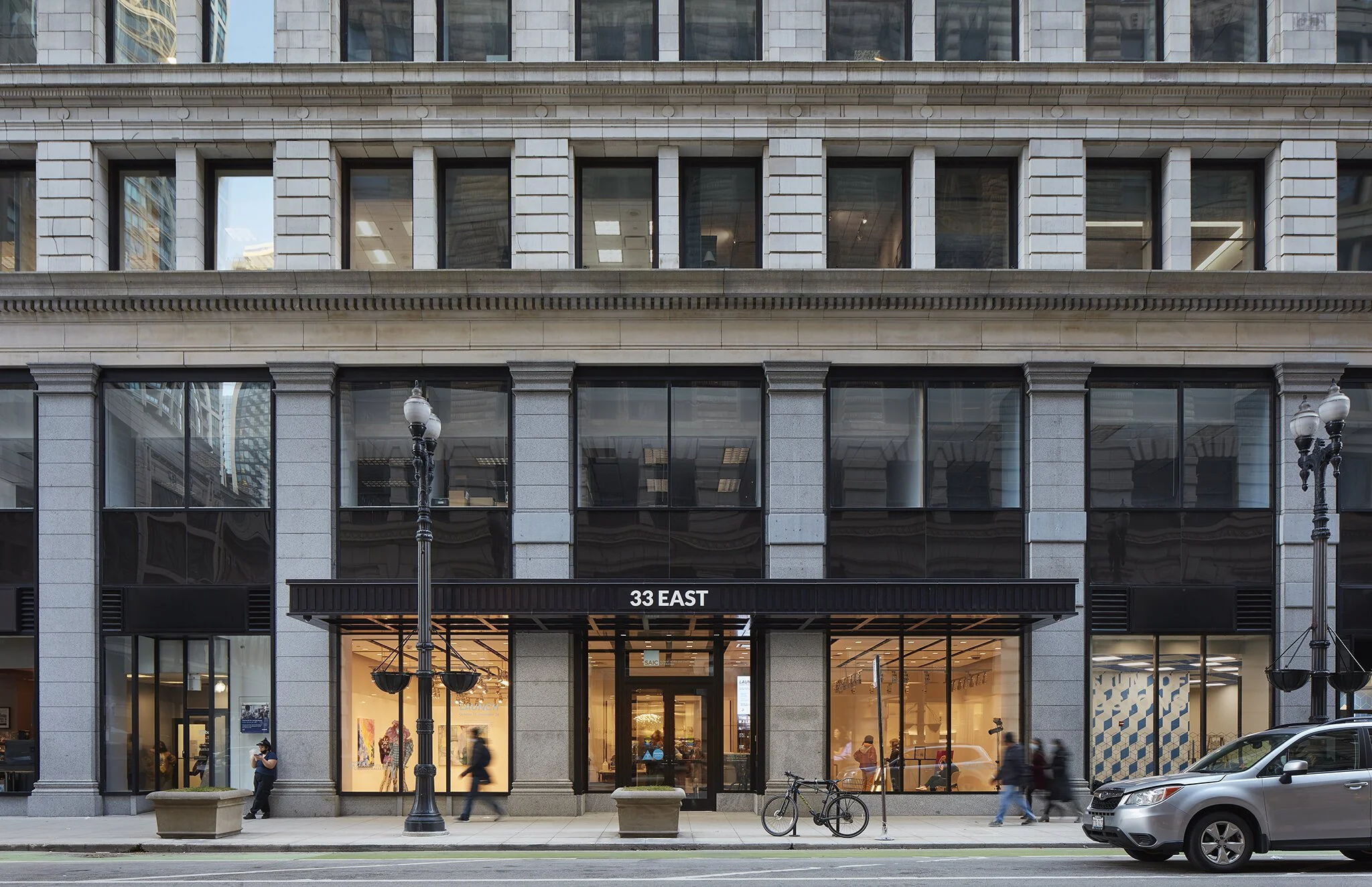
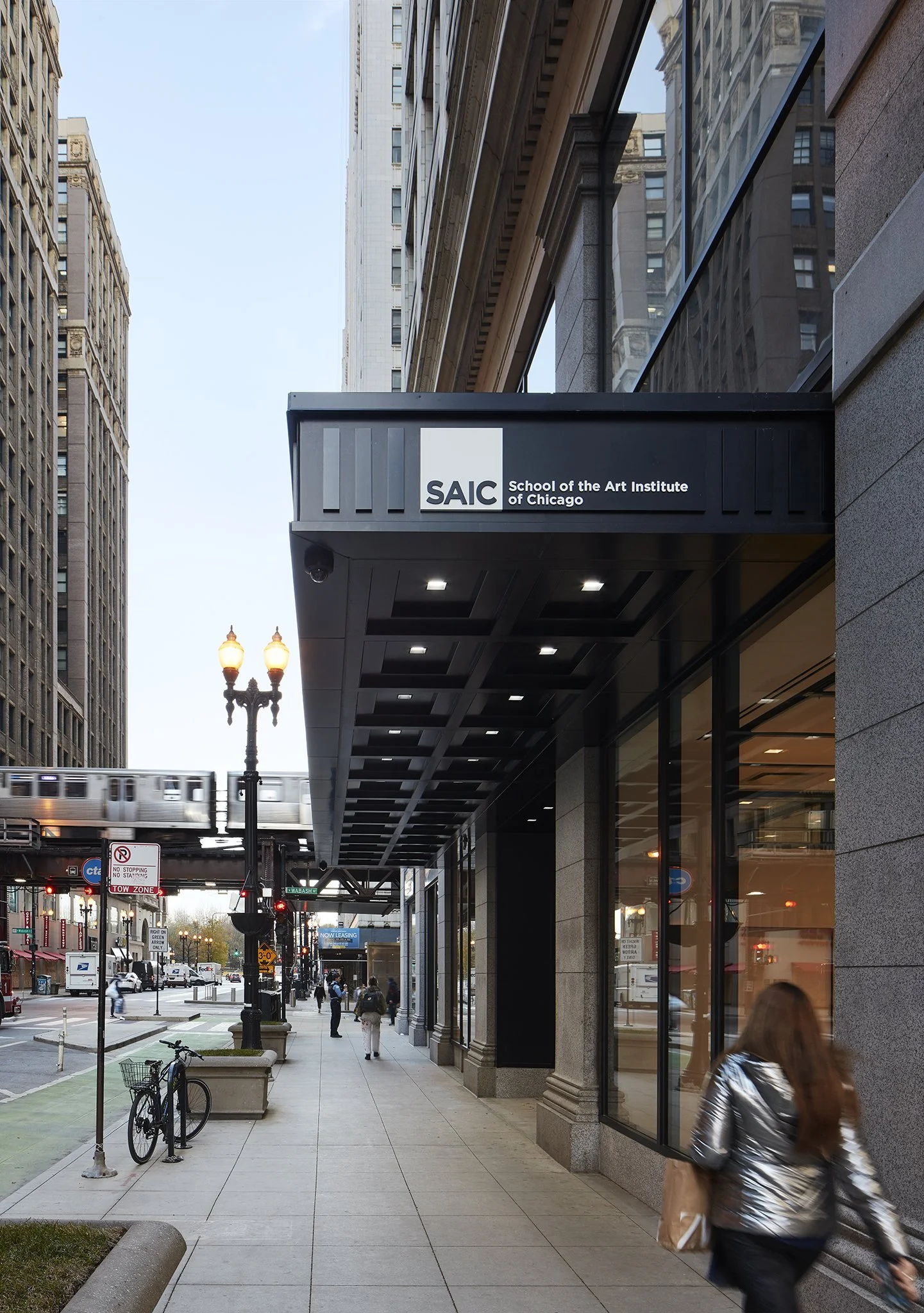
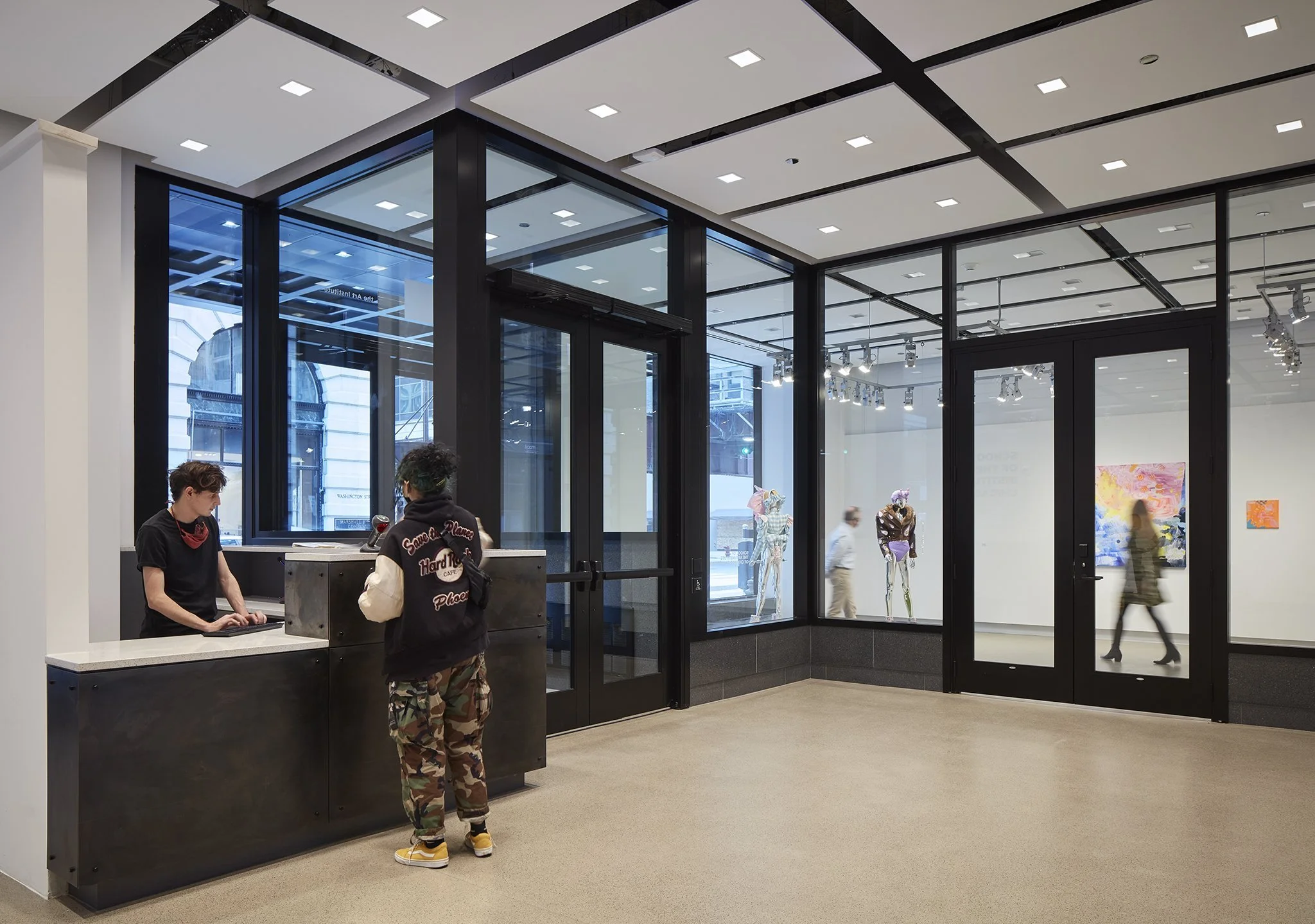
From the outset, the project was guided by the idea of a building within a building. The lower levels at 25 East Washington were conceived as a distinct architectural environment with its own entry, sequence, and identity for the School of the Art Institute of Chicago. Establishing a dedicated presence at the street was critical to the project’s inception, both to give the school a clear home within a shared historic structure and to reconnect the building to its original mercantile legacy of layered public engagement.
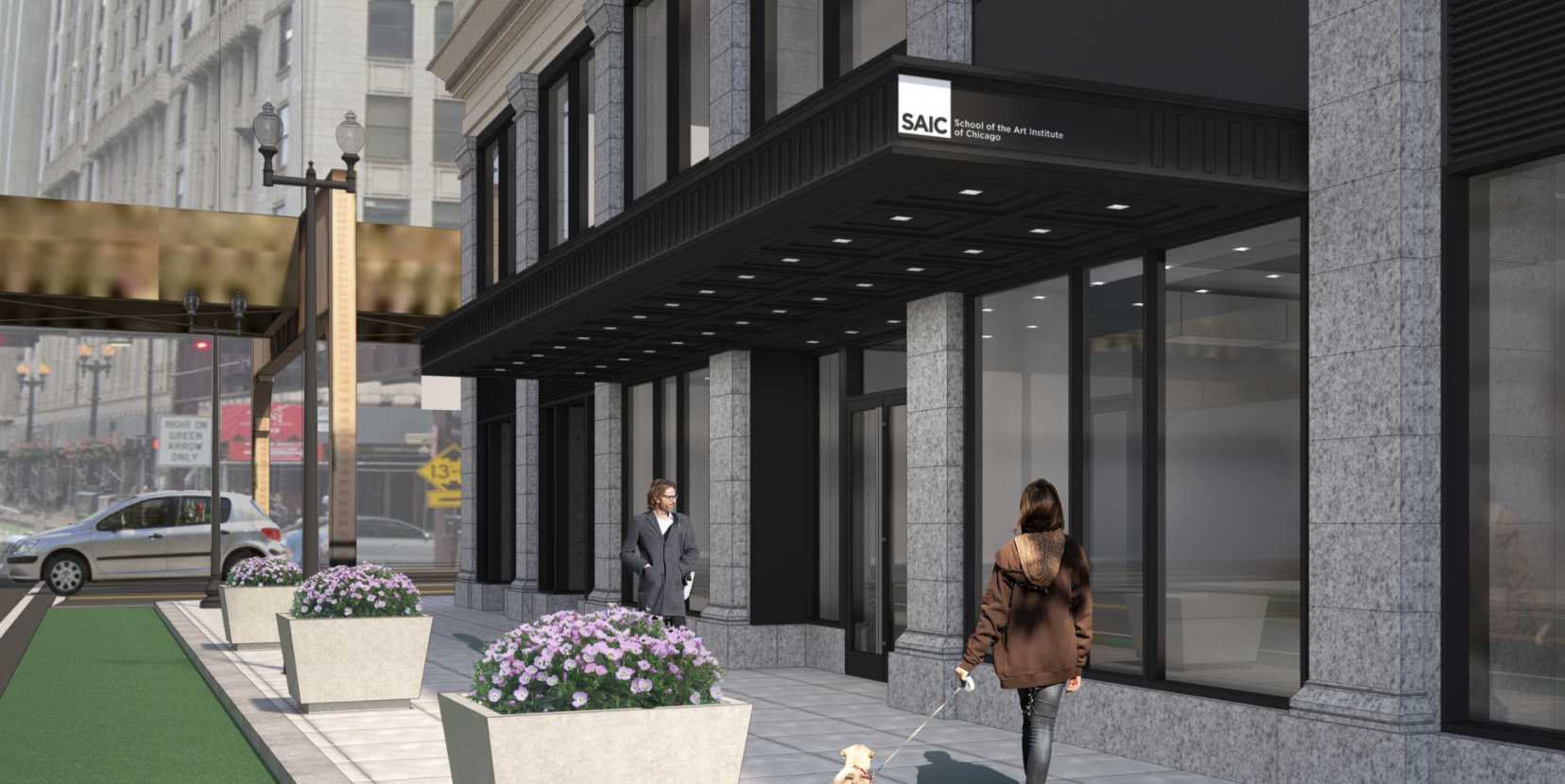
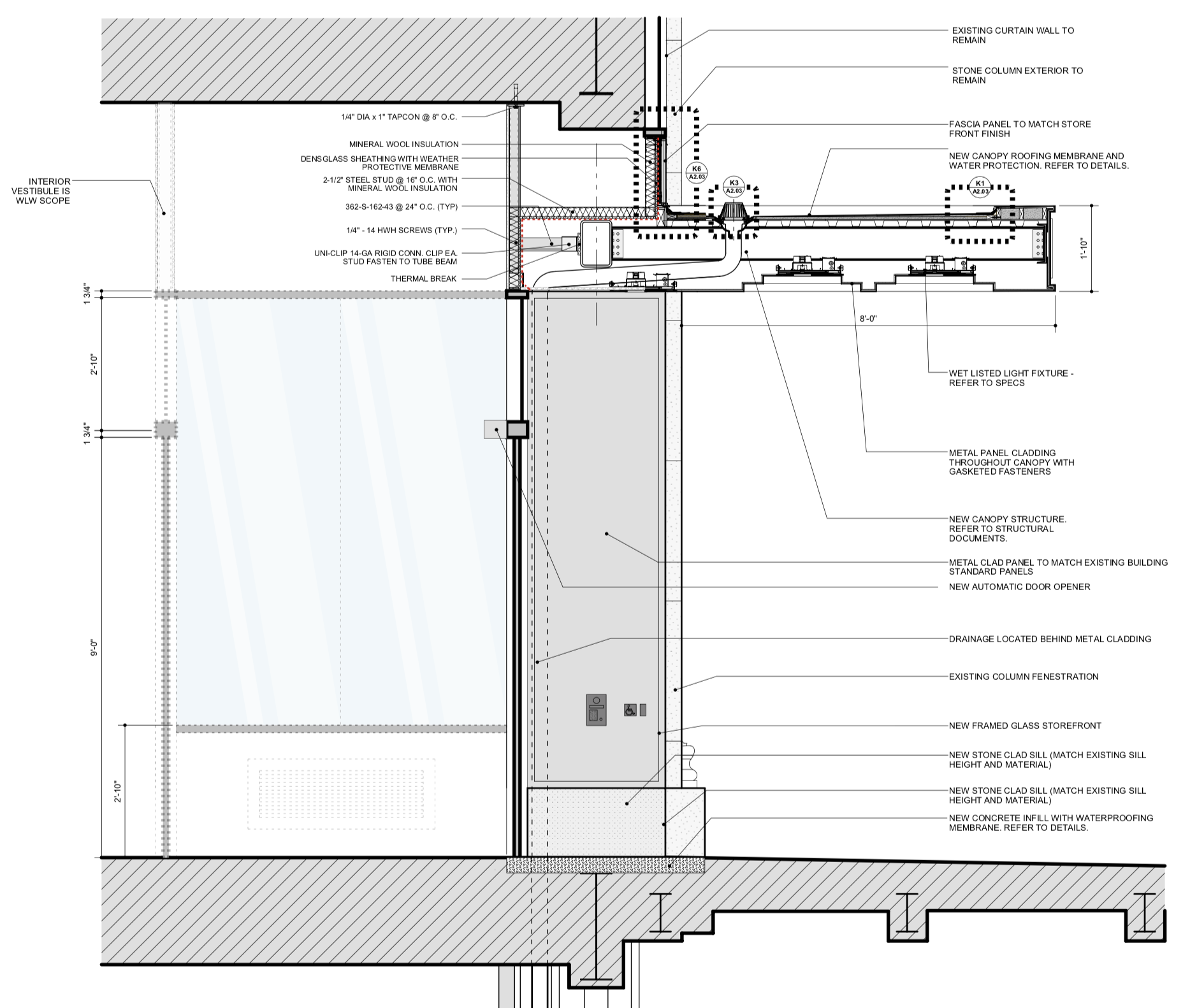
A new Art Deco–inspired canopy and entry sequence reframe the once-closed façade as an invitation, referencing the ornamental metalwork of a bygone era. Drawing from the building’s historic language, the entry establishes clarity and identity at the sidewalk while signaling a contemporary academic presence. This threshold reconnects the city to the creative life below, setting a tone that is public and civic rather than hidden or secondary.
Discovery Beneath the Street
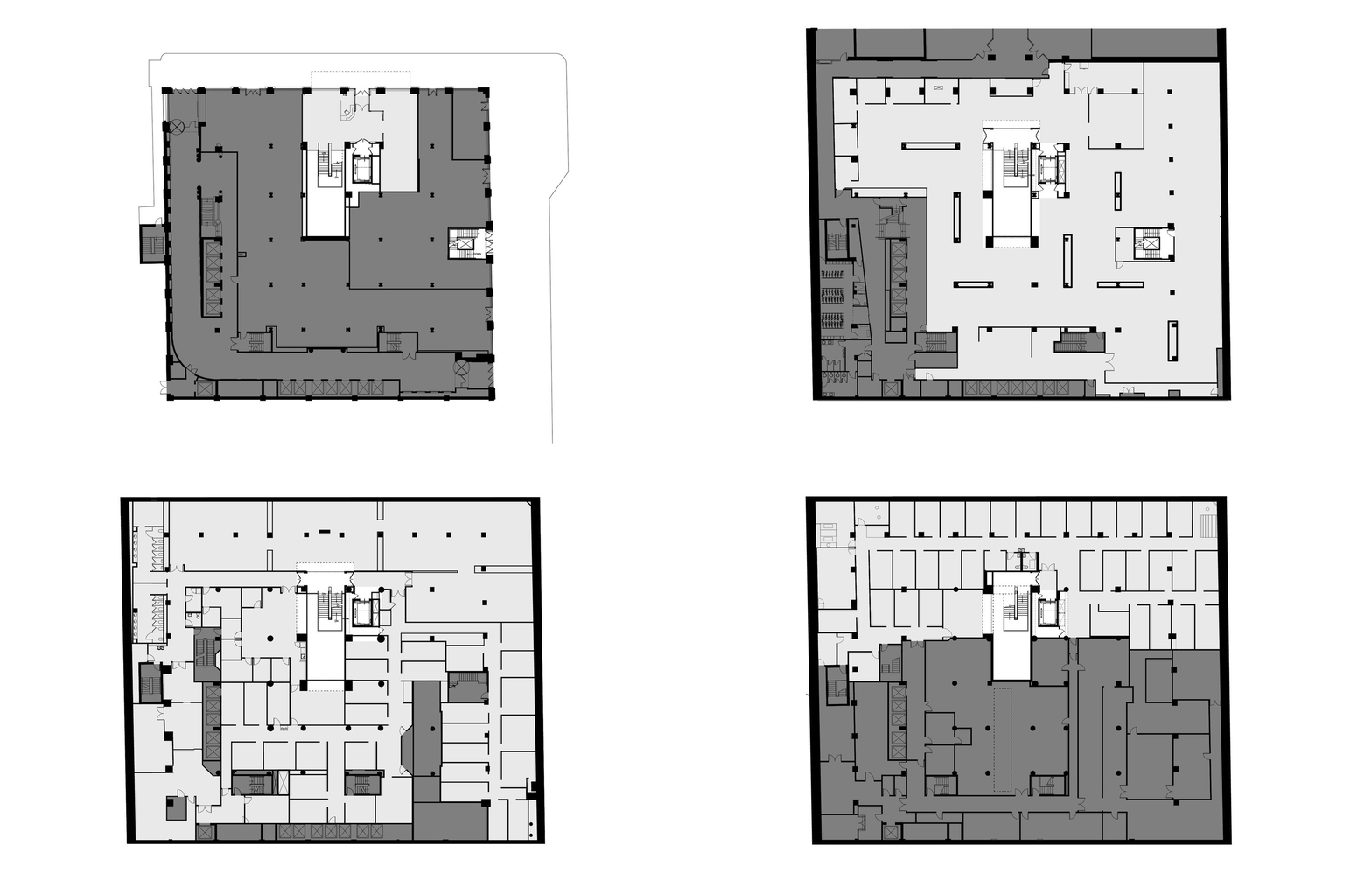
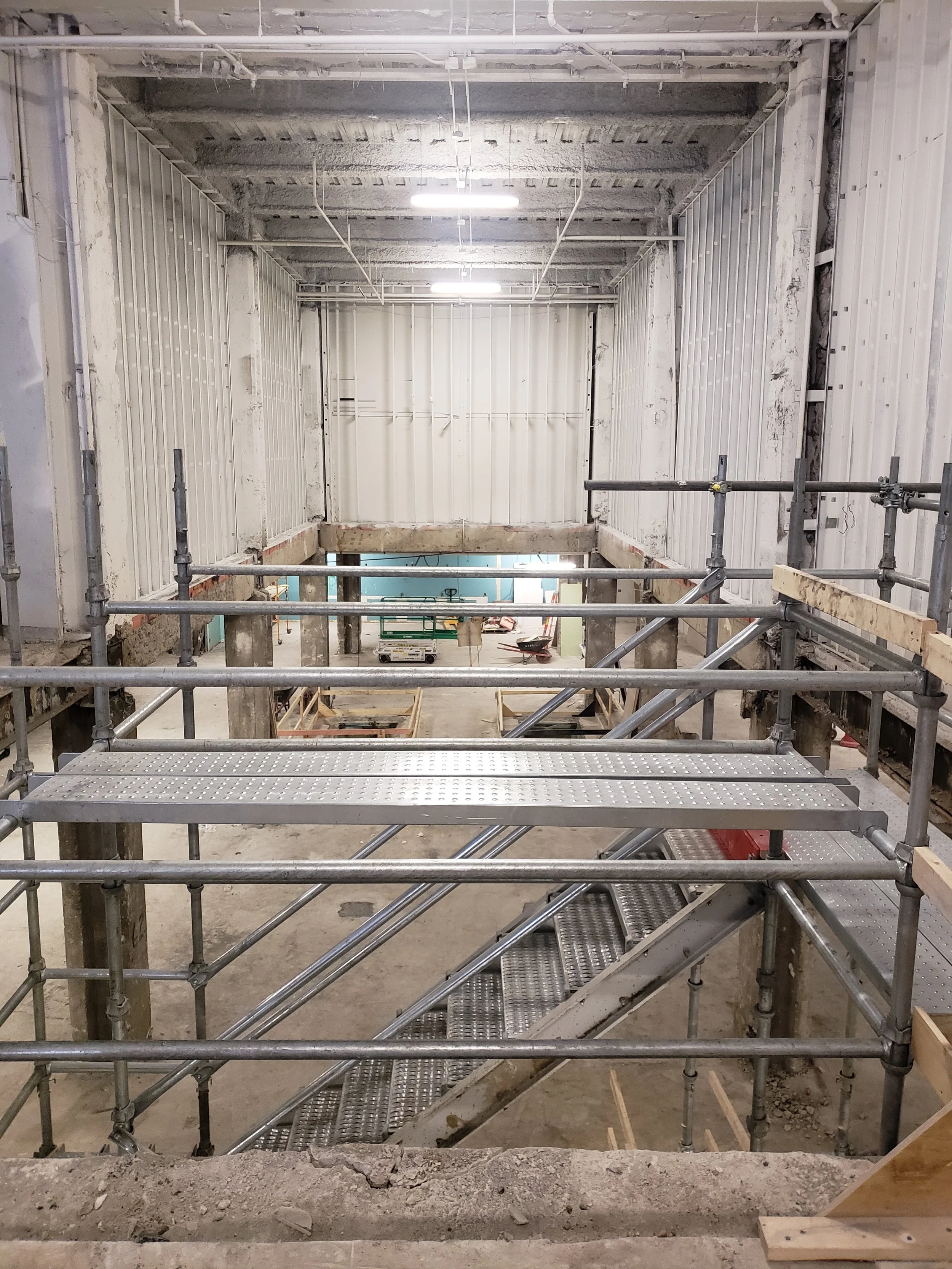
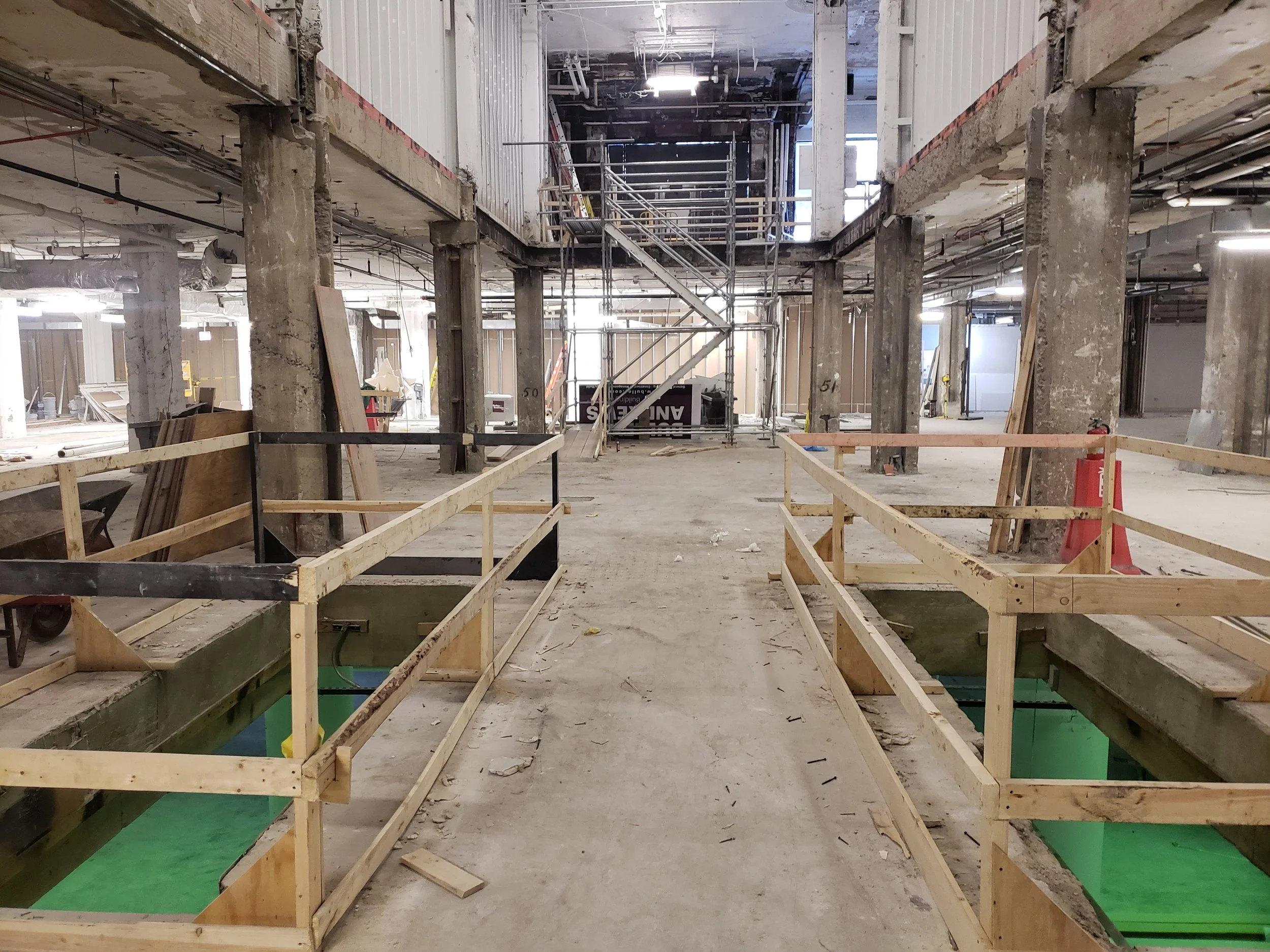
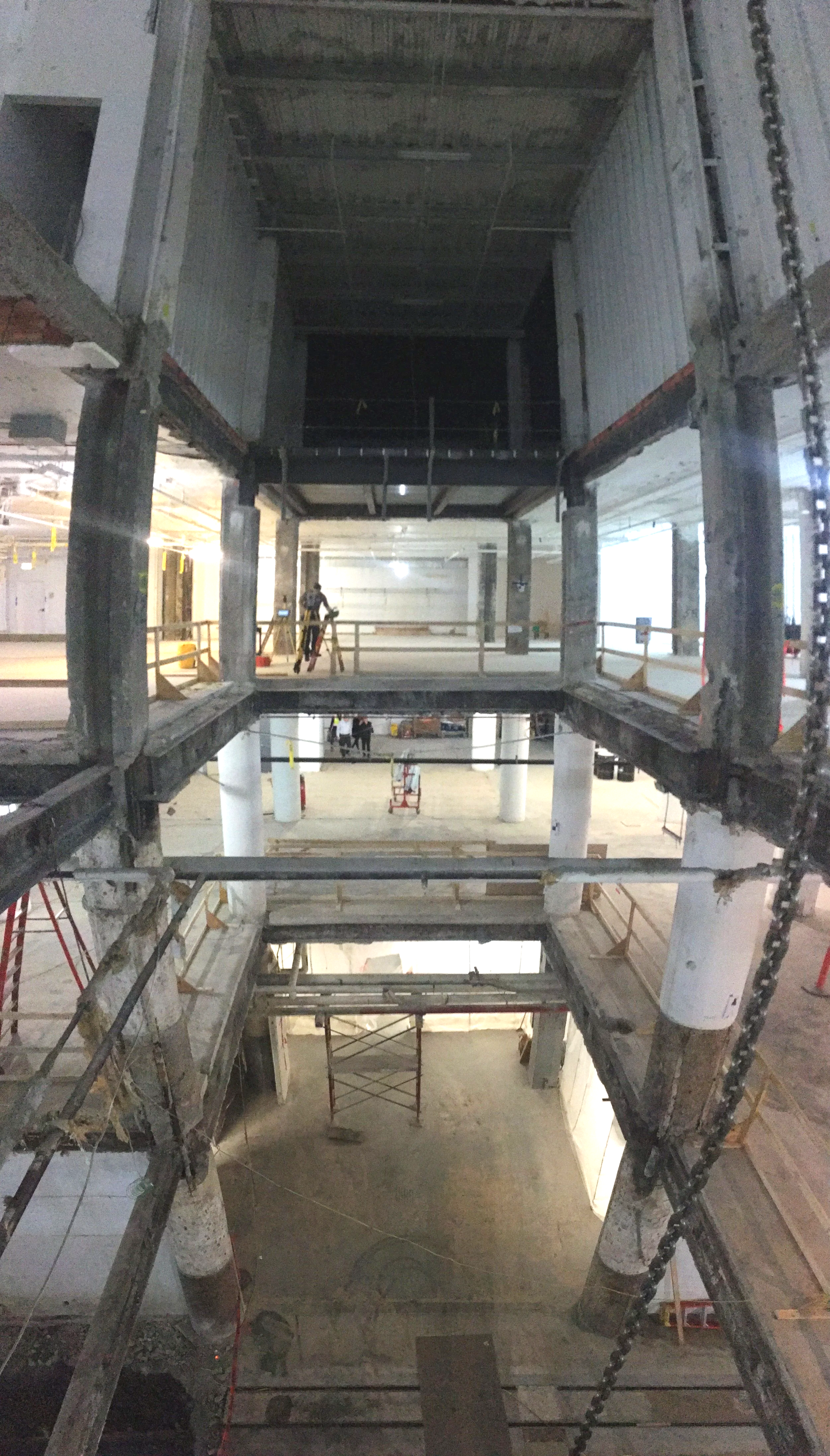
Within the entry, the project descends into three floors of below-grade space shaped by decades of layered construction and incremental change. Early site walks and exploratory demolition revealed irregular structure, fluctuating ceiling heights, abandoned utilities, and limited access to daylight. These conditions could not be fully understood through drawings alone and required careful documentation and verification in the field.
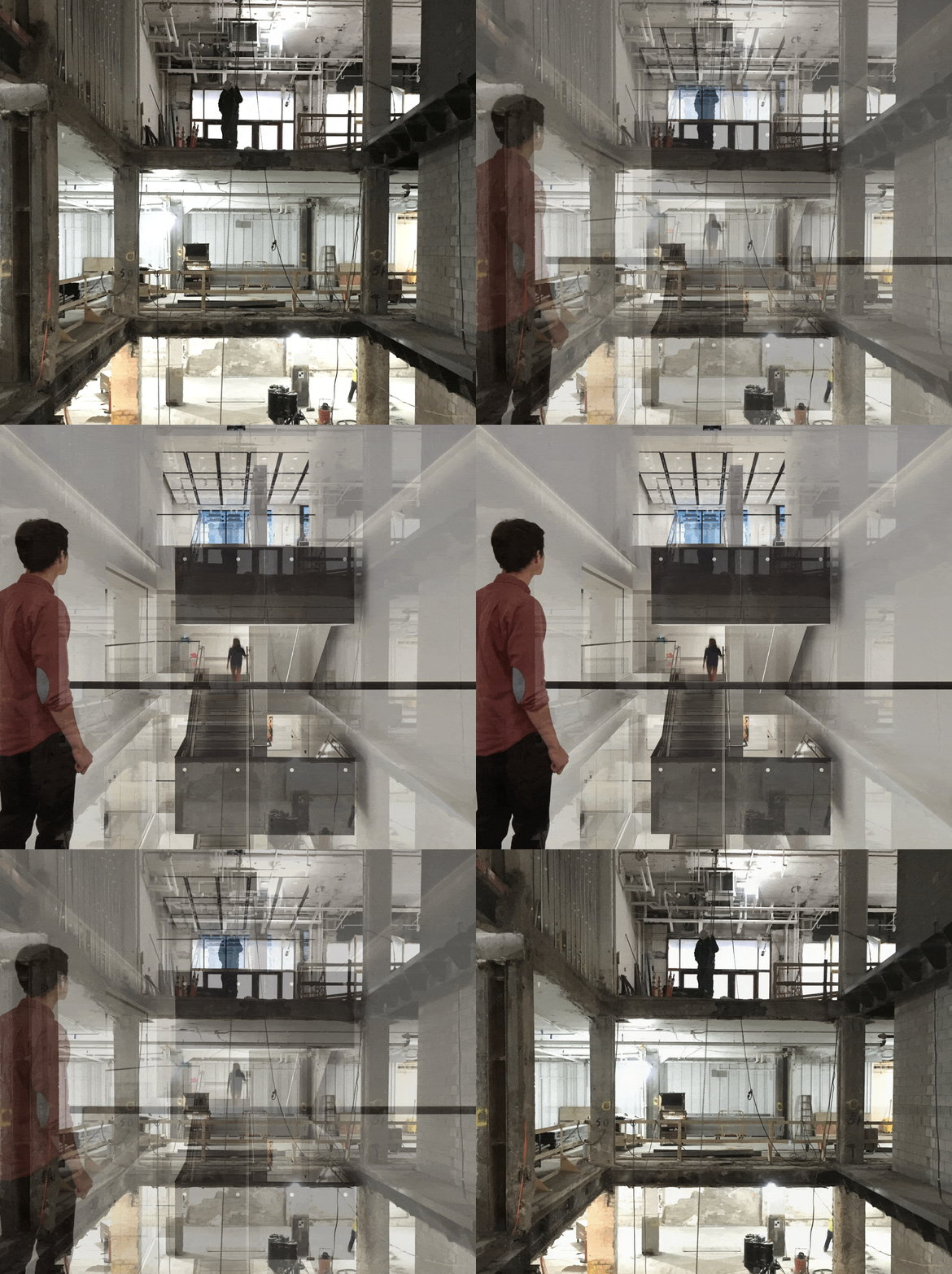
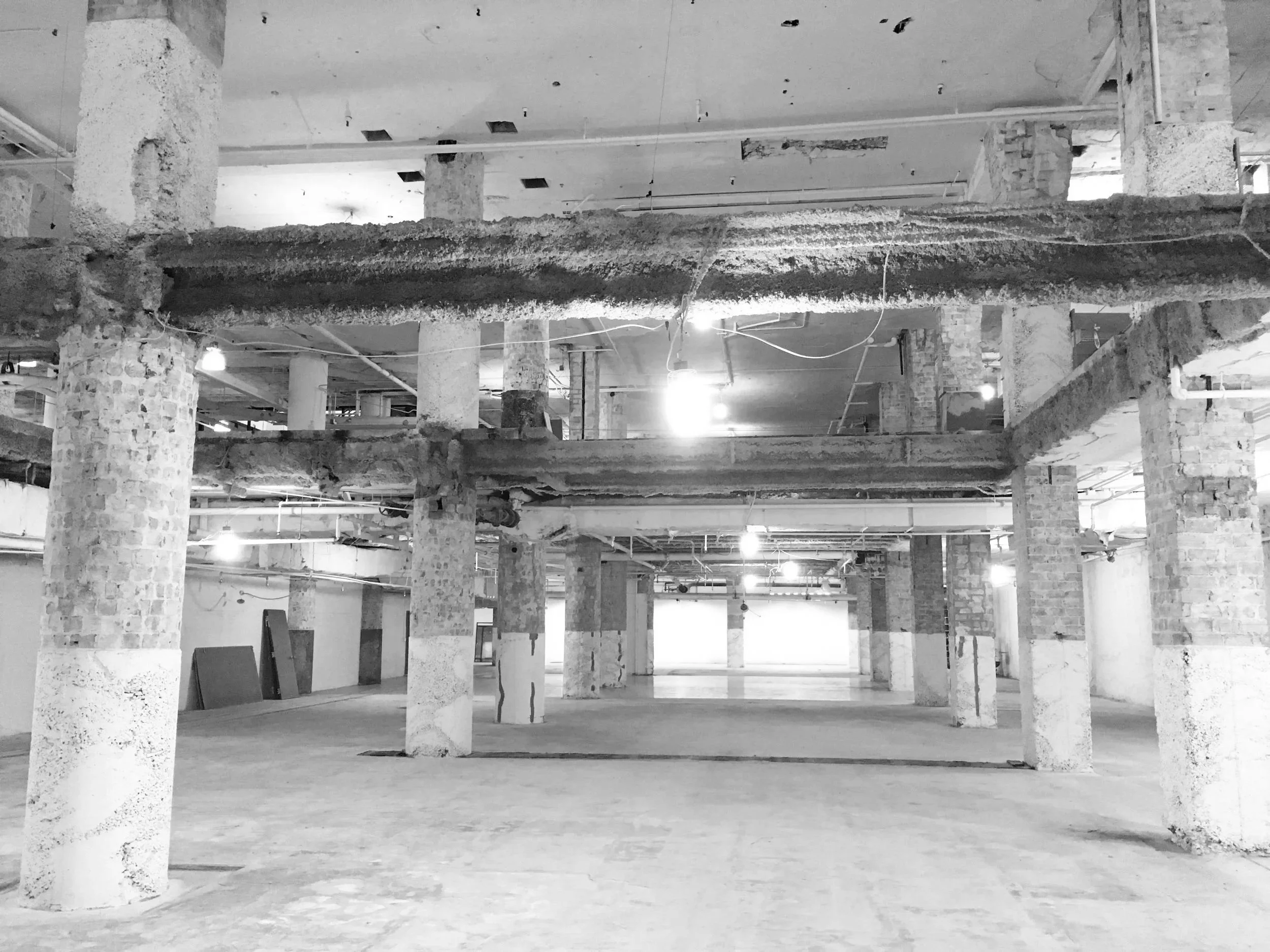
Much of the design was shaped by this discovery process. As existing conditions were uncovered, layouts, adjacencies, and systems were refined in real time through close coordination with structural, MEP, lighting, and life-safety consultants. Field condition imagery captures this phase as one of investigation and adaptation, where architecture emerged through direct engagement with the building as it revealed itself.
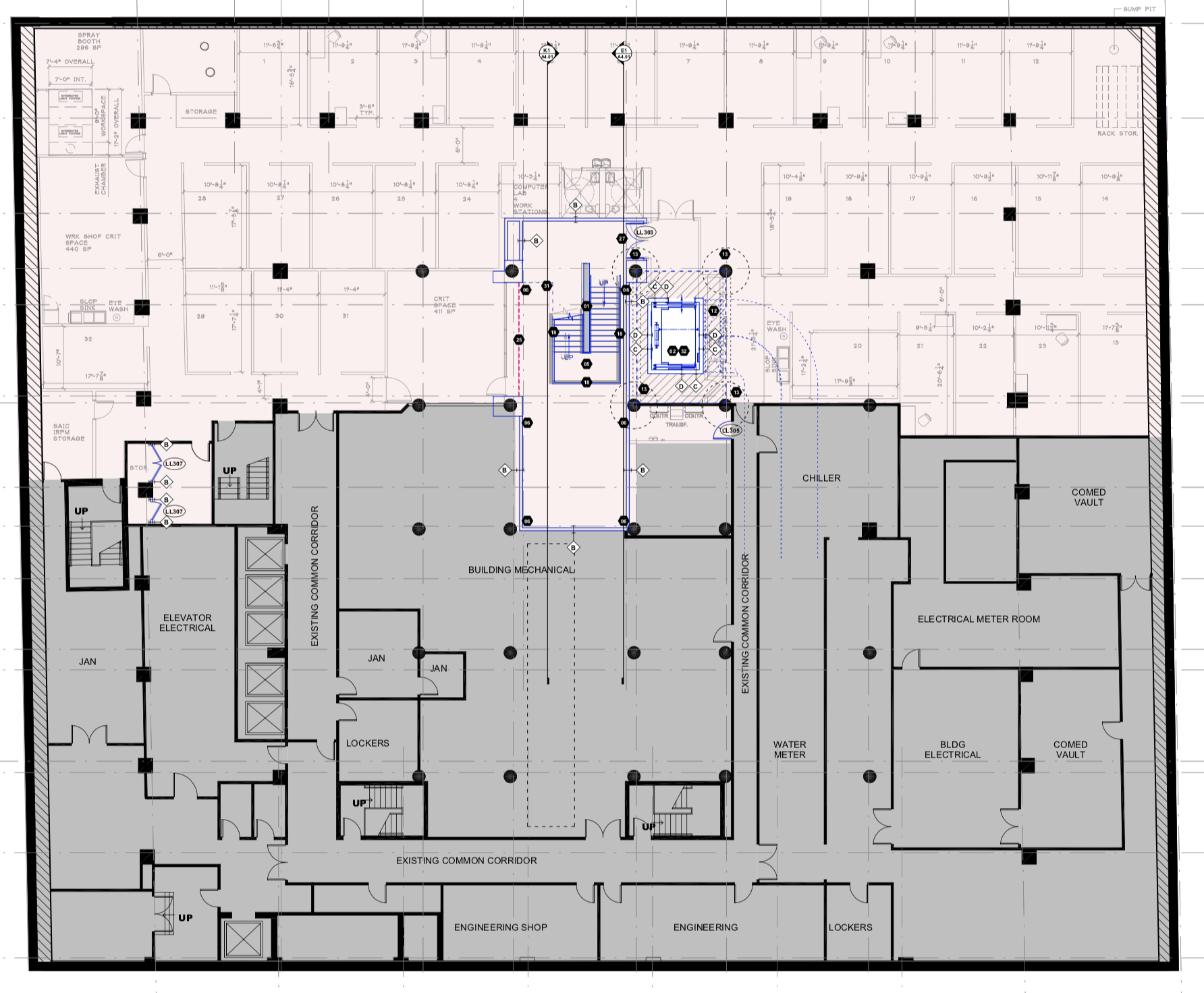
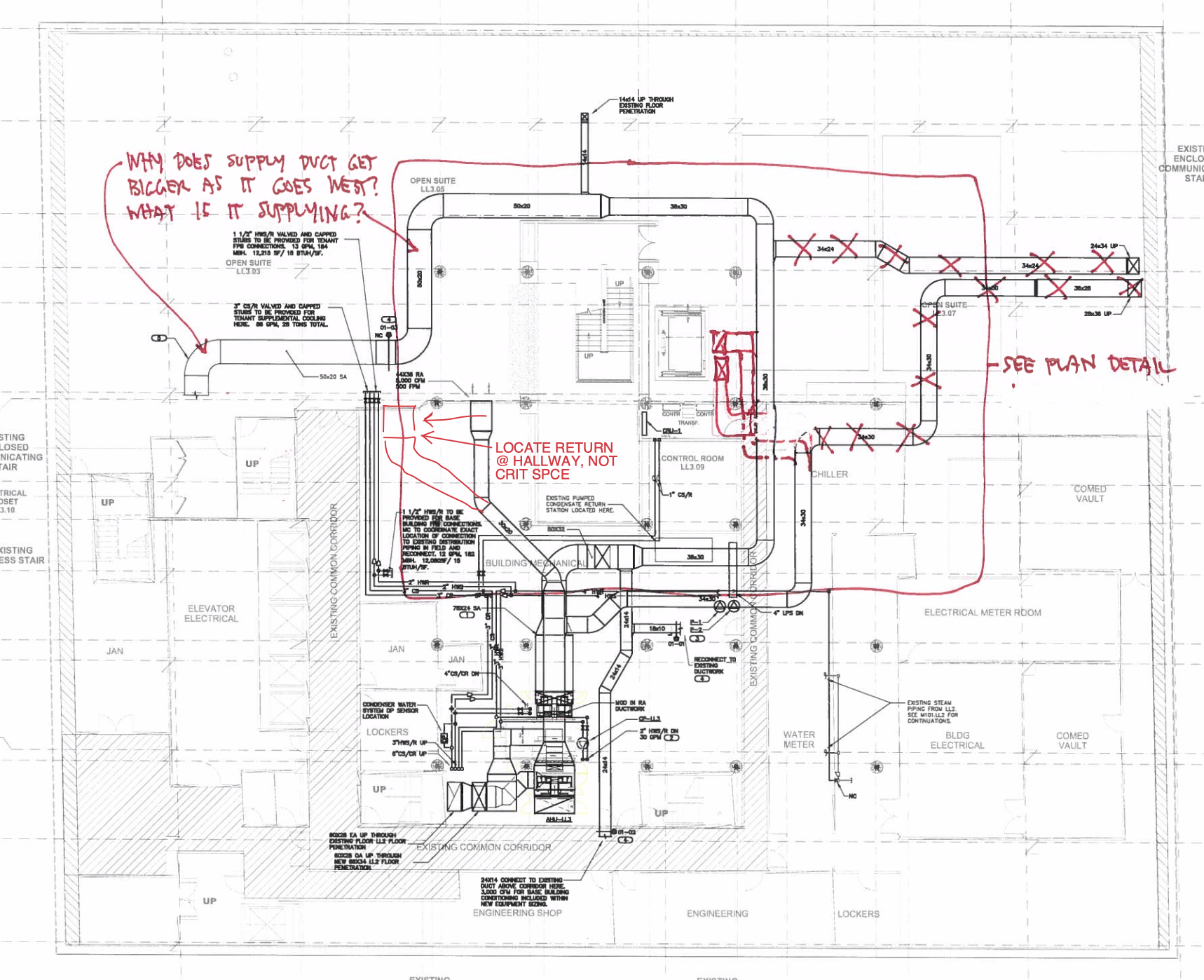
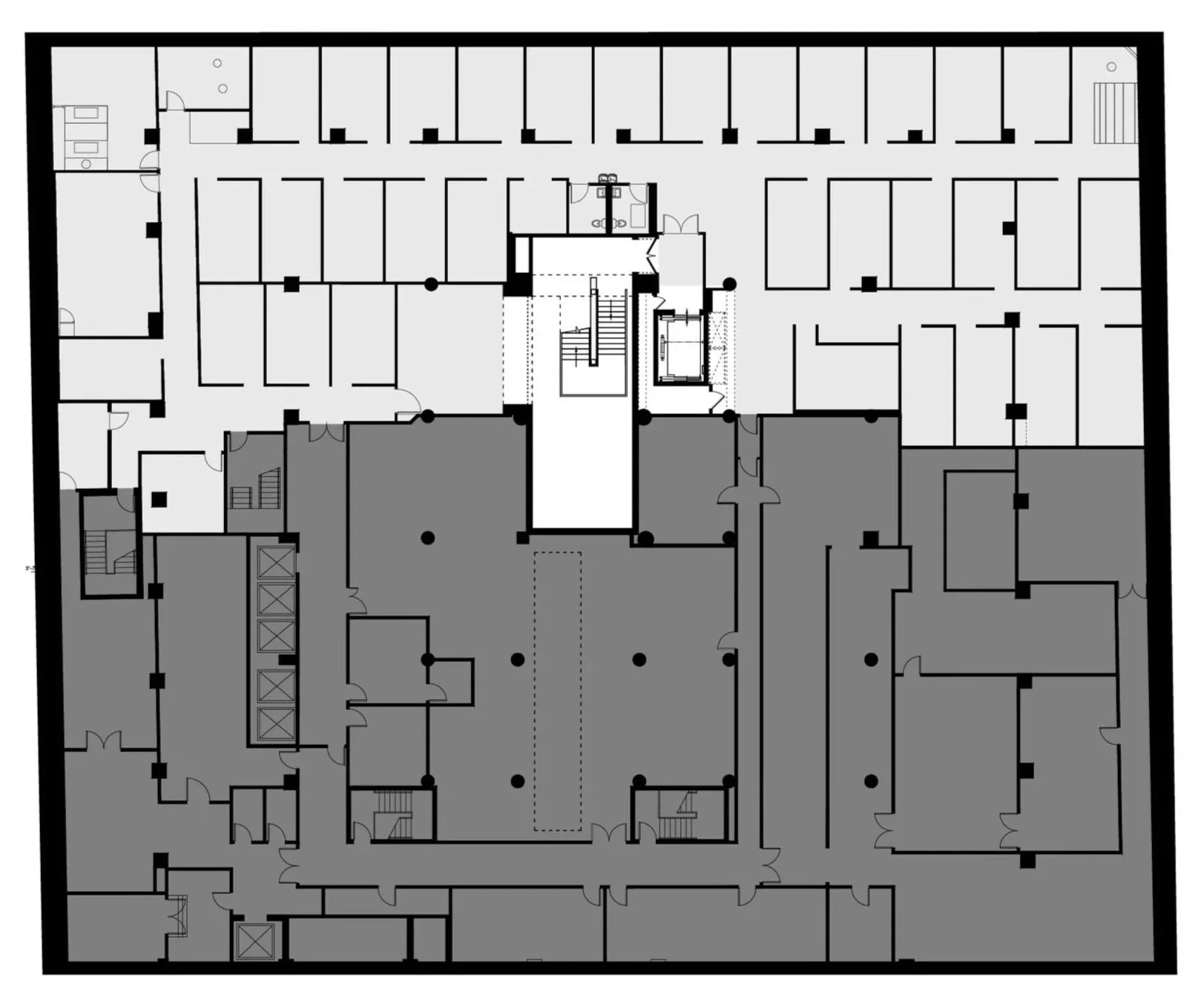
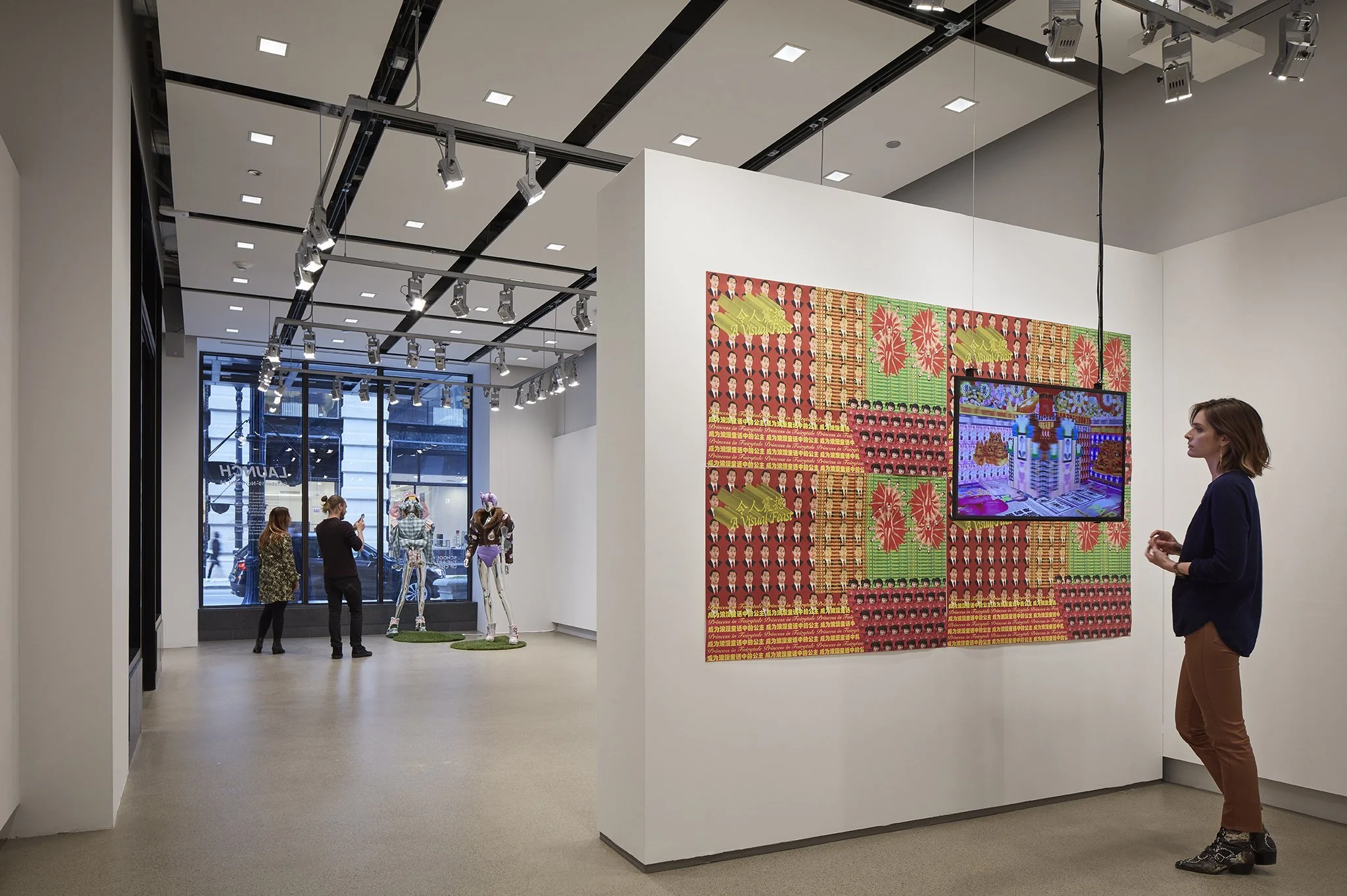
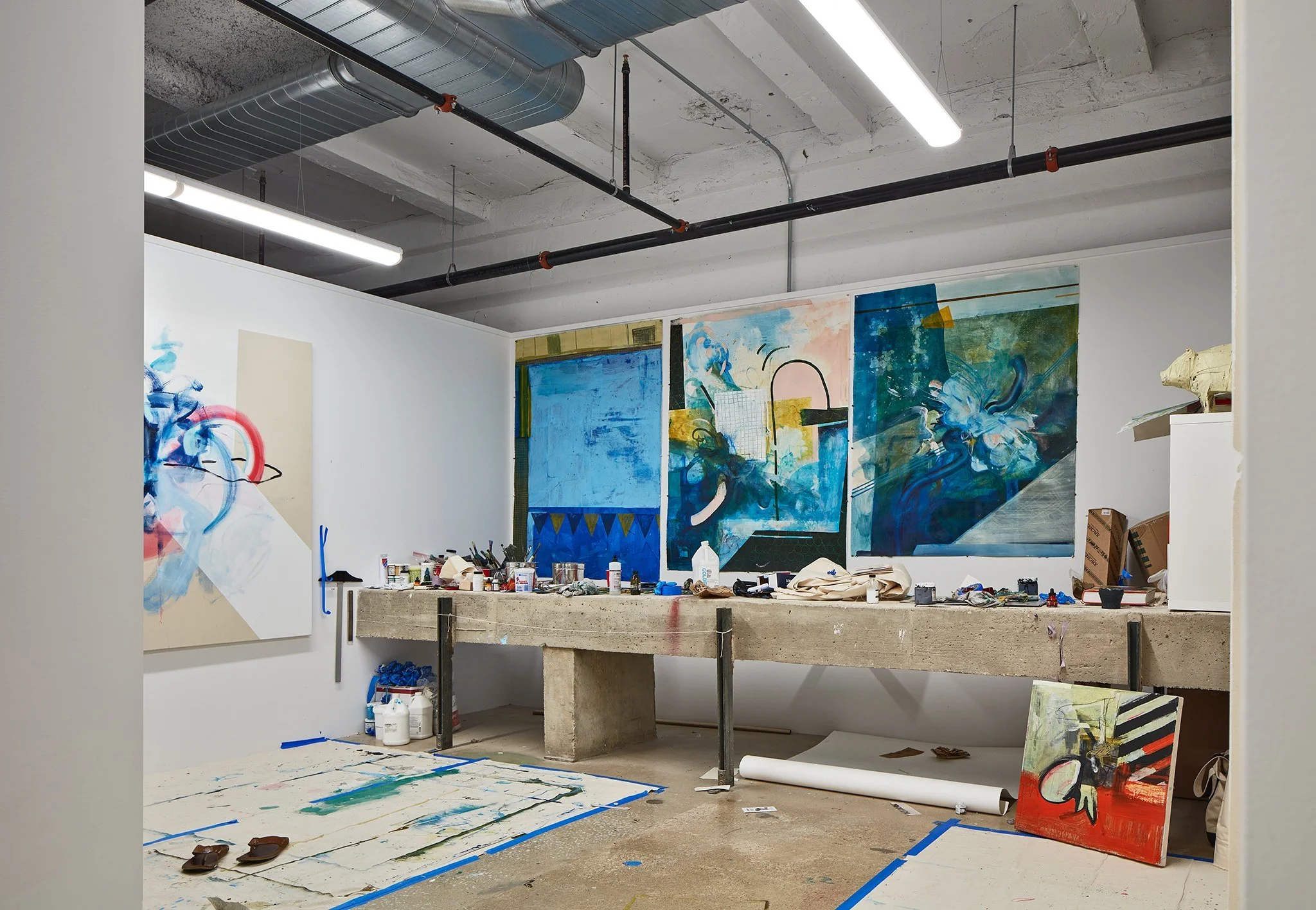
Through early analysis, the lower levels revealed a dual potential. Deeper zones, naturally removed from daylight, were well suited for focused, inward-looking studio work, while areas closer to the street and atrium supported more outward-facing, expressive uses. Rather than resisting these conditions, the design embraced them, allowing enclosed studios to benefit from controlled light and concentration, while galleries and public-facing spaces leveraged visibility, movement, and connection to the city.
This approach was developed with the base building’s long-term future in mind. While the spaces were purpose-built for SAIC’s academic and exhibition needs, the underlying planning and infrastructure allow for future subdivision or reconfiguration, ensuring adaptability as programs and tenancy evolve over time.
Designing in Real Time
The complexity of the work was further intensified by the project’s execution during the COVID pandemic. Limited site access, evolving safety protocols, and remote collaboration required a high degree of trust and coordination across the team. Design development, consultant coordination, and construction sequencing were often carried out simultaneously, relying on targeted site documentation, digital modeling, and constant communication to maintain momentum and clarity.
Within these conditions, the project prioritized clear and intuitive public movement from the street to the lower levels. New elevators and code-compliant egress stairs were carefully integrated to meet contemporary accessibility and life-safety requirements, while remaining subordinate to the overall spatial experience. These systems are embedded quietly within the architecture, supporting performance and safety without interrupting the clarity or continuity of the sequence.
Stitching Light & Movement
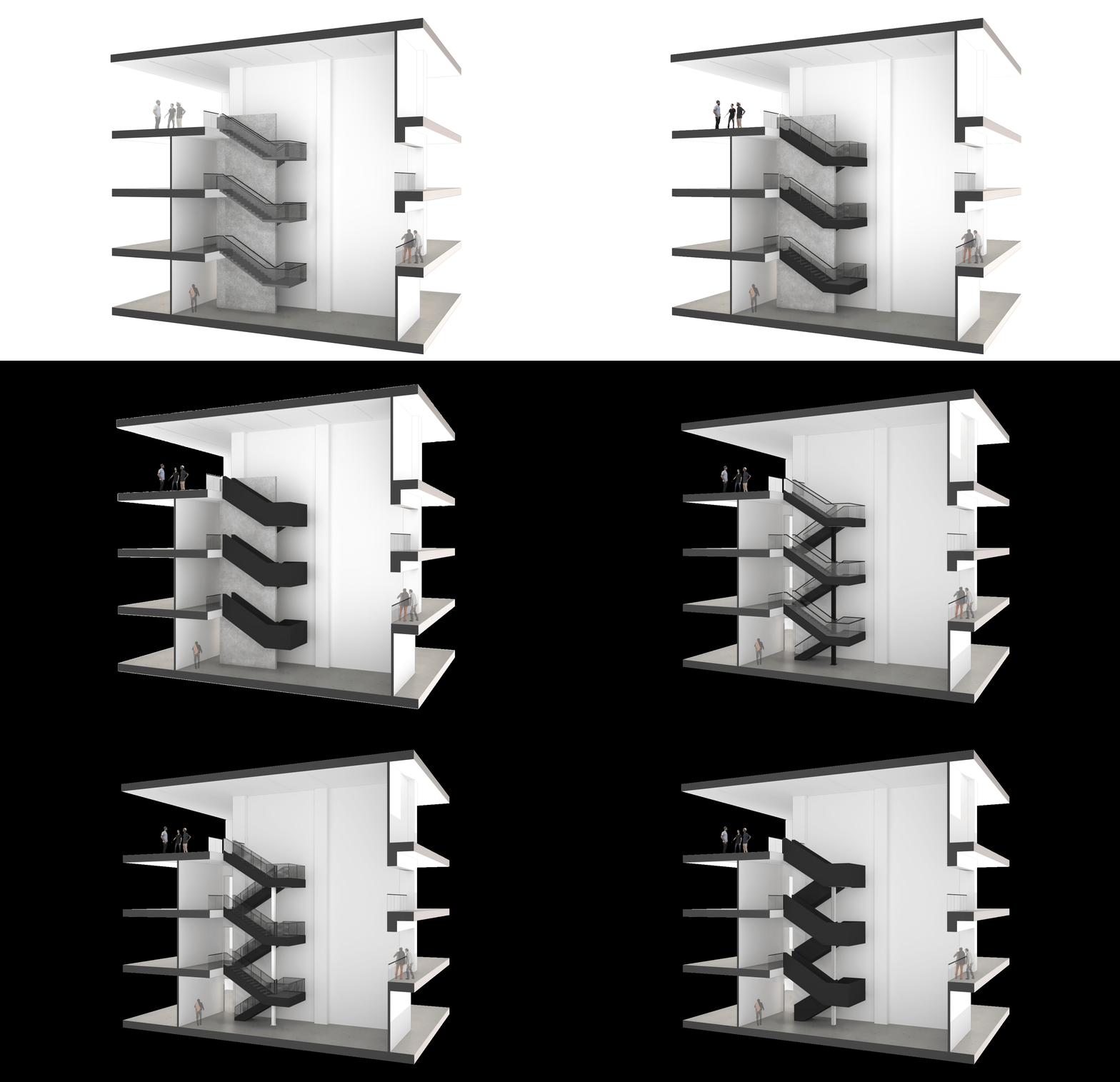
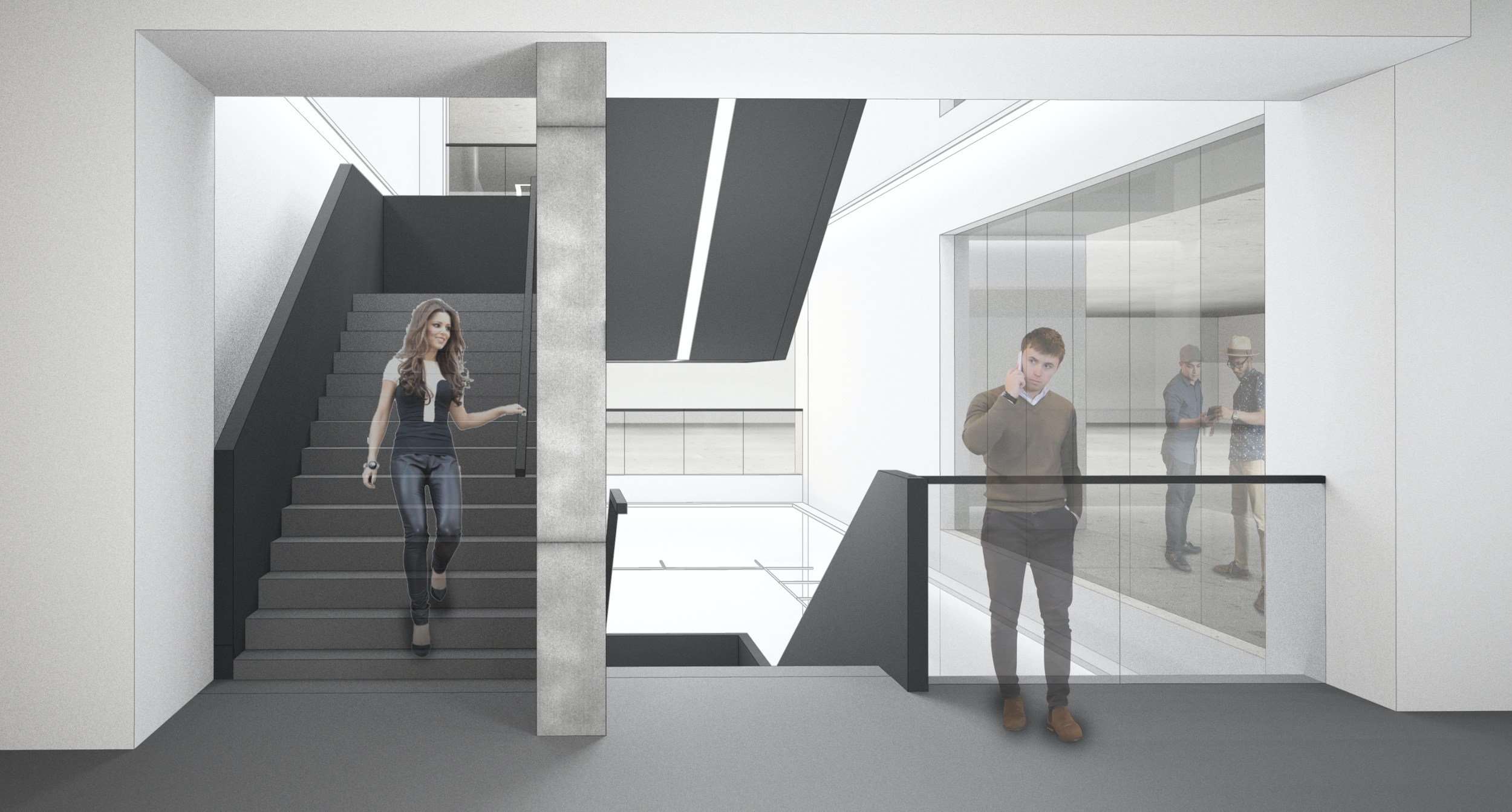
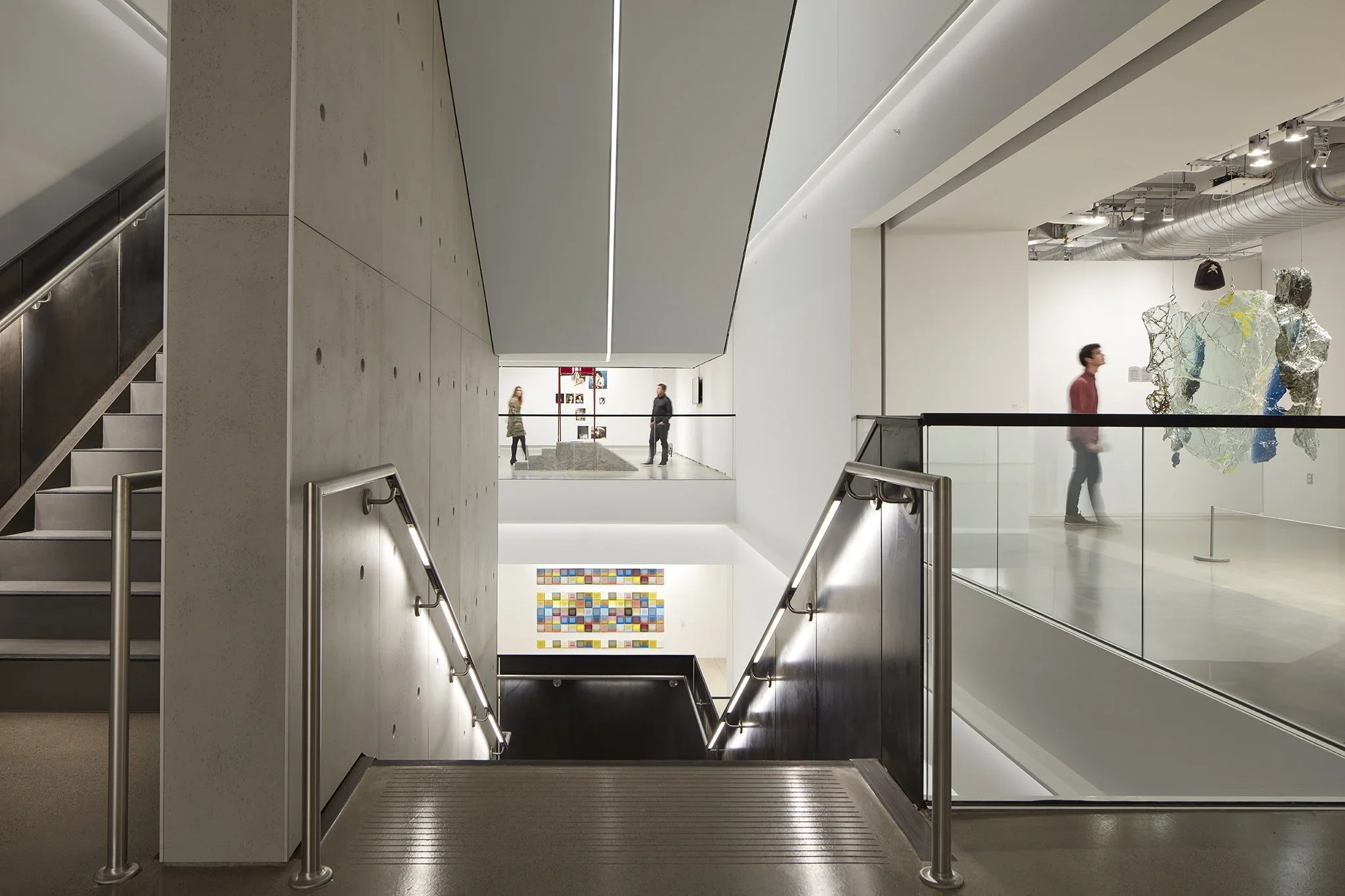
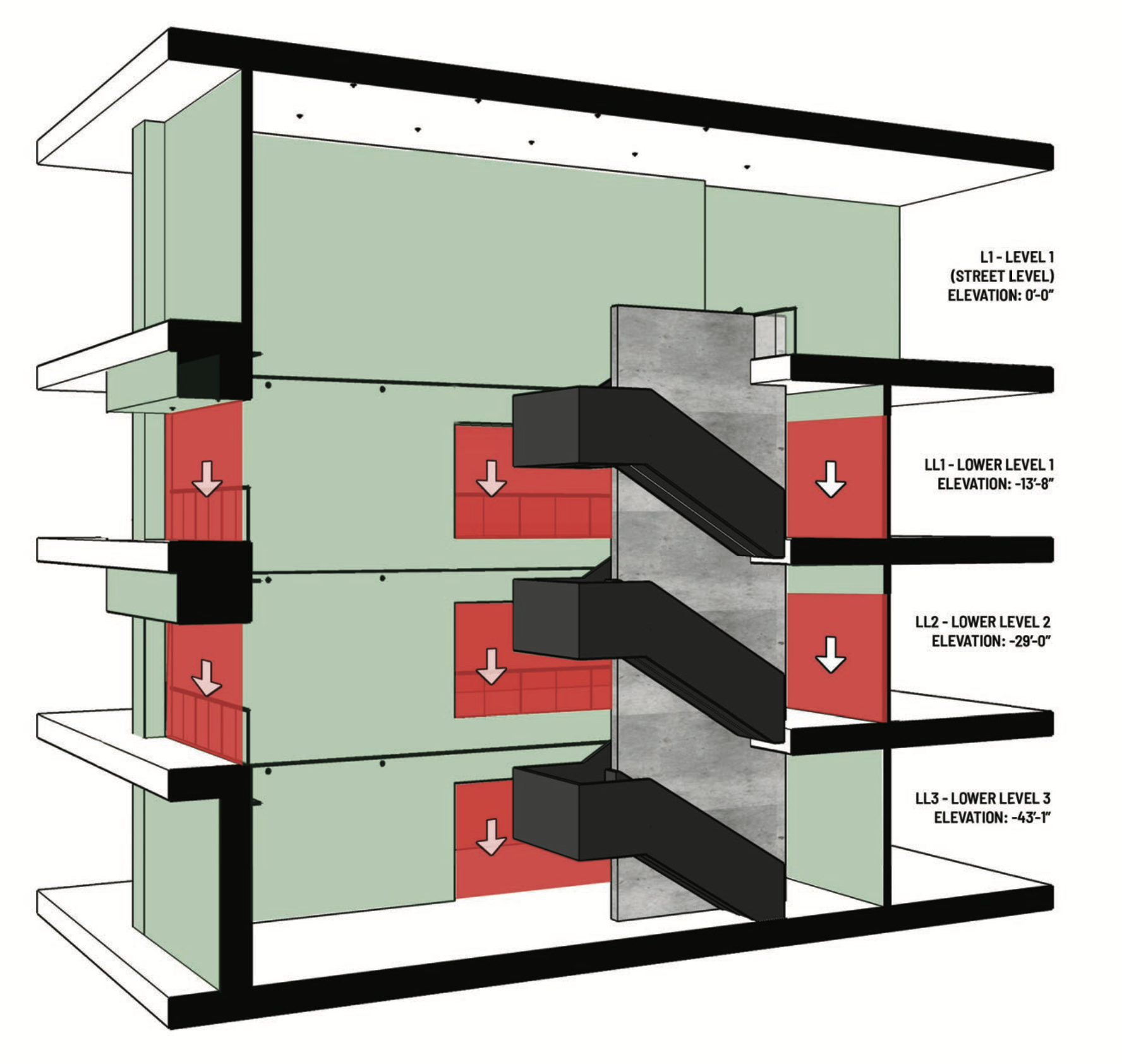
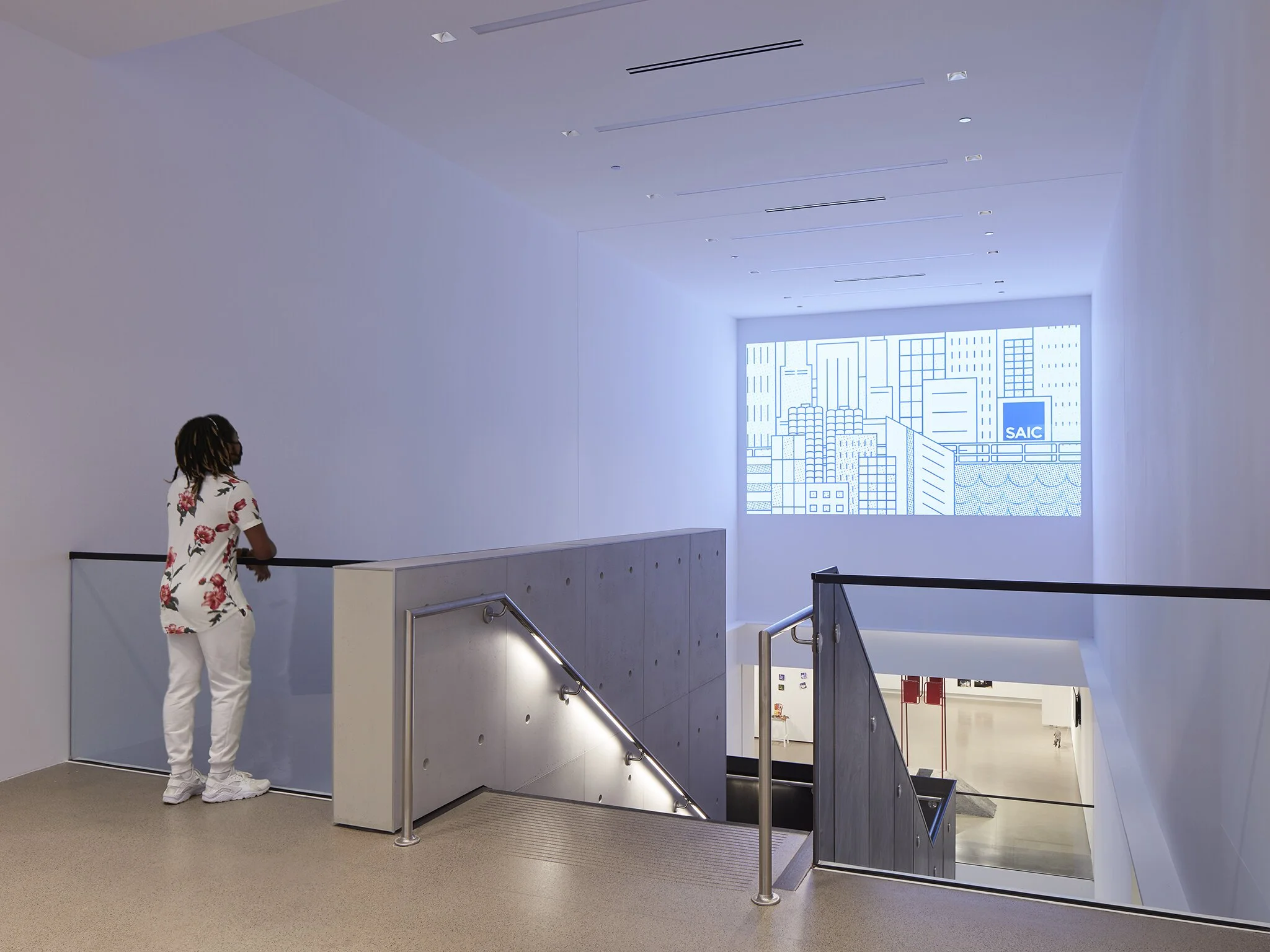
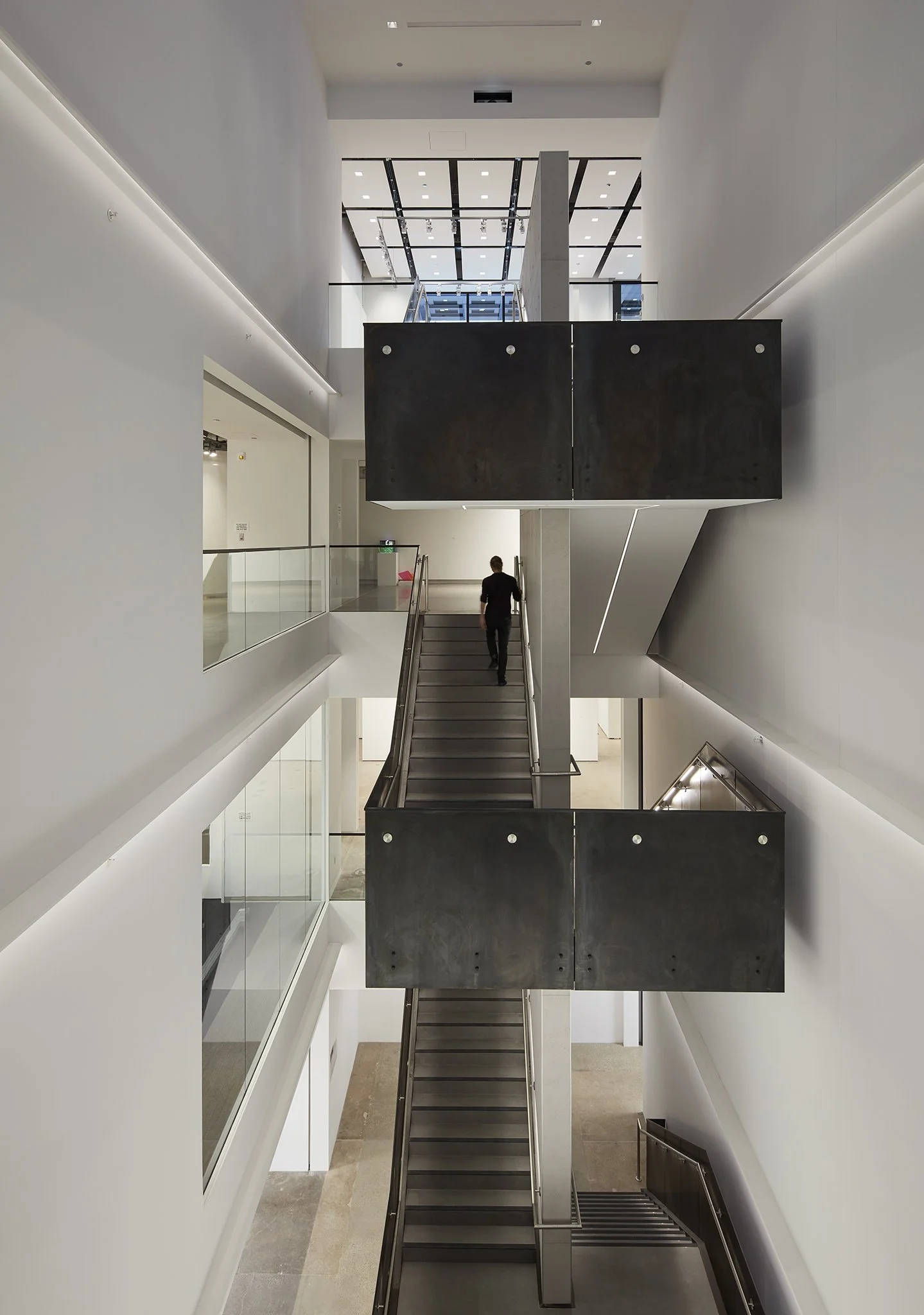
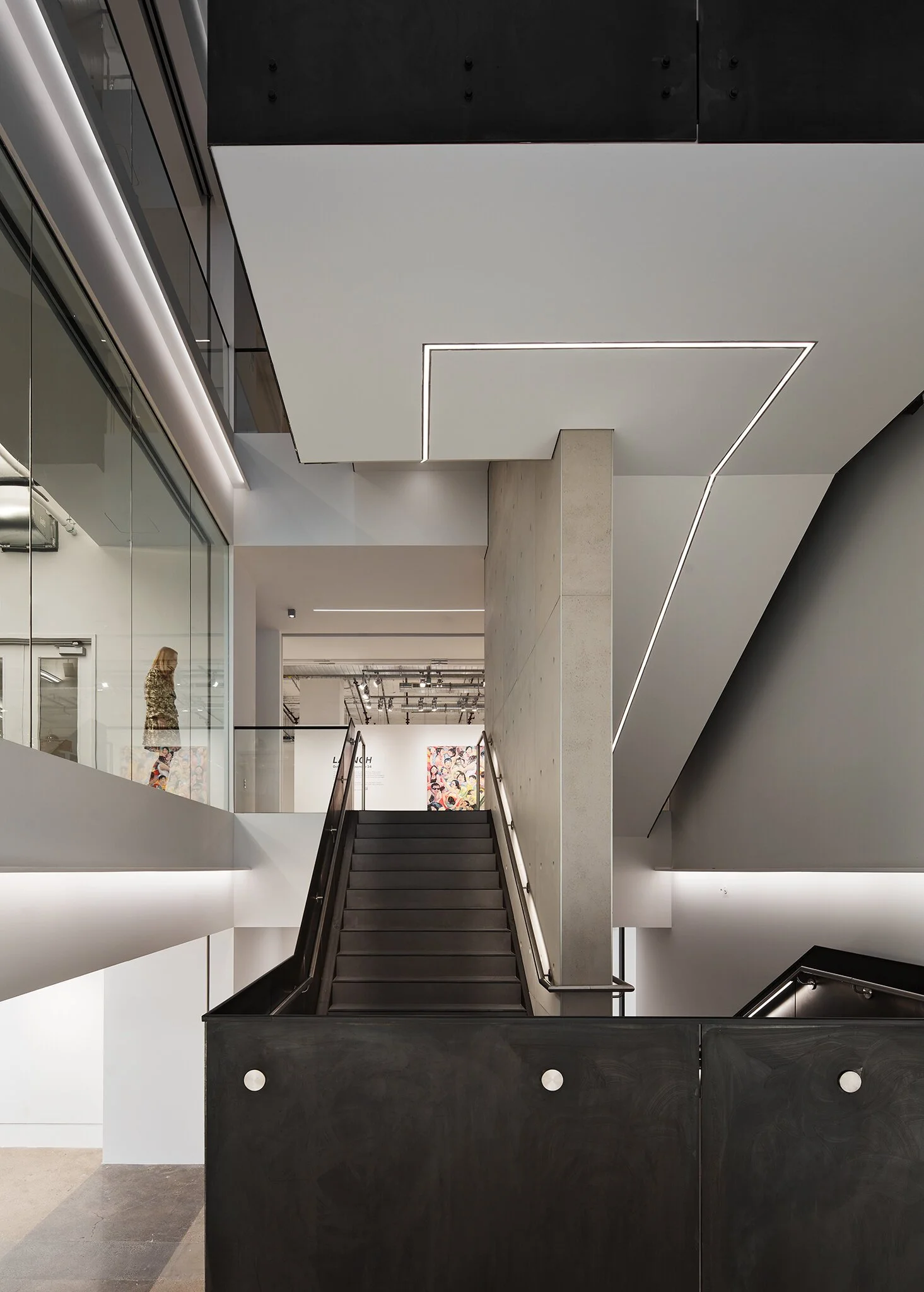
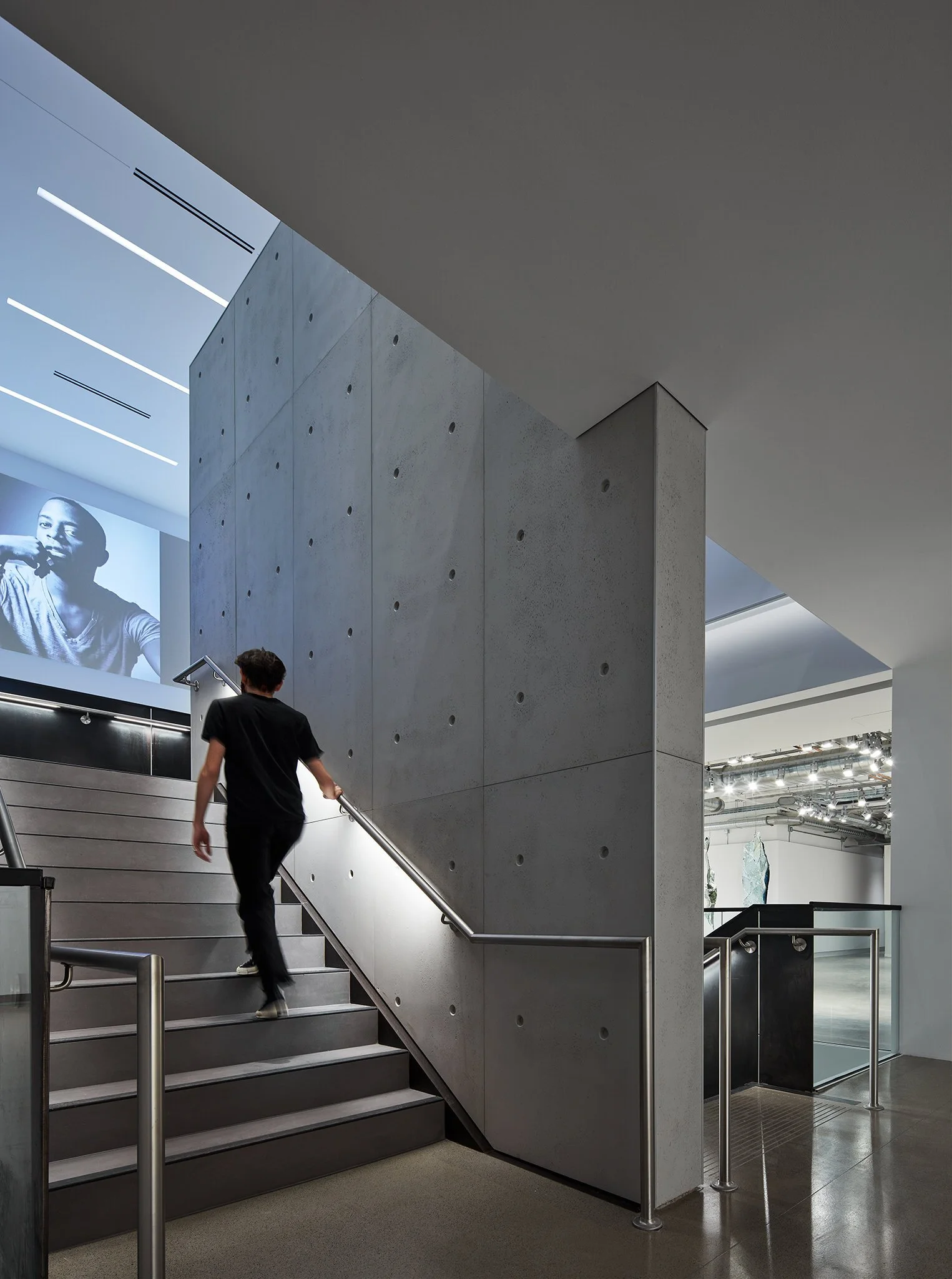
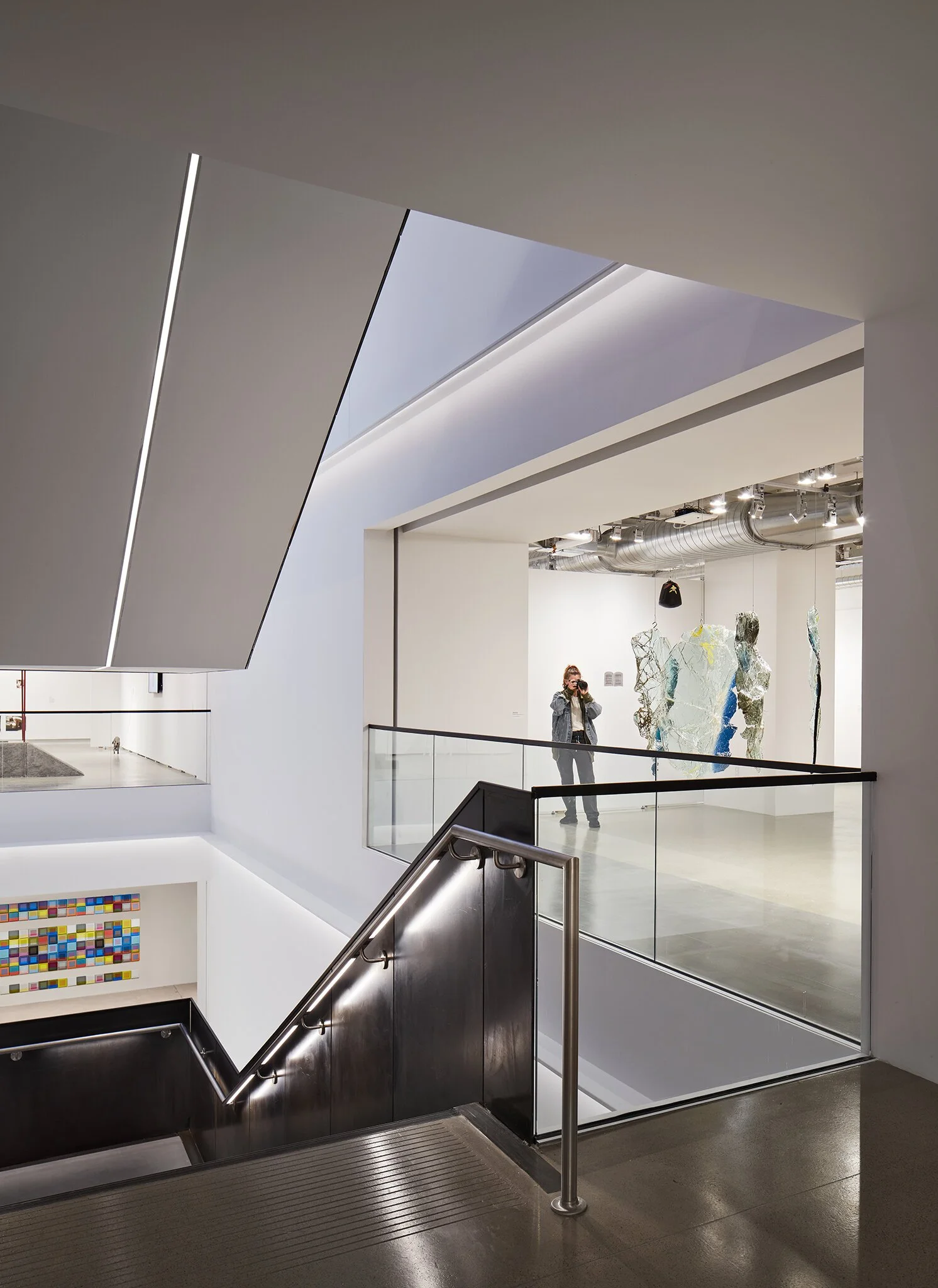
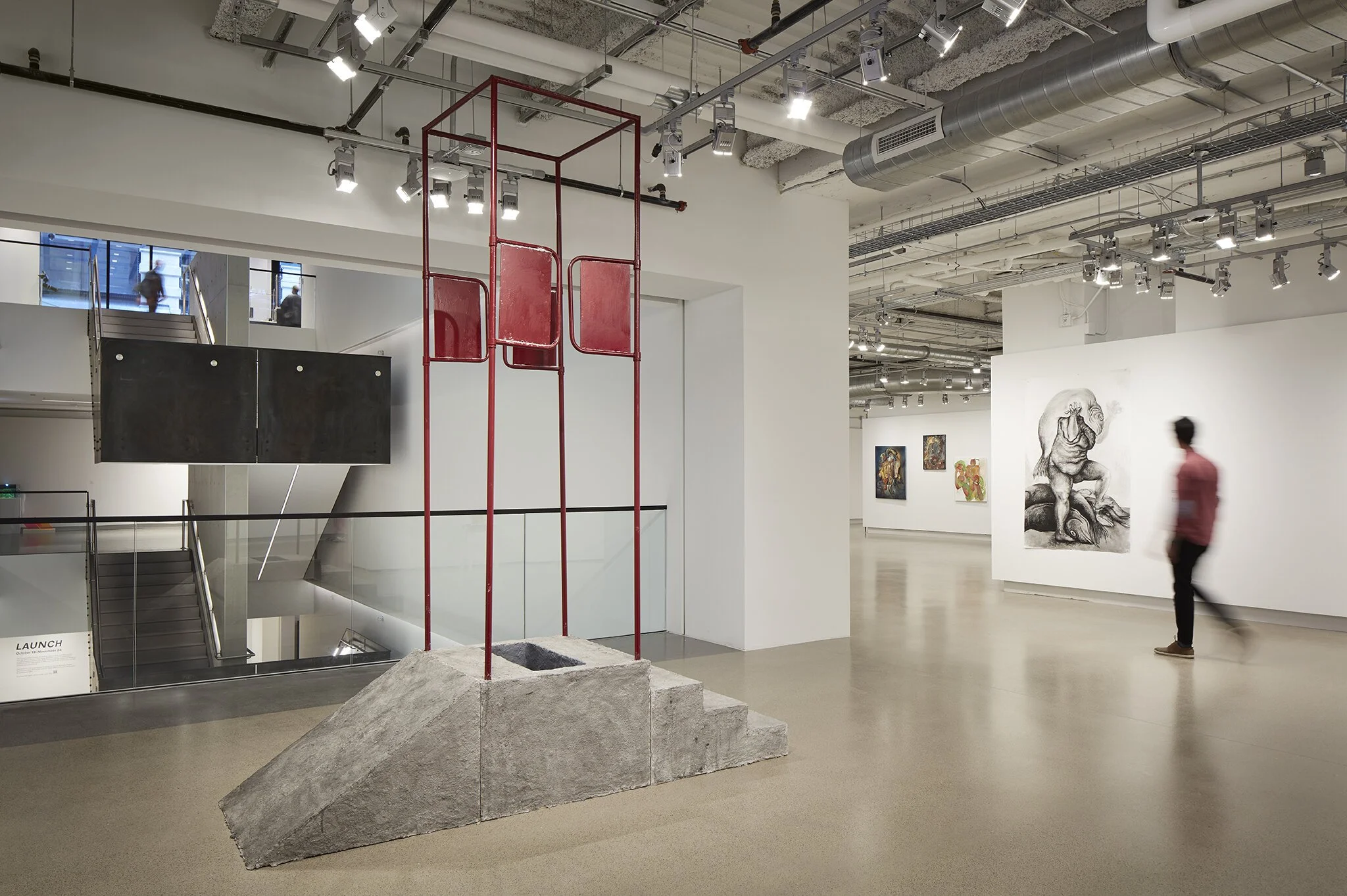
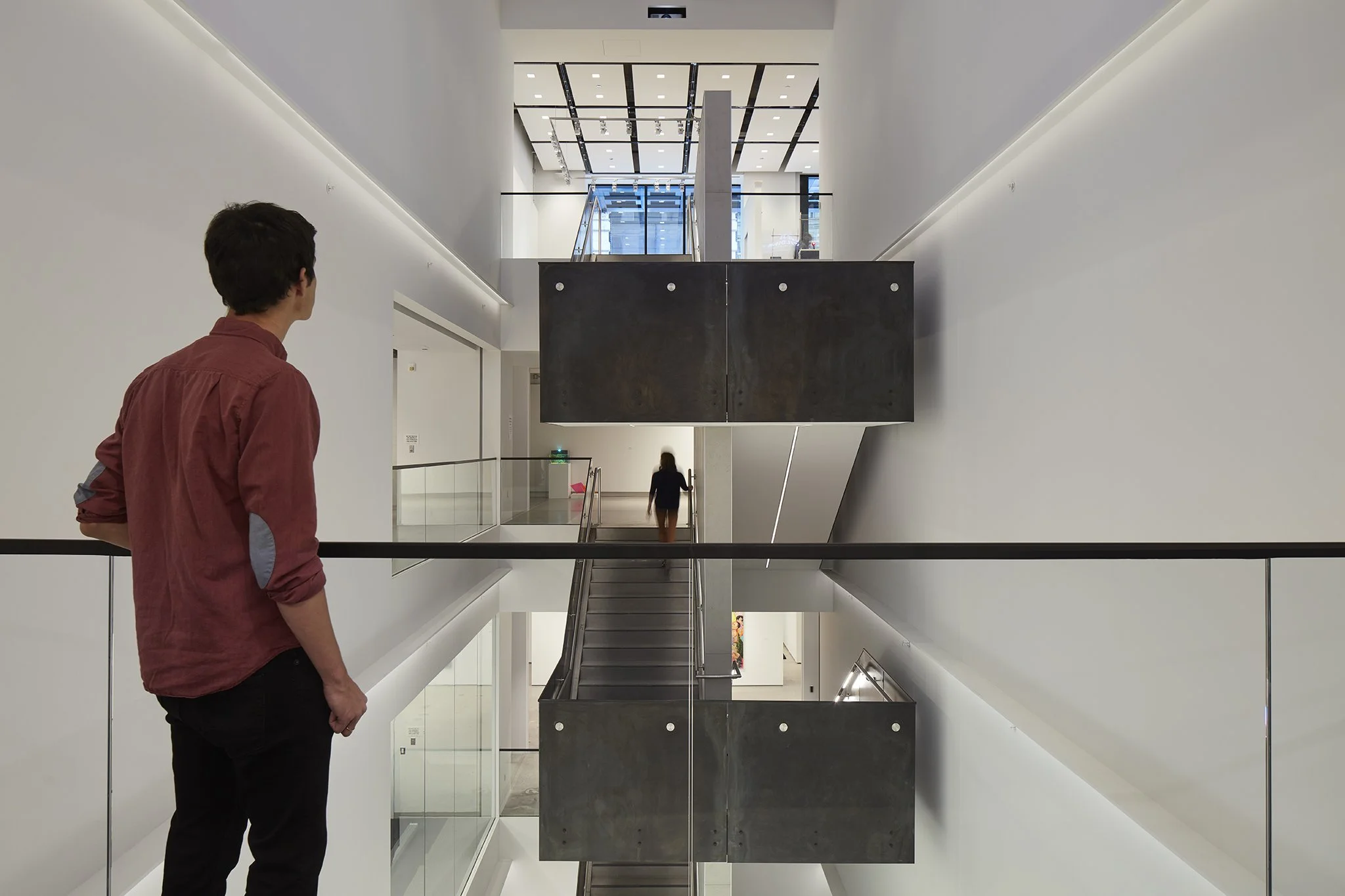
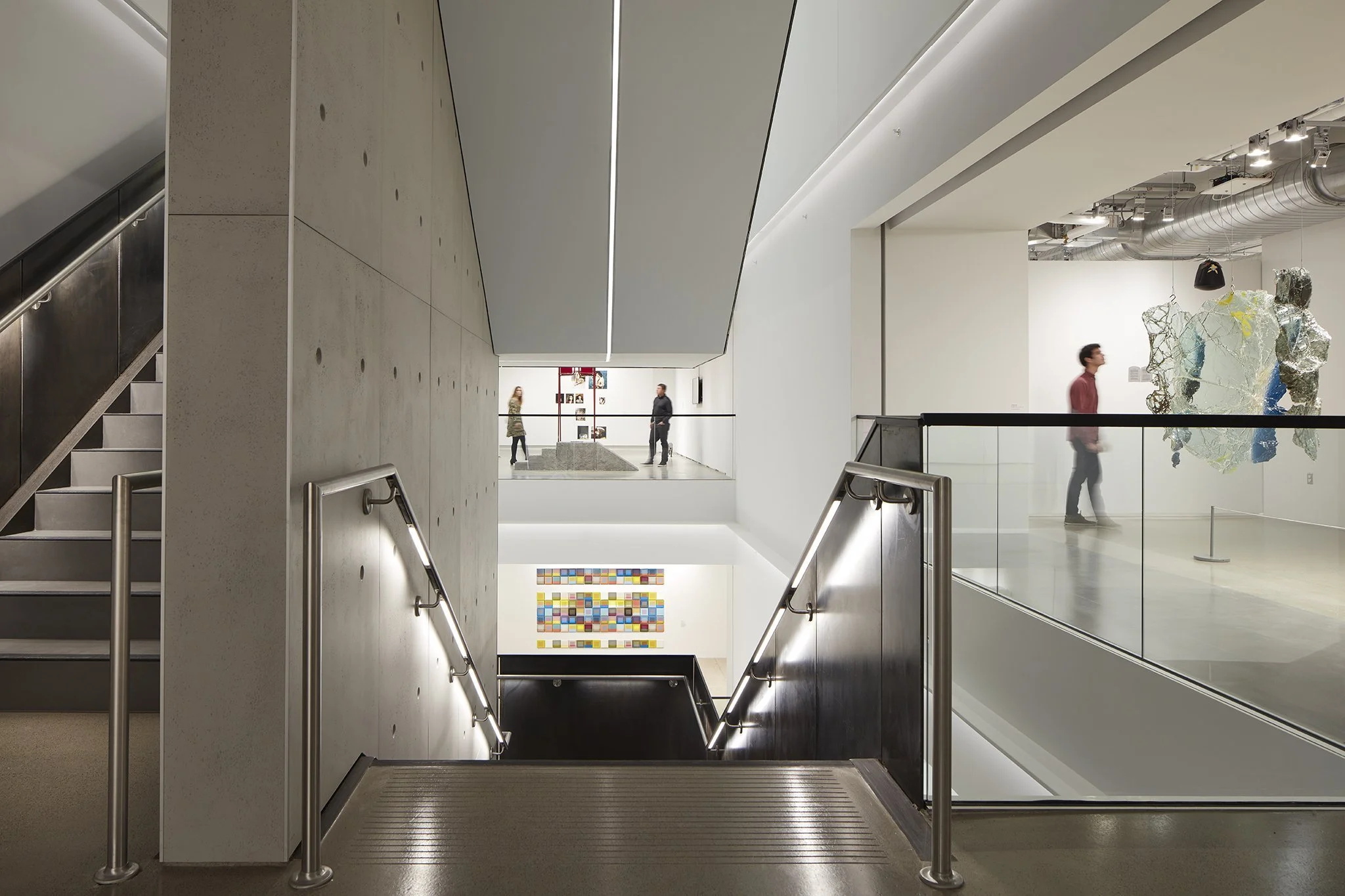
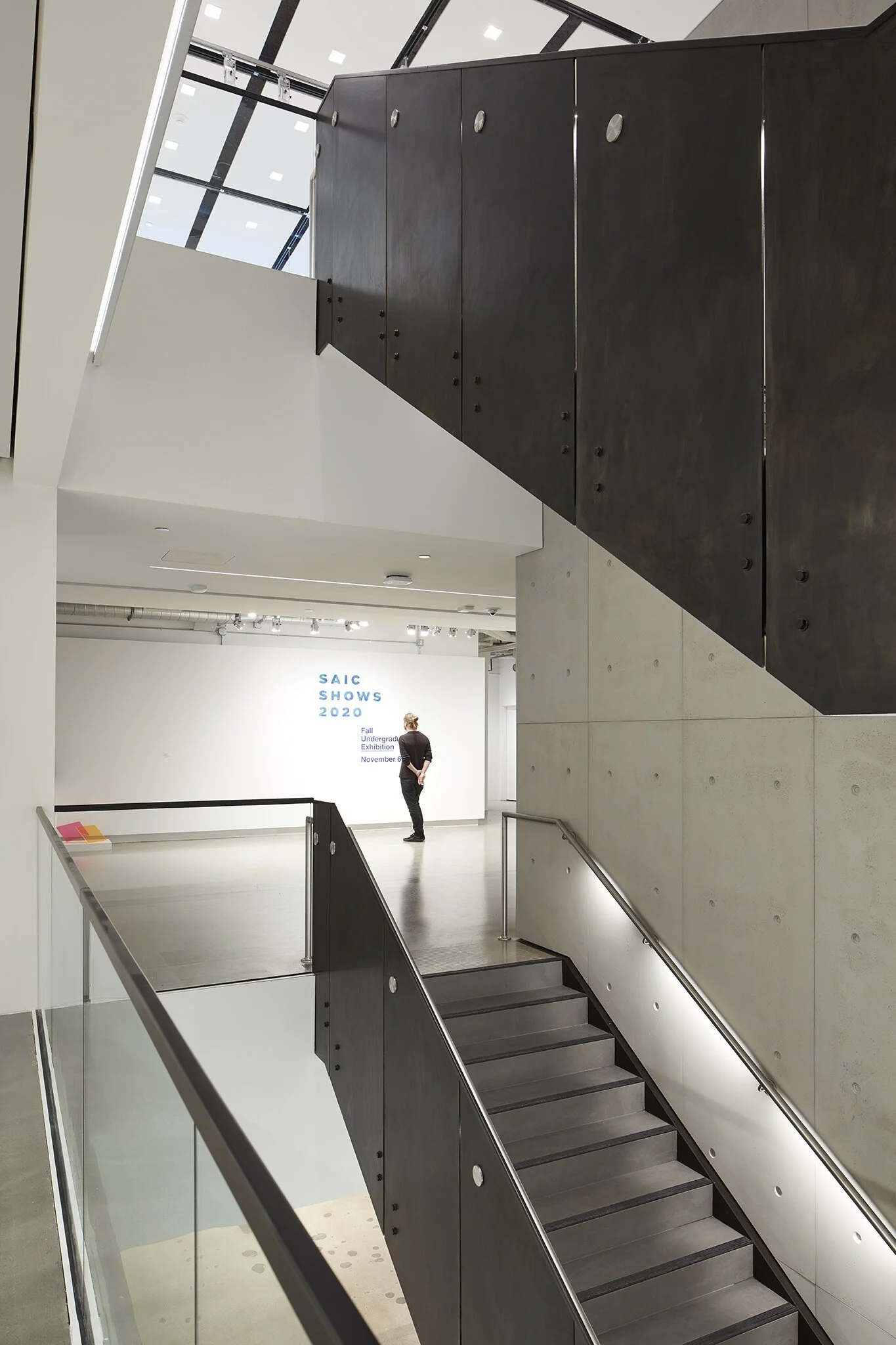
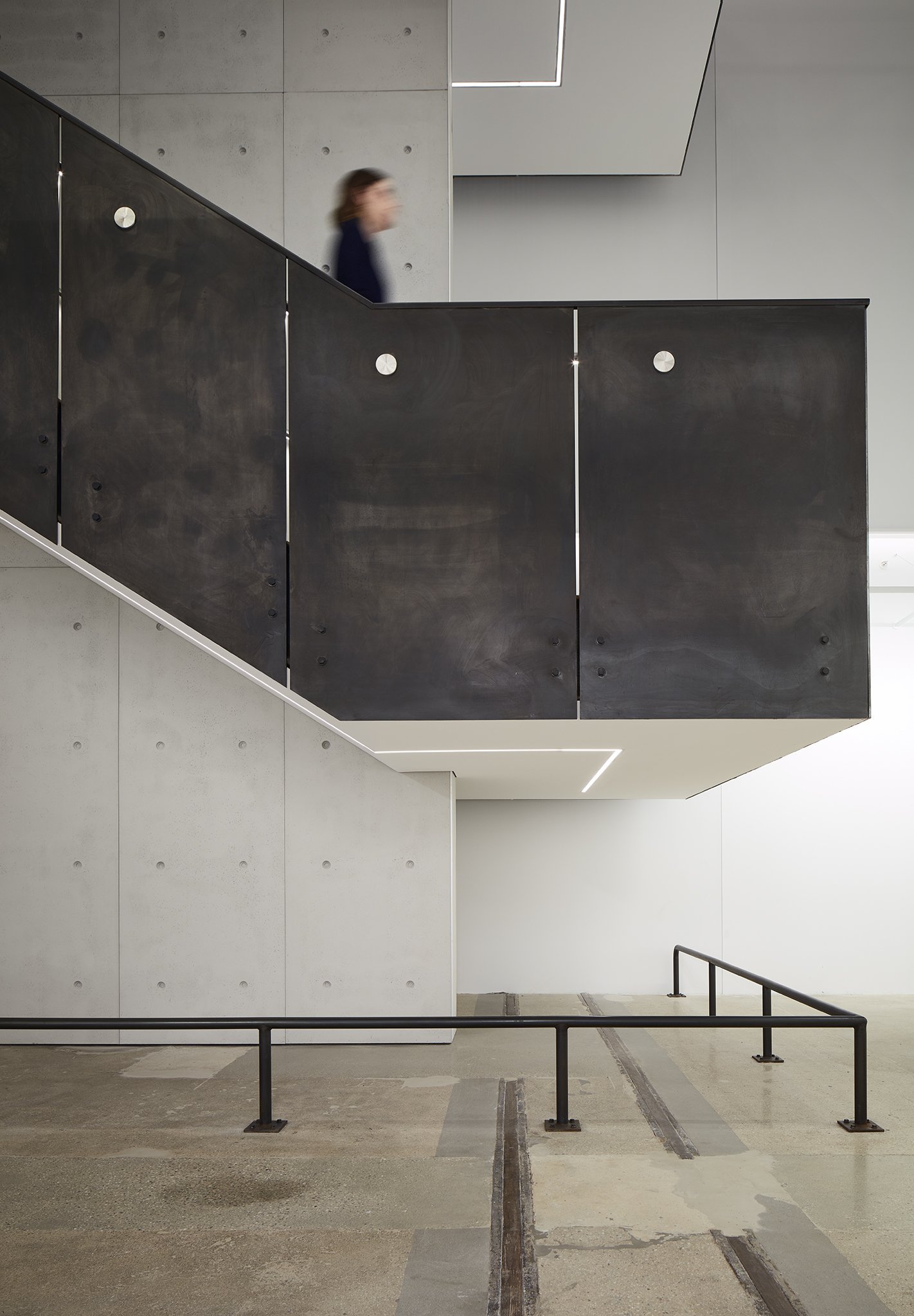
At the heart of the project is a monumental stair and vertical atrium that organize movement and experience across all levels. More than a circulation element, the stair acts as a connective spine, drawing people downward through light, movement, and long visual connections while providing clear access to all galleries and student spaces along the way.
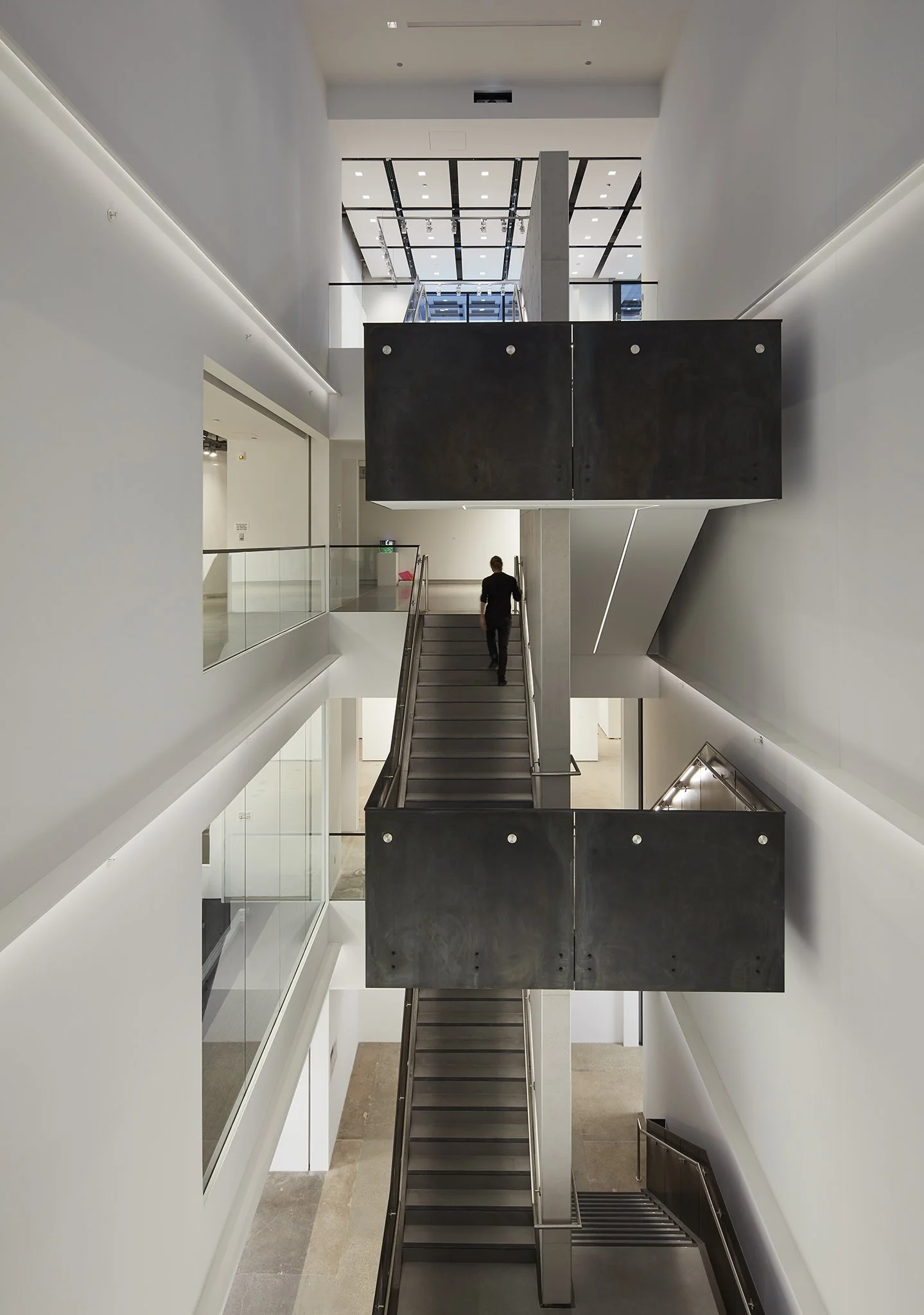

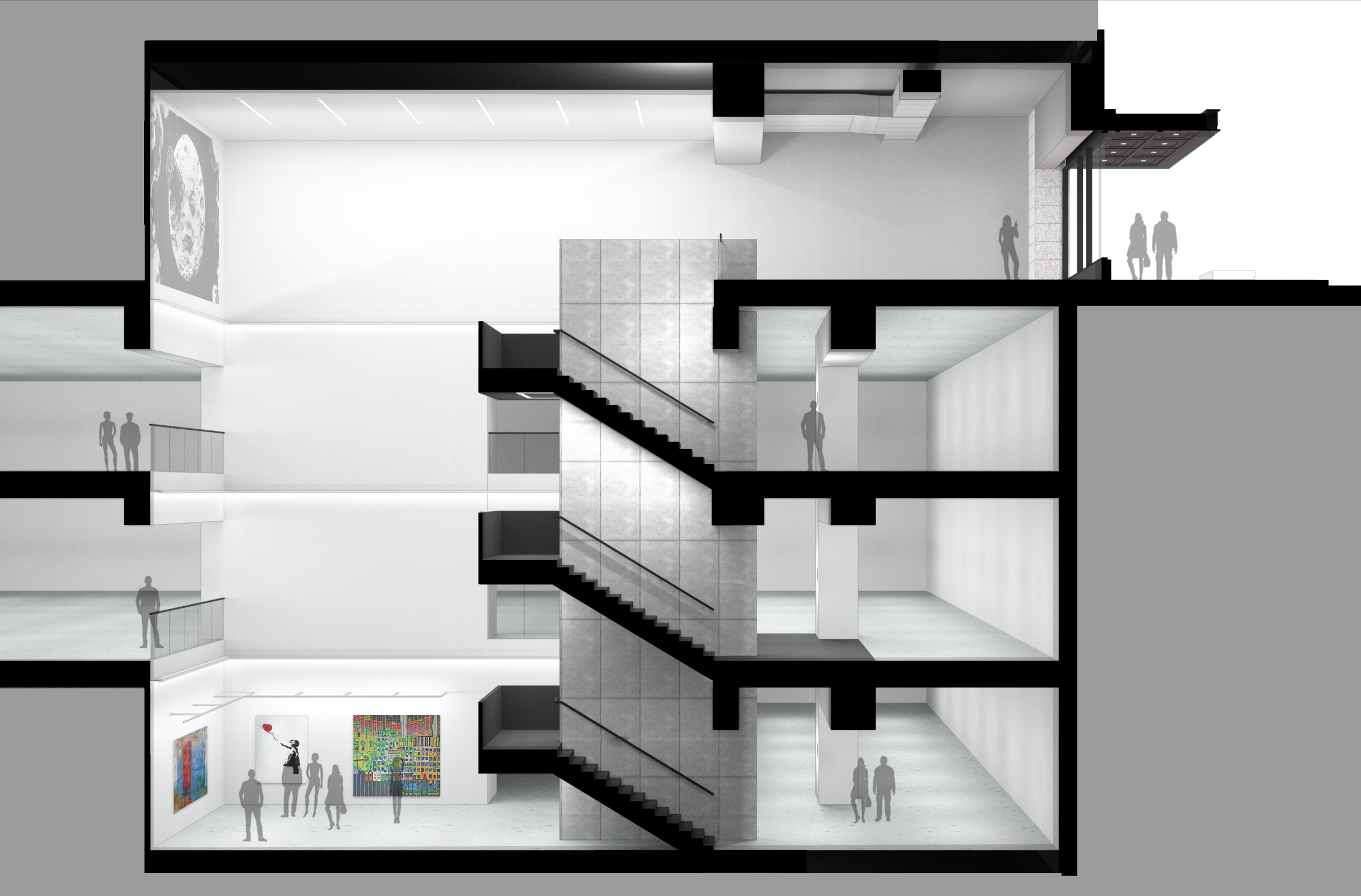
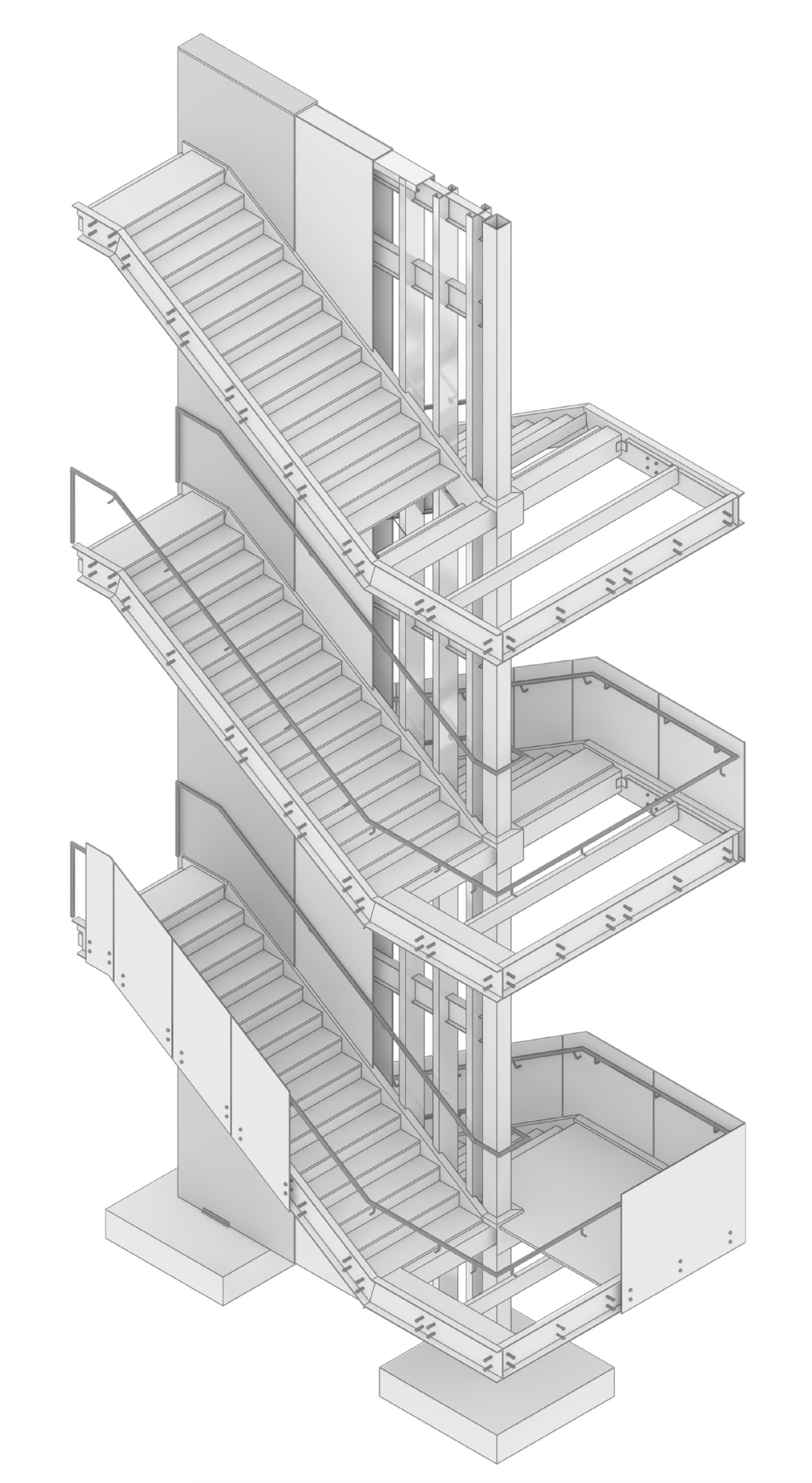
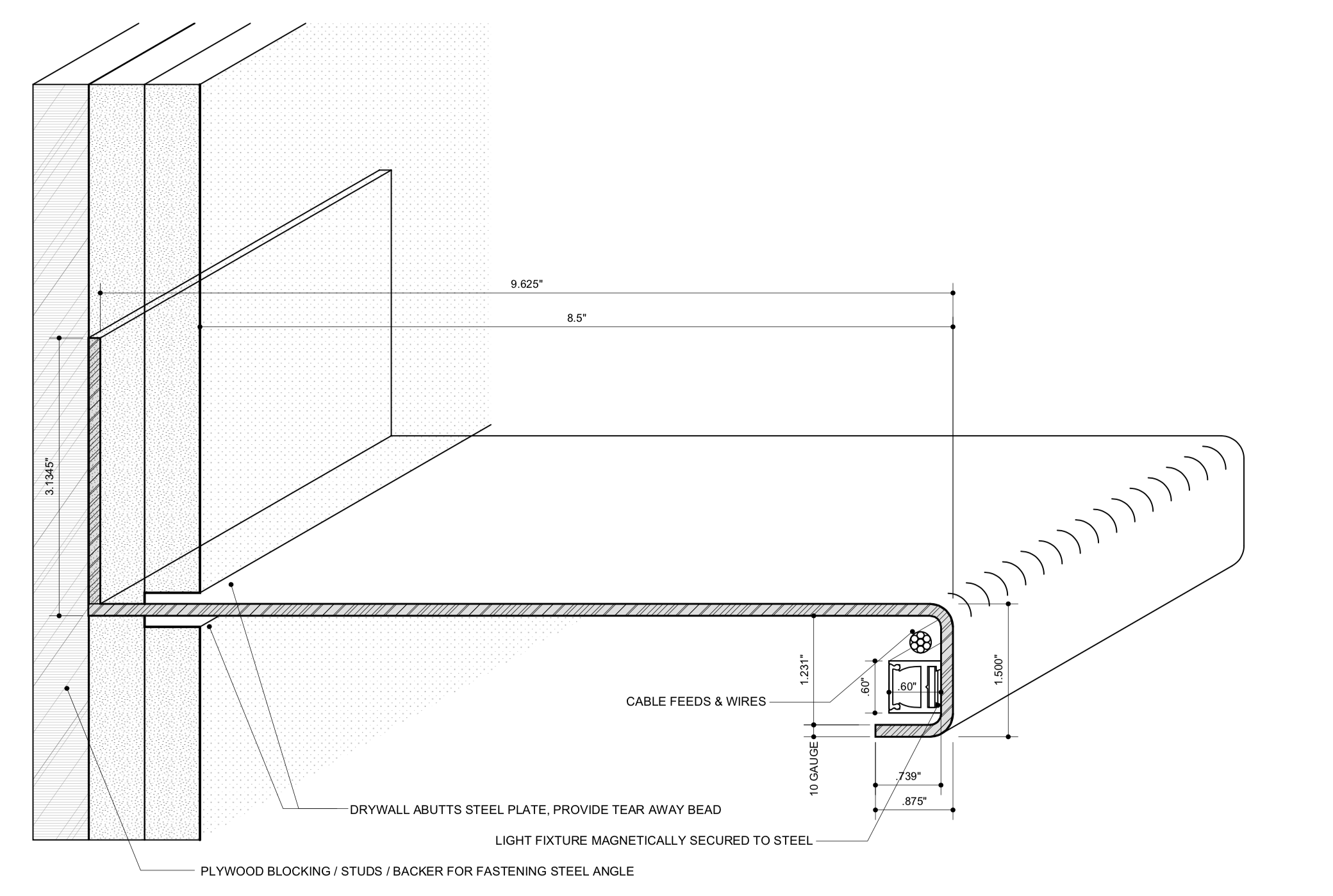
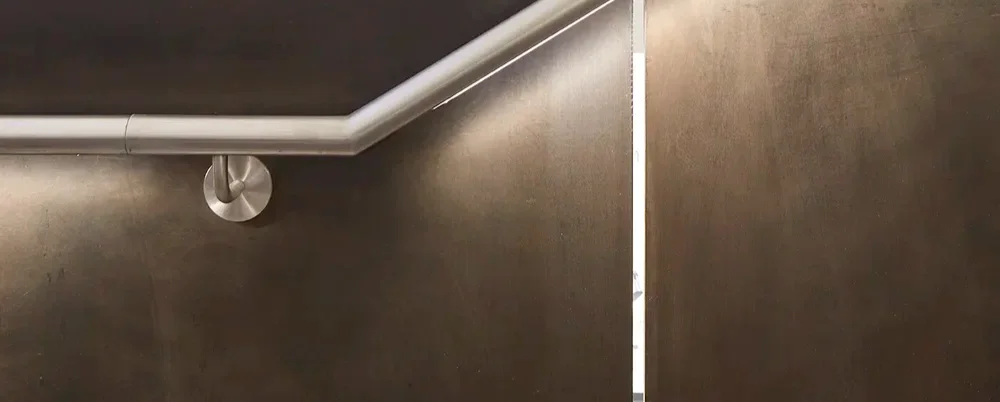
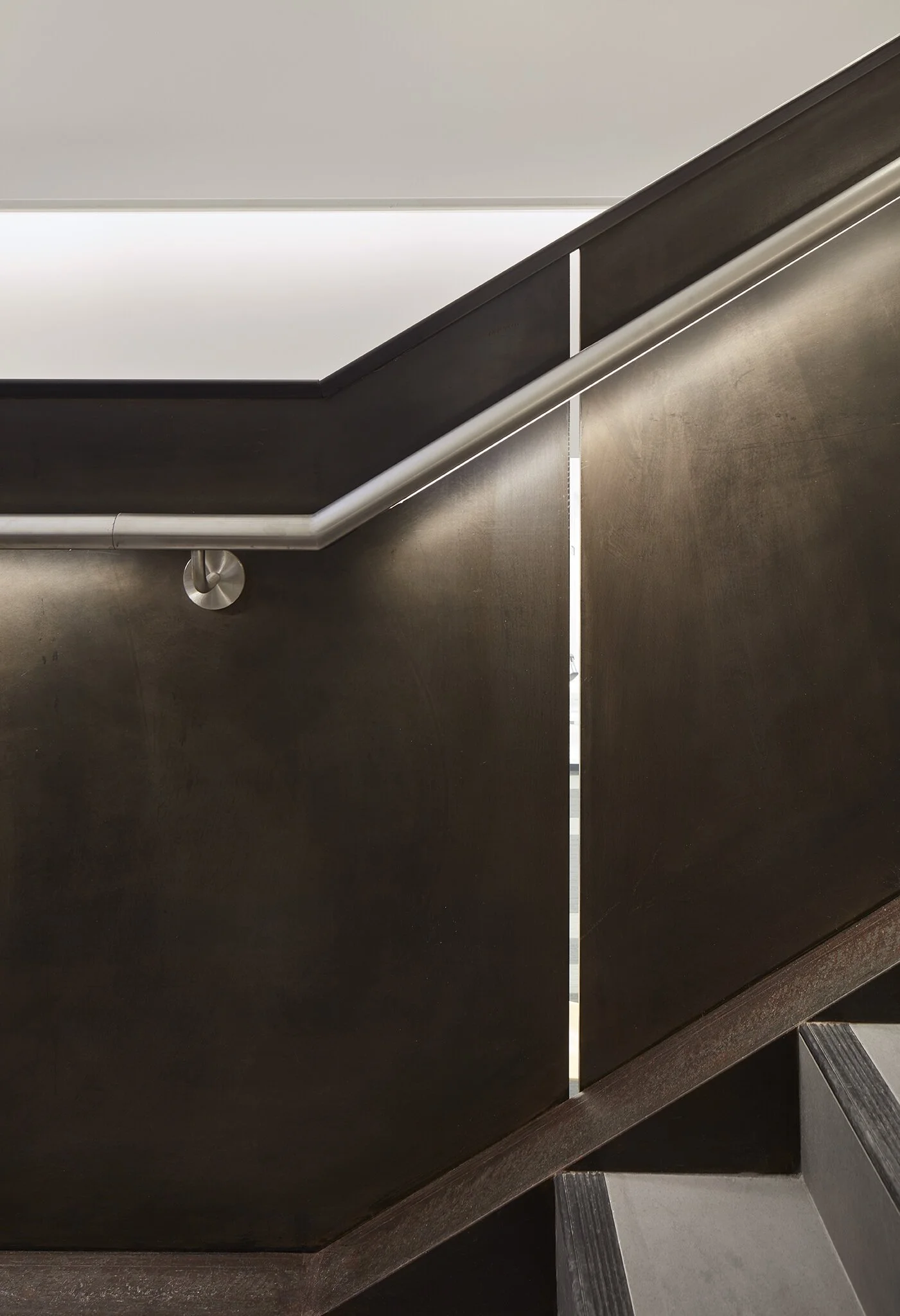
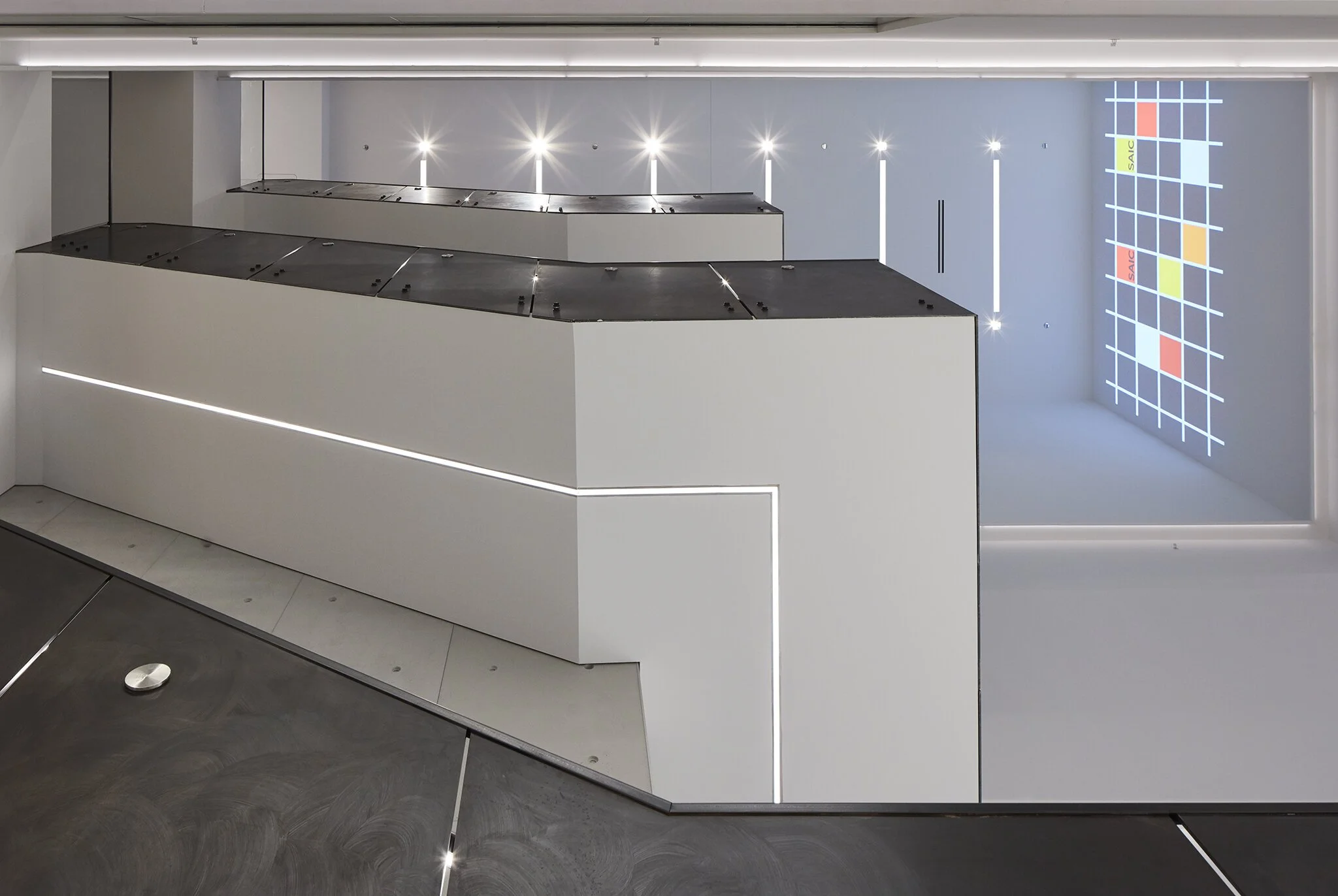
Lightweight concrete panels line the central stair, addressing structural and load requirements while providing a durable, grounding presence. This allows the steel ribbon stair to read as a lighter, floating element as it layers down through the lower levels. Daylight is pulled deep into the building, while the surrounding walls serve as an active canvas for digital art and projection, animating the descent and maintaining a continuous awareness of creative activity within the galleries and studios.
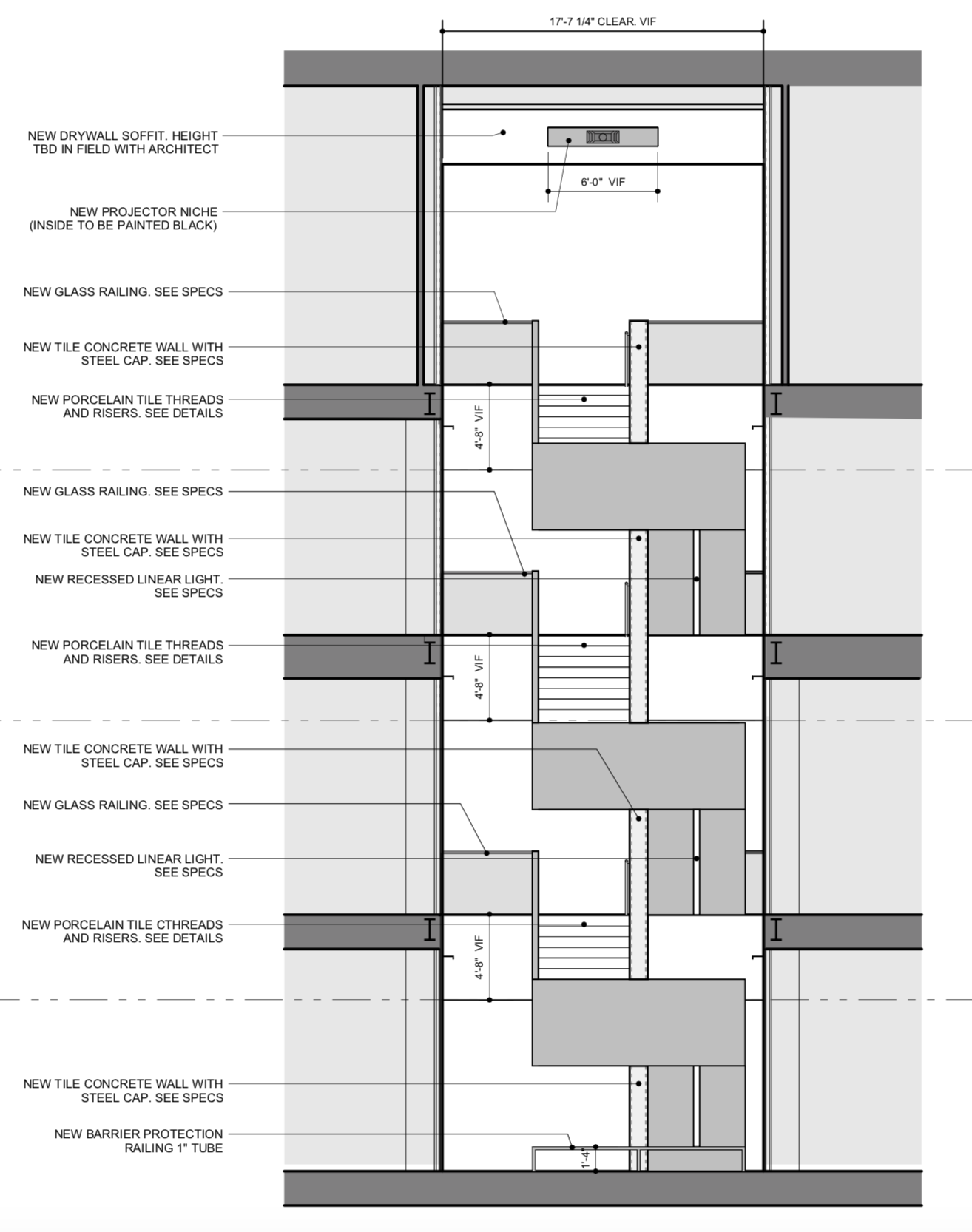
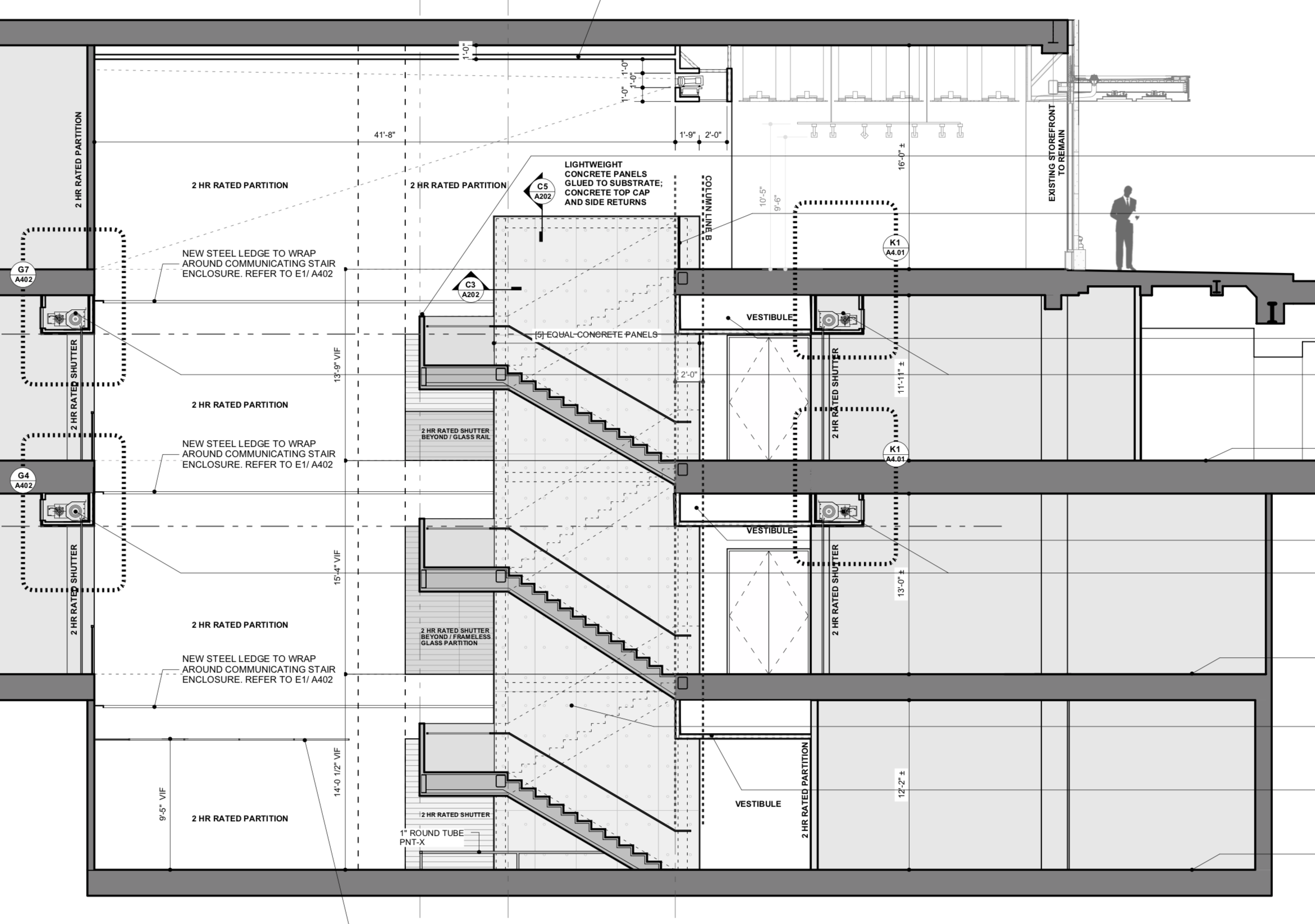
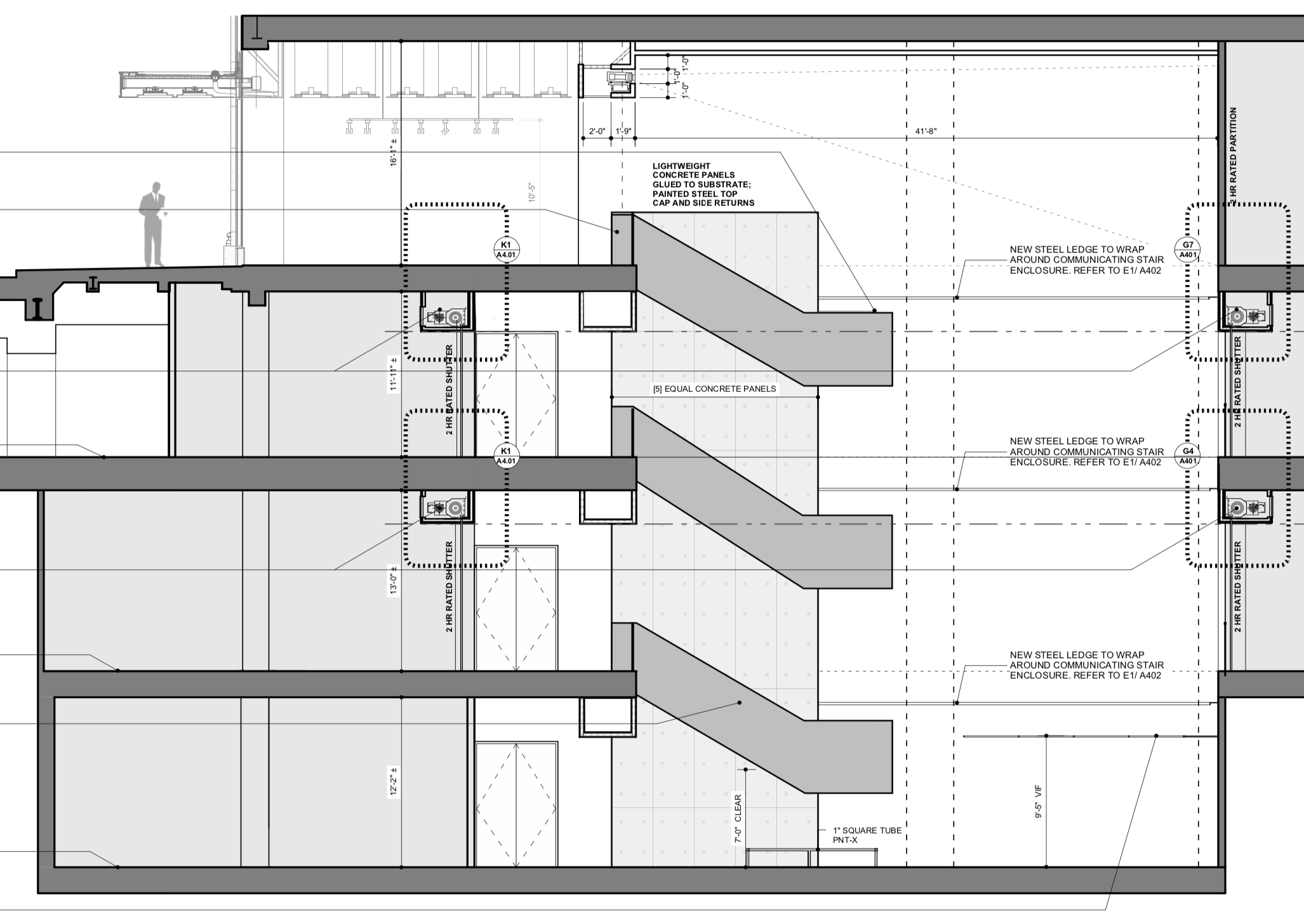
The atrium establishes orientation and openness, transforming what was once a series of disconnected spaces into a legible and engaging environment. As the stair descends, it connects students, faculty, and visitors to shared critique and collaboration zones, culminating at the LL3 level in a communal critique space that reinforces exchange, visibility, and collective learning. Design process imagery documents how structure, lighting, and circulation were layered together to shape this central experience.


Final Execution
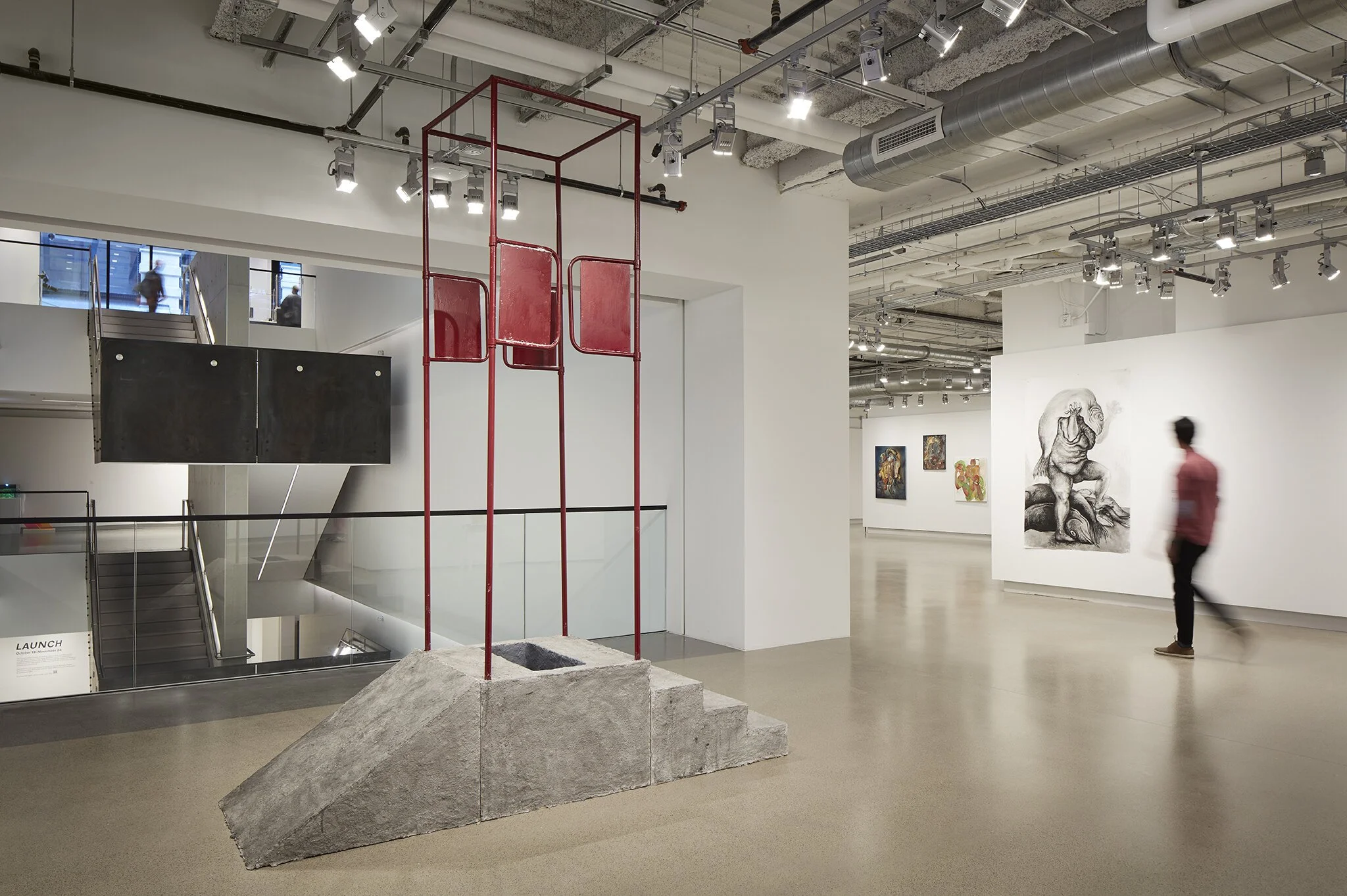
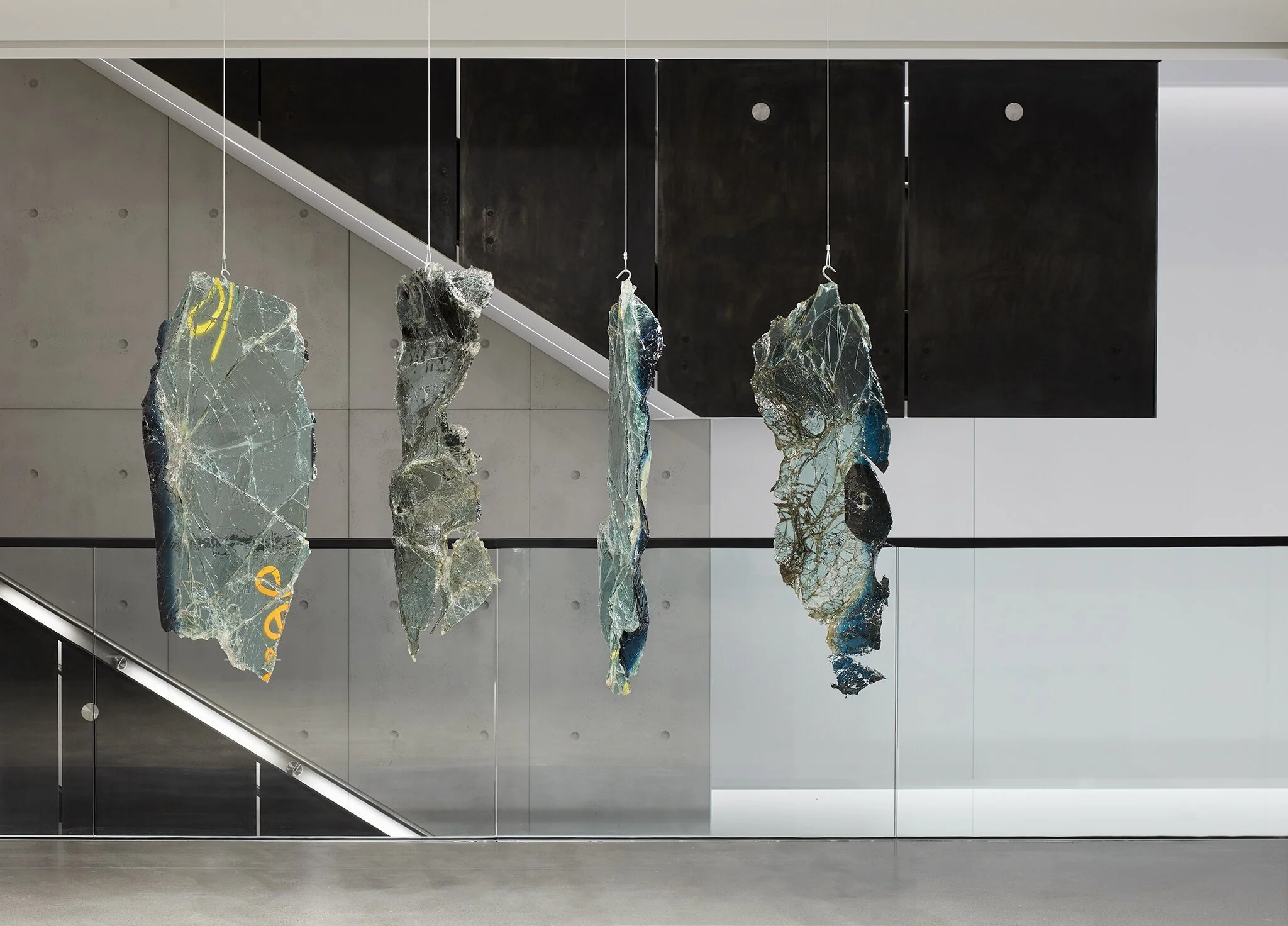
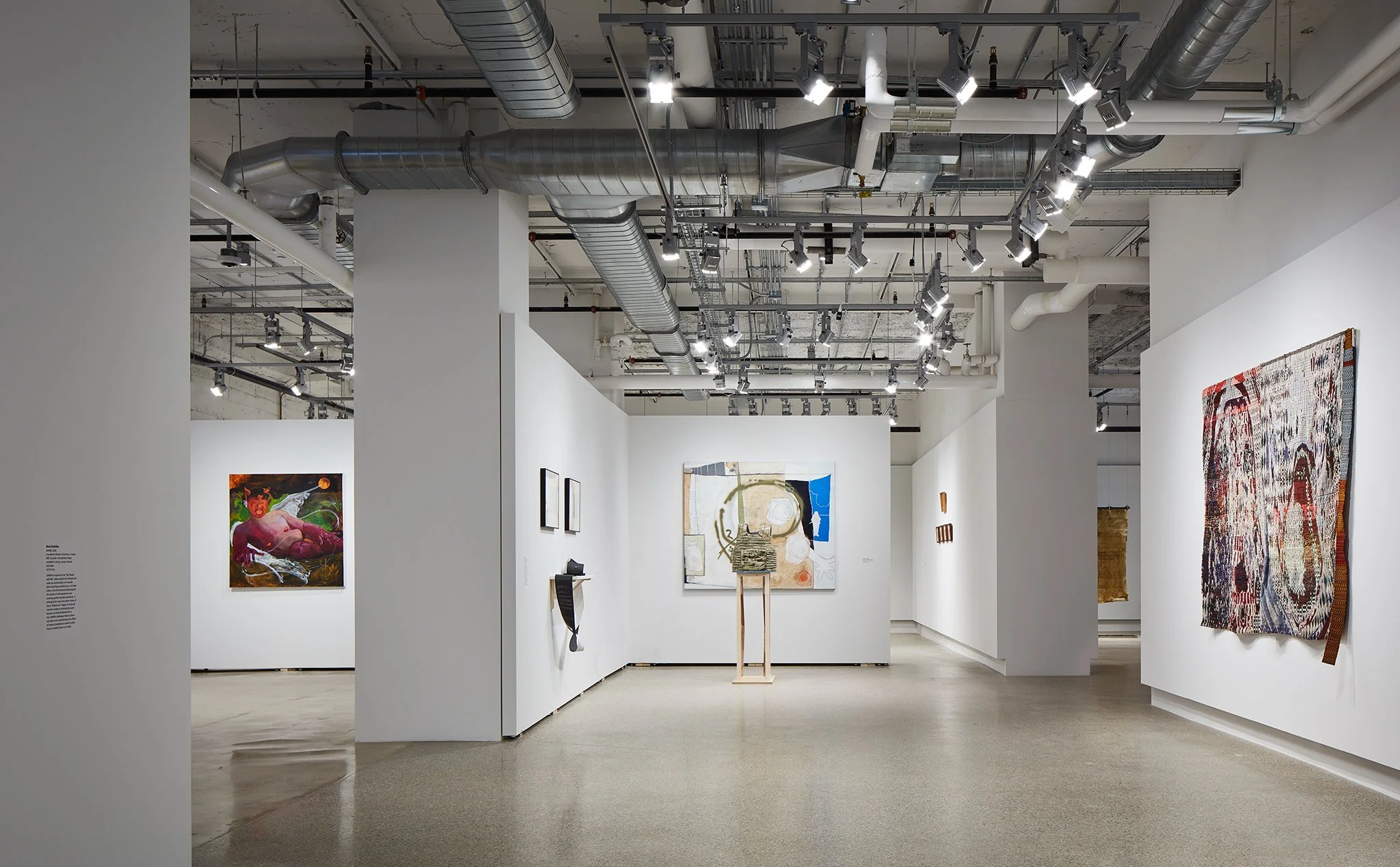
As construction reached completion, the lower levels were redefined as vibrant studios and public galleries. Interior architecture and finishes were selected for durability and restraint, creating a flexible backdrop that allows student work and exhibition to remain central. Visual connections reinforce shared purpose and openness, supporting both learning and public engagement.
What was once hidden is now accessible and purposeful. Developed in close coordination with the School’s programmatic needs, the architecture balances adaptability with clarity, grounding new activity within the building’s historic framework.
The completed work reflects the collective effort of architects, consultants, and builders working through complex field conditions with care and precision—resolving challenges as they emerged while maintaining the integrity of the design.
-
Name : SAIC Infrastructure
Location: 33 East Washington St, Chicago, IL
Building : Historic Beaux-Arts Landmark (1914, Daniel Burnham)
Size : 65,000sf
Role : Project Architect, Owner’s Design Lead
Program : Educational, lobby, atrium, monumental stair, elevator systems
-
• Street-to-lower-level connectivity
• Monumental stair & atrium design
• New elevator and egress stairs
• Daylight and visual connections
• Exterior facade, entry canopy and identity elements
• Interior architecture and finishes
• Coordination with public gallery and studio spaces
-
Construction Manager : Mortenson
General Contractor : Bulley & Andrews
MEP : IMEG
Structural : Forefront Structural Engineers
AOR : Weese Langley Weese : SAIC Galleries, Studios, & Offices
-
AIA Chicago Interior Honor Award 2021
Interior Design Best of the Year Honoree 2021
Illinois Real Estate Journals Award Best Redevelopment - Education 2021
American School & University Educational Interiors Showcase : Outstanding Design – Exhibition Spaces/Galleries
PHOTOGRAPHY
Steve Hall and Kendall McCaugherty, Hall + Merrick Photographers, Kevin Kamien
2018-2020