
Historic Lobby Renovation
25 East Washington
services performed at Eastlake Studio
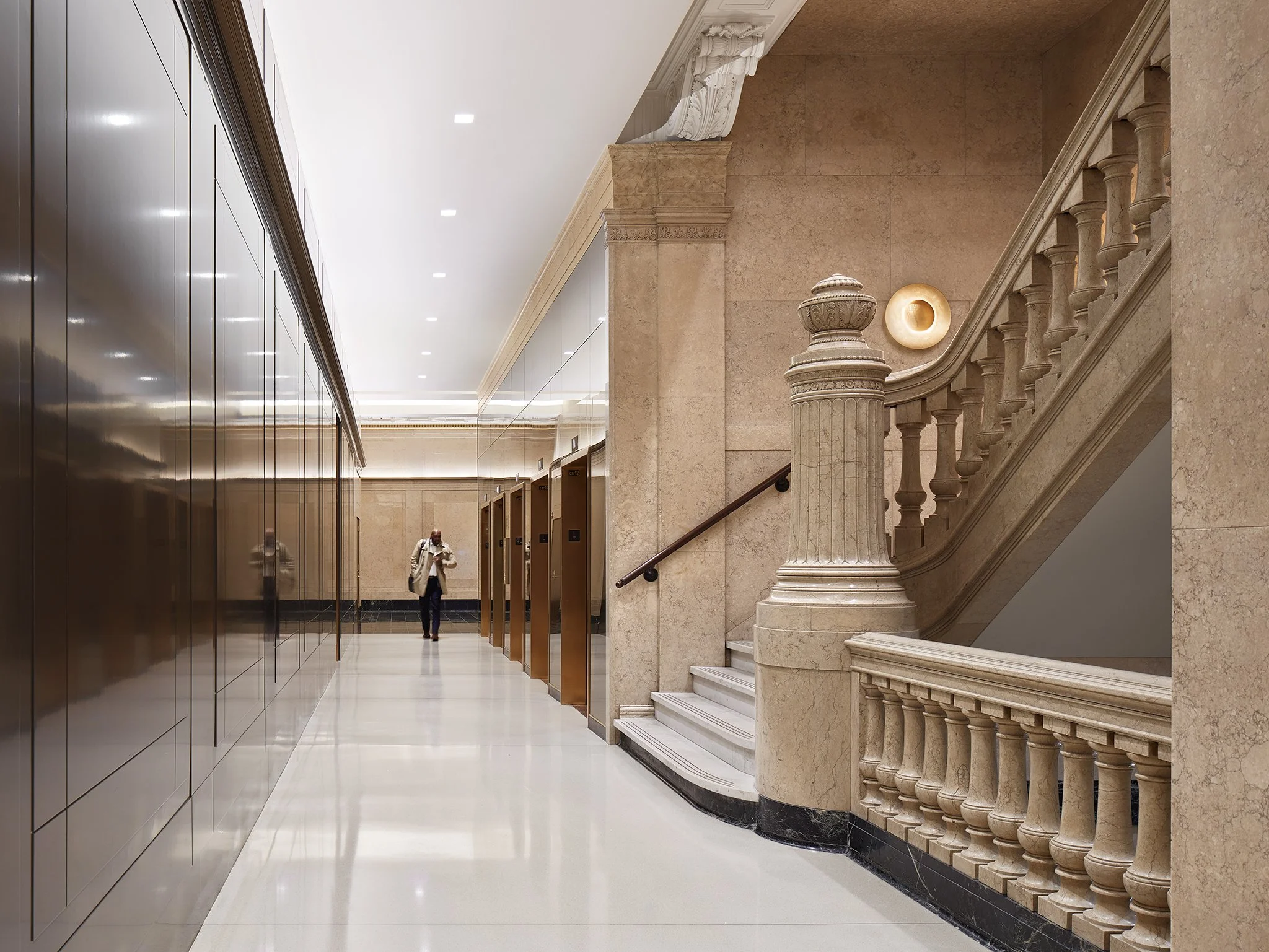
A Legacy, Reconsidered
Designed by Daniel Burnham and completed in 1914, 25 East Washington was originally conceived as the Marshall Field & Co. Men’s Store Annex - a refined urban destination defined by craftsmanship, ceremony, and civic presence. Its Beaux-Arts architecture established a clear architectural order and material richness that has endured for more than a century.
More recently, the building has undergone a thoughtful, phased revitalization focused on renewing its most public and shared spaces. Beginning with the historic lobby, and extending through the lower-level SAIC studios and galleries and the seventh-floor amenity environment, each intervention builds on the last. Together, these projects form a cohesive strategy: reveal the building’s original clarity, introduce contemporary performance, and establish a consistent design language to guide its next chapter.
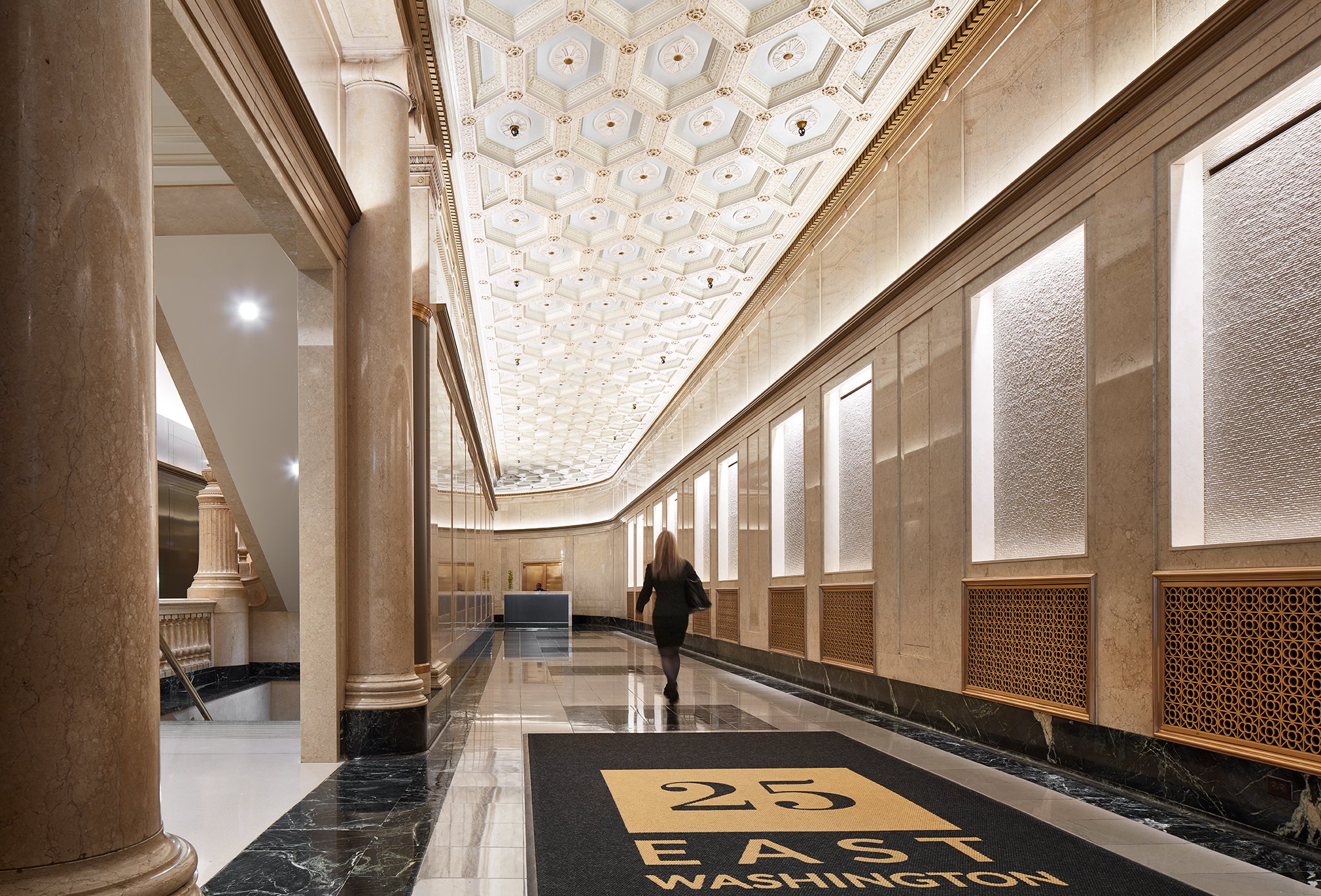
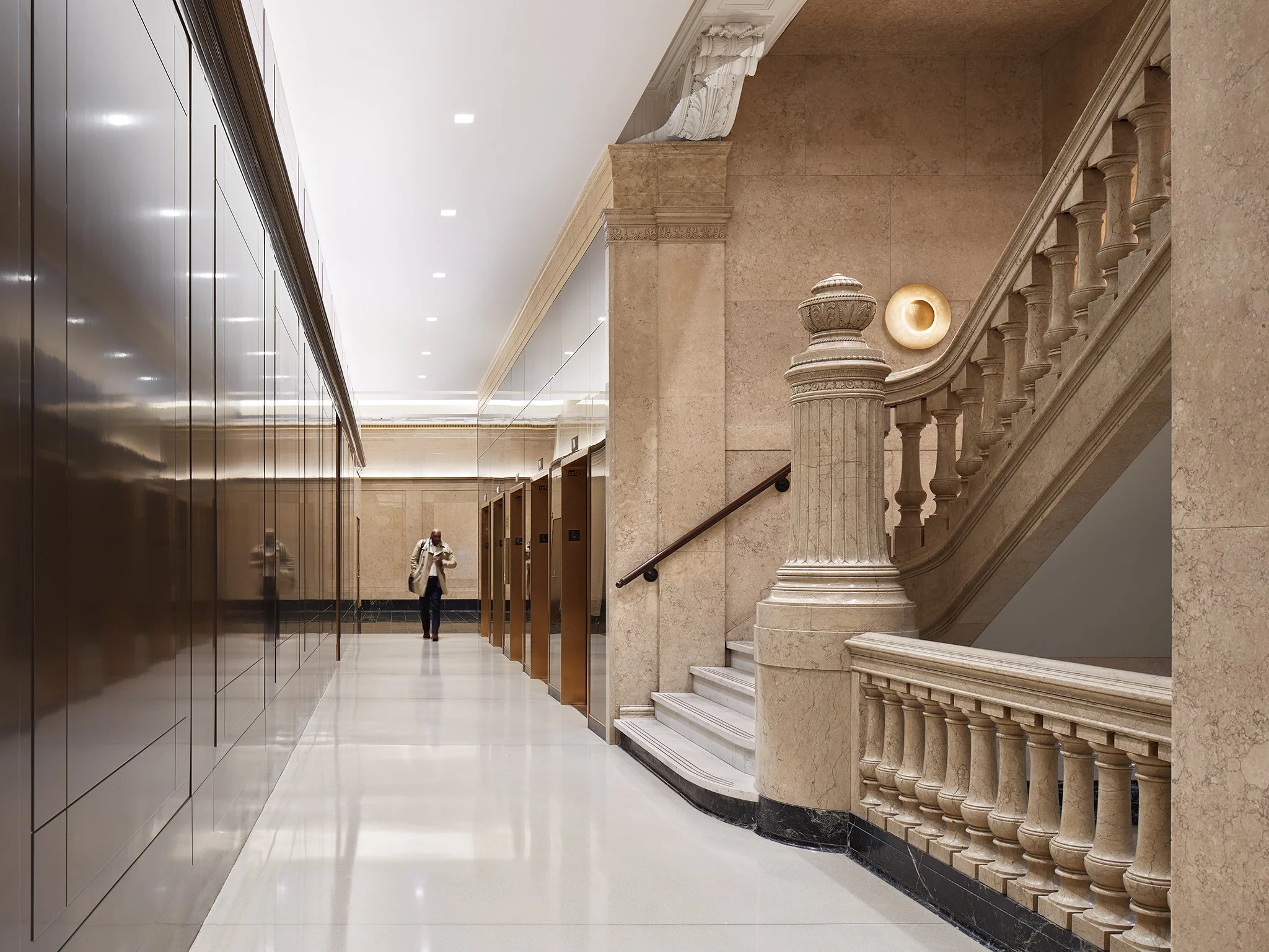
The lobby renovation set the foundation for the future building revitalization. By removing the accumulation of past alterations, restoring stone surfaces, and integrating lighting, wayfinding, and a new vestibule, the project reestablished a clear sense of arrival and identity at the street.
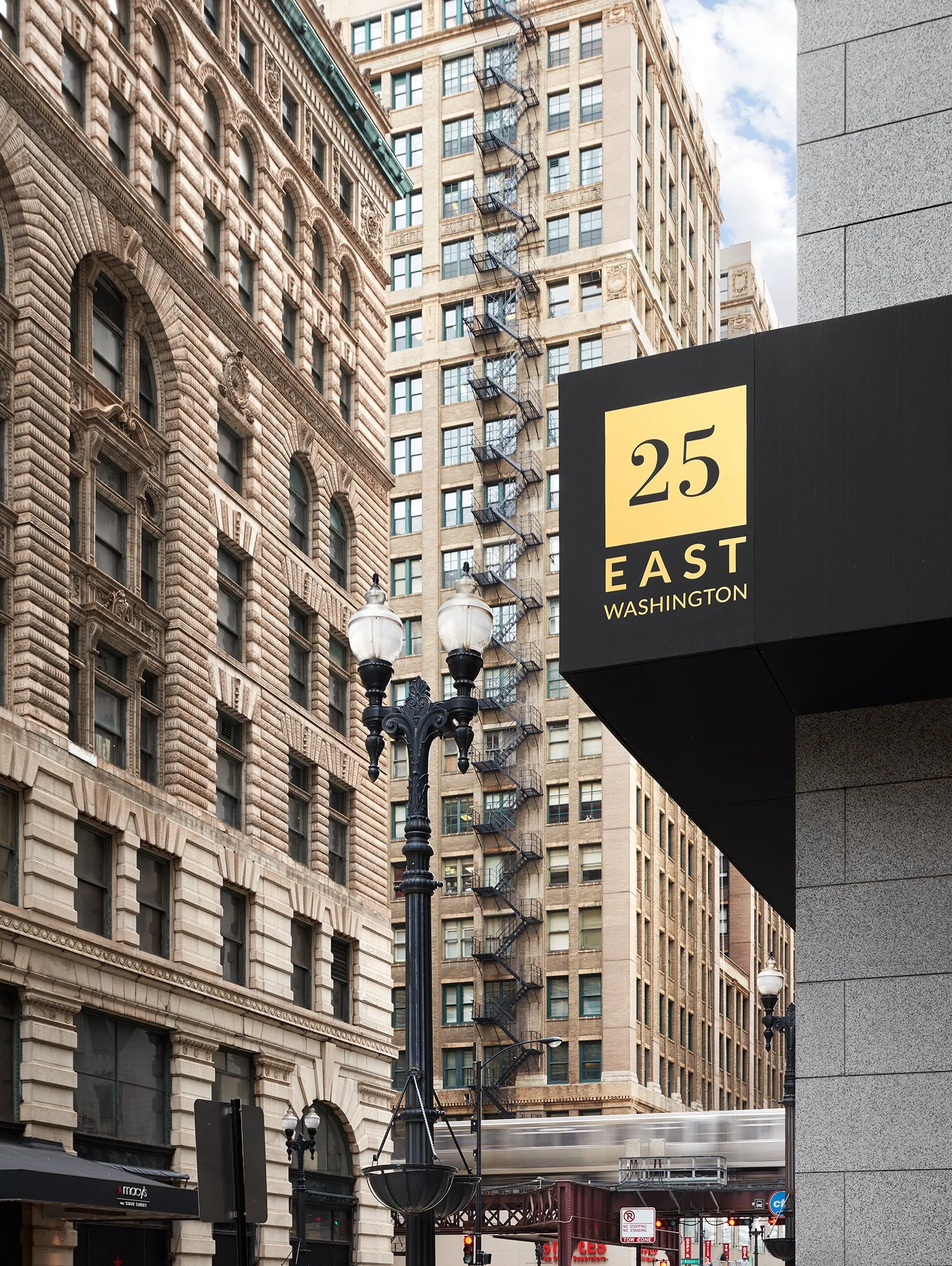
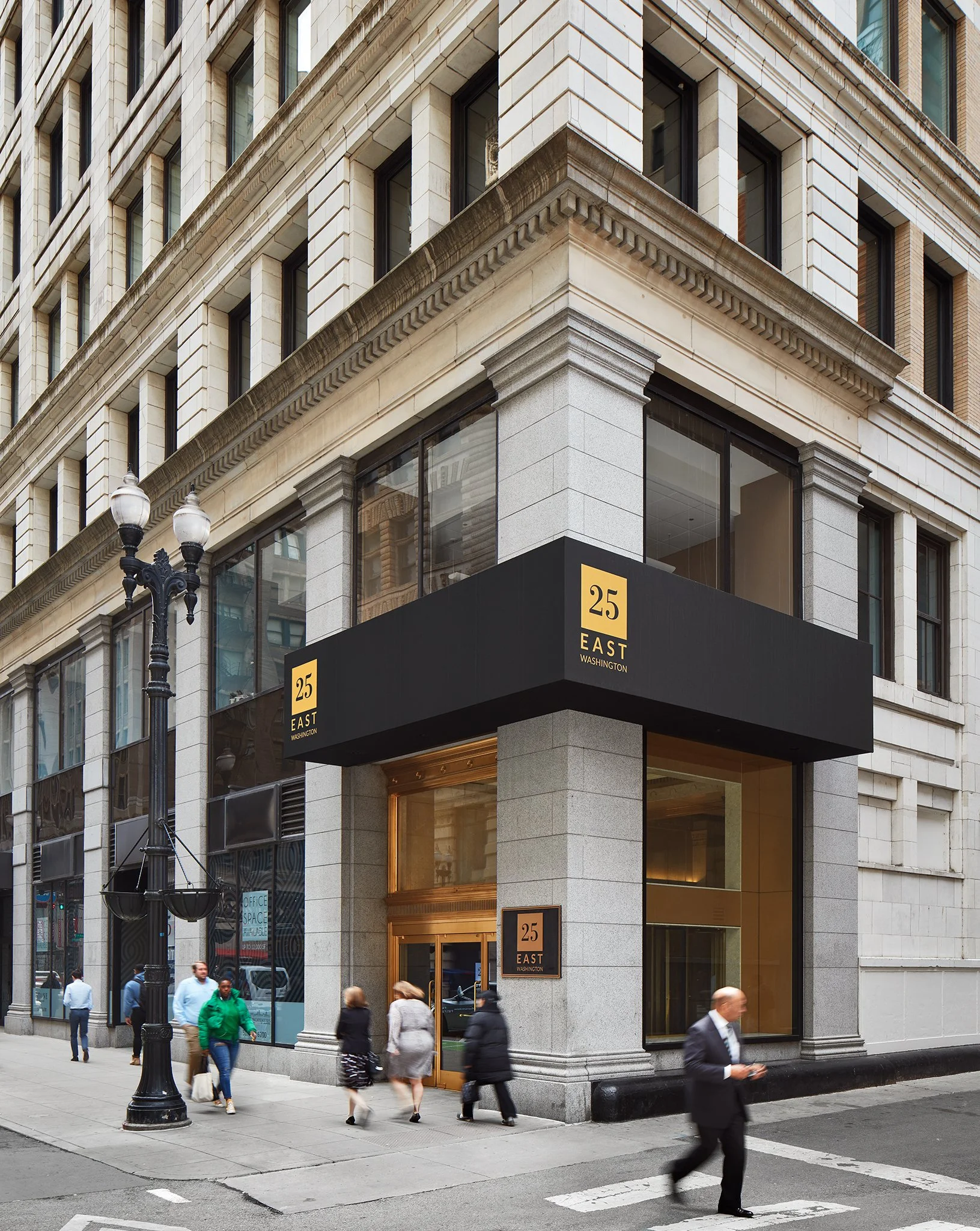
This renewed front door now anchors the building’s broader transformation. The removal of the former alley-facing condition and introduction of a transparent corner glass façade reestablish the building’s presence at the street, turning a once-secondary edge into an inviting point of entry and drawing daylight deeper into the lobby.
This architectural shift informs the material discipline, spatial approach, and level of craft carried forward into the amenity floor above and the SAIC spaces below. Across all phases, the work balances preservation and modernization, allowing the building to evolve while remaining unmistakably itself.
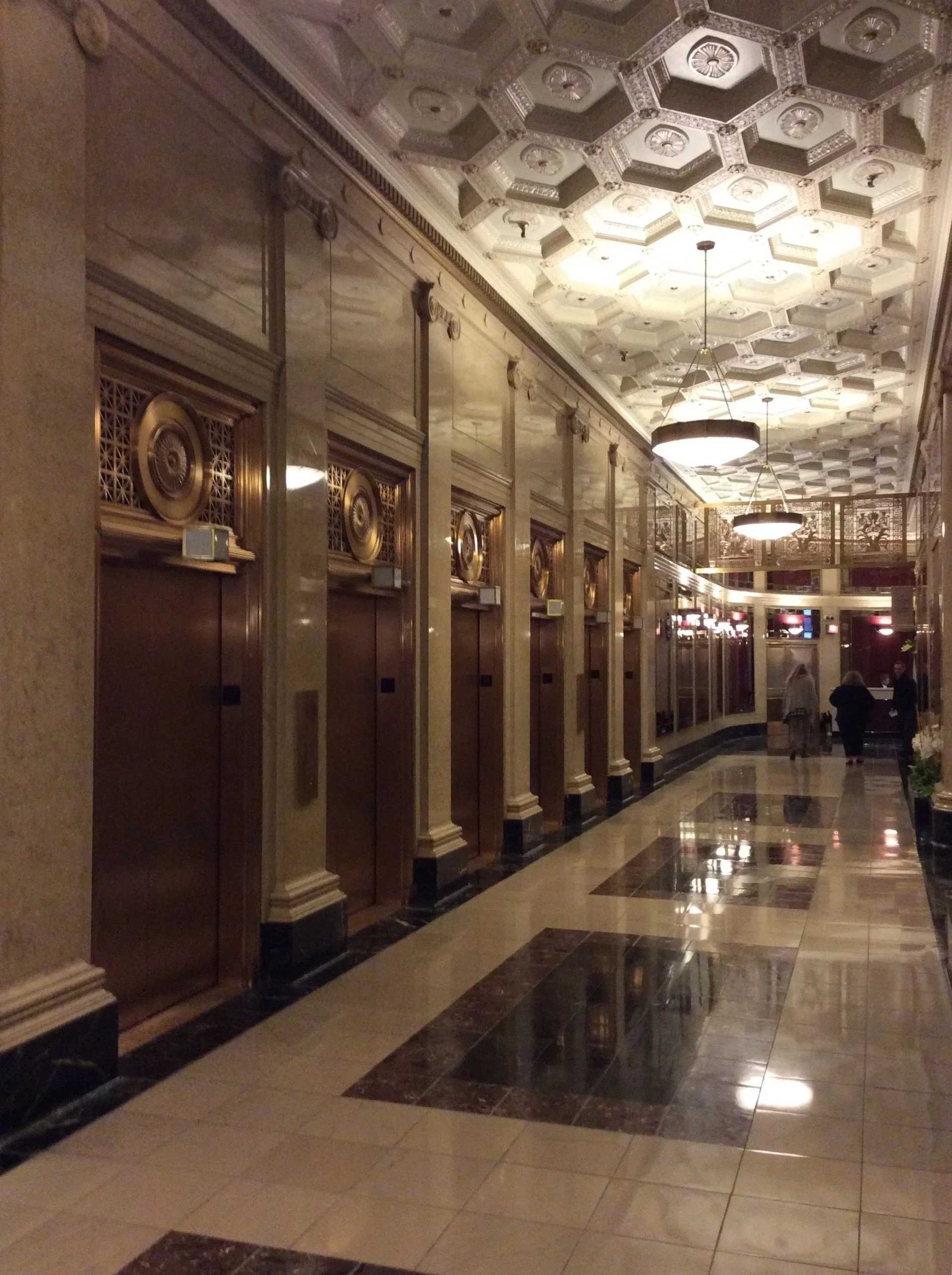
Before
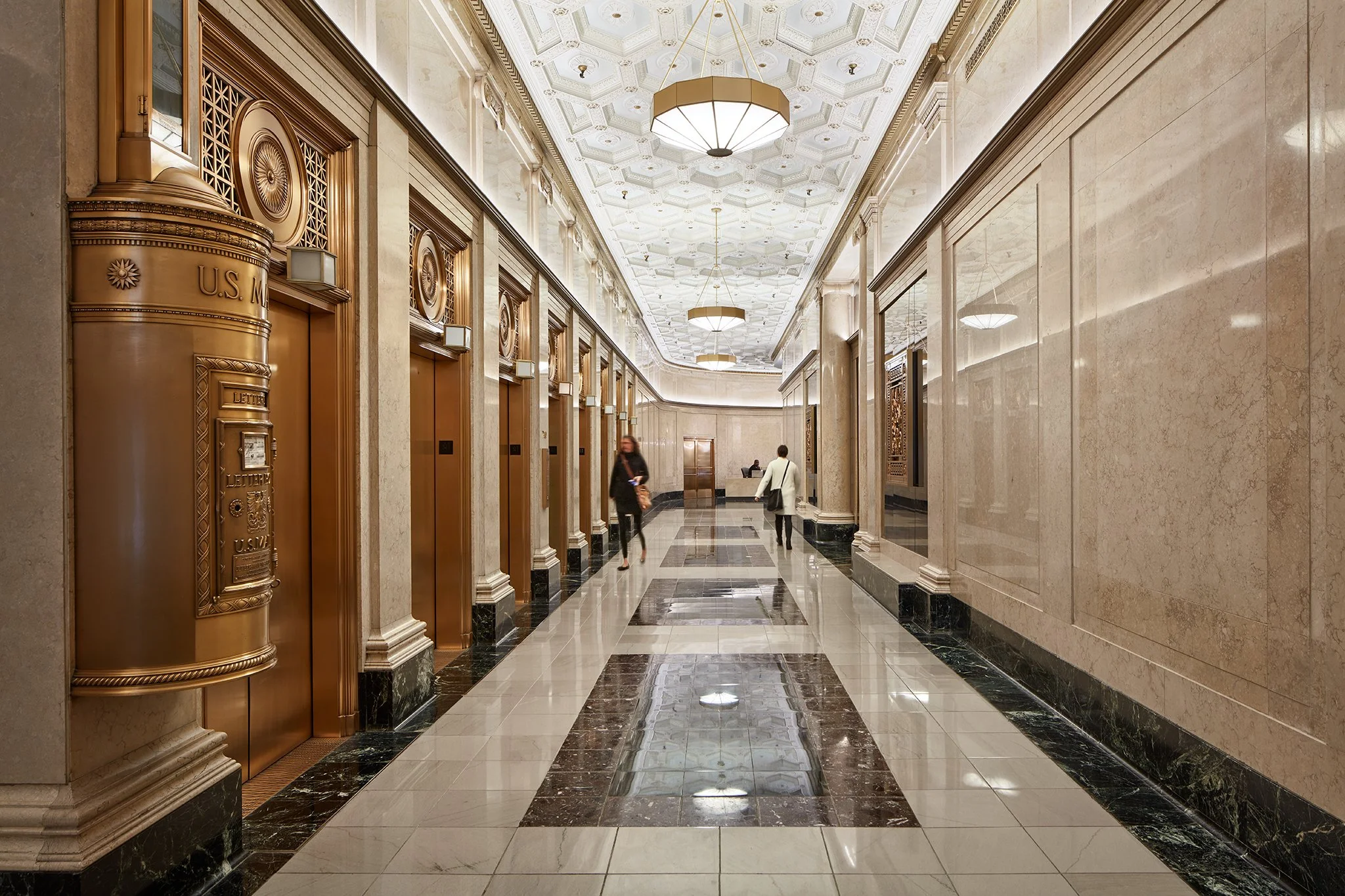
After
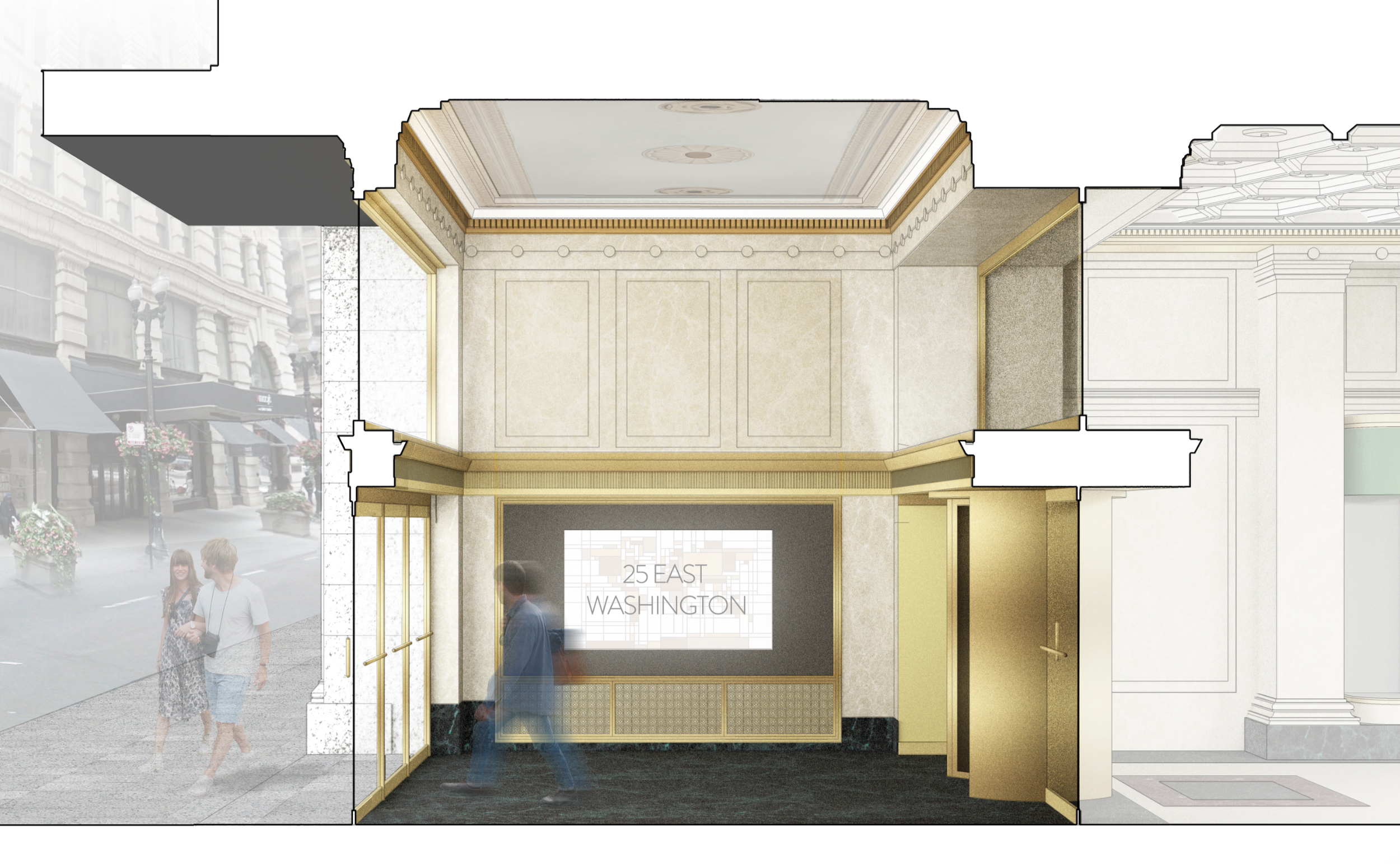
Proposed Vestibule
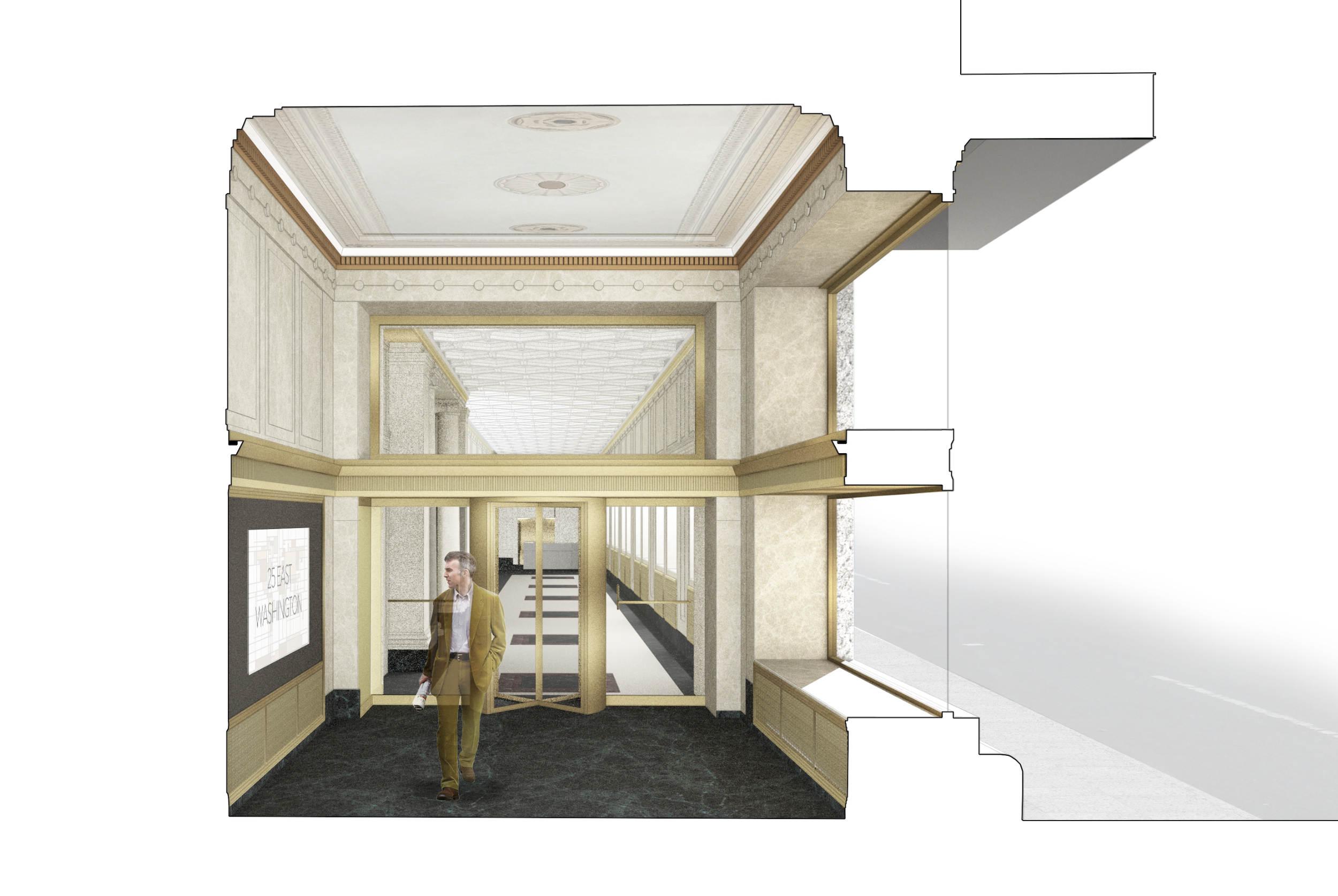
Proposed Vestibule
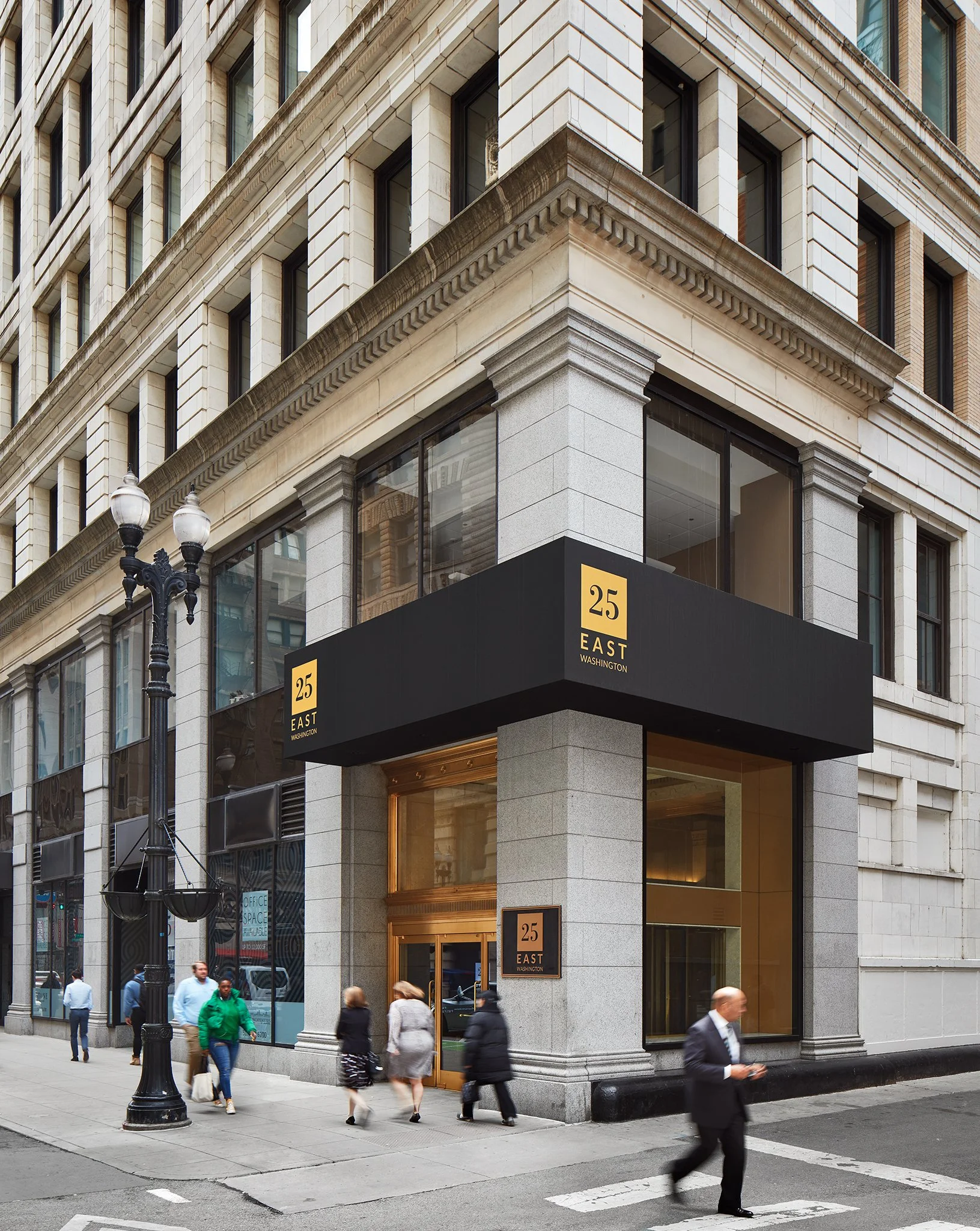
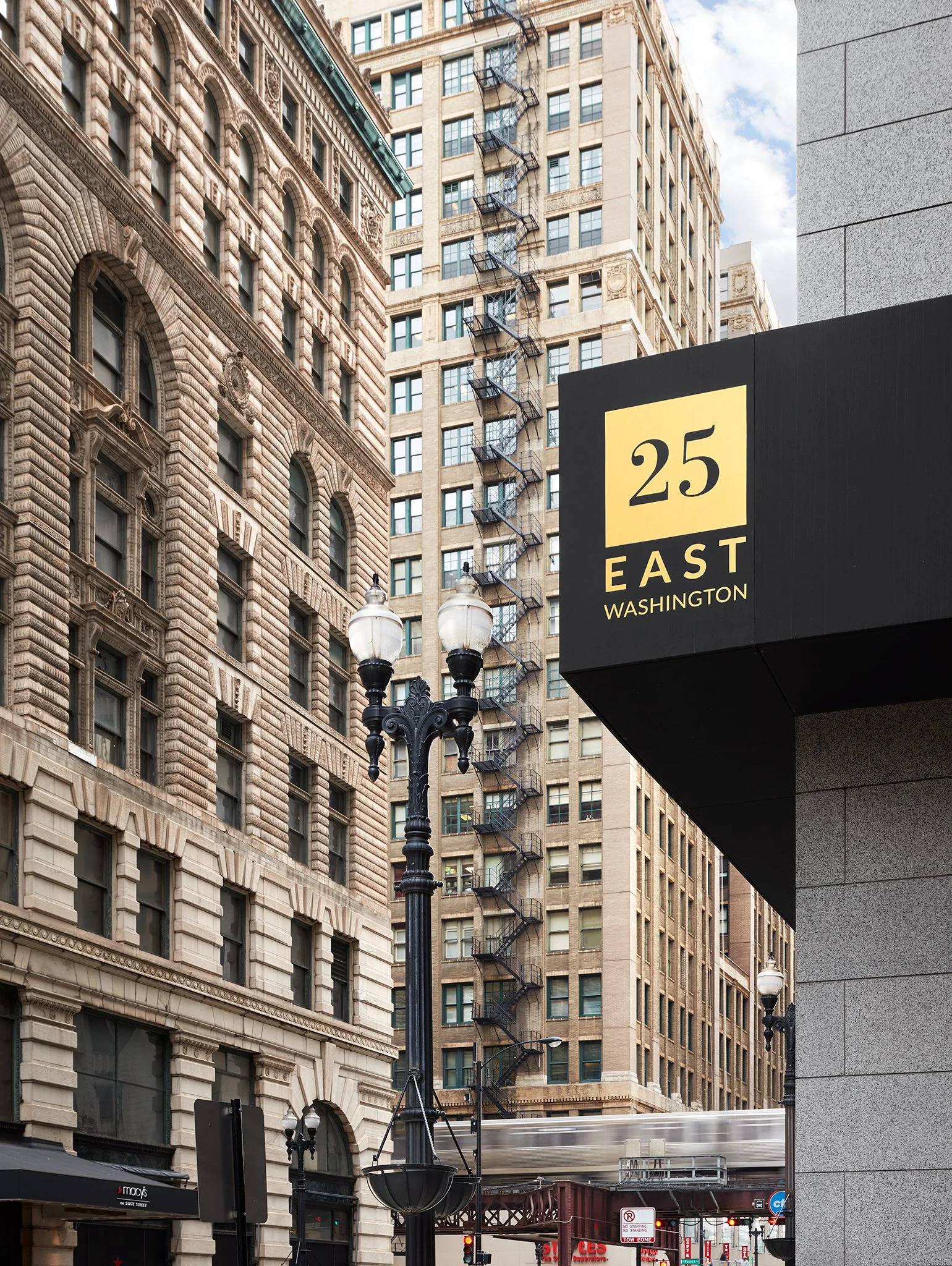
Renovated Entry & Street Presence
Making History Legible
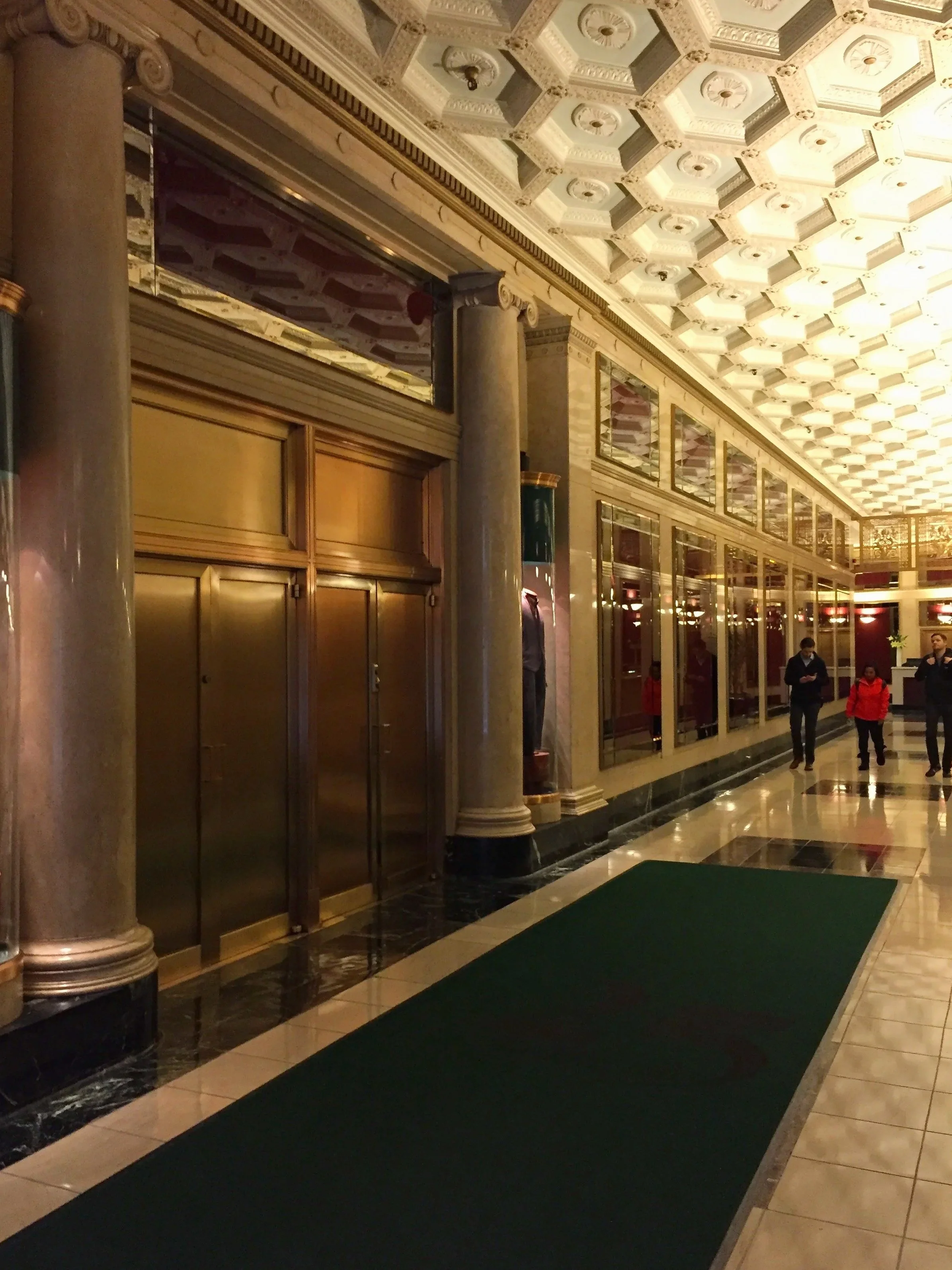
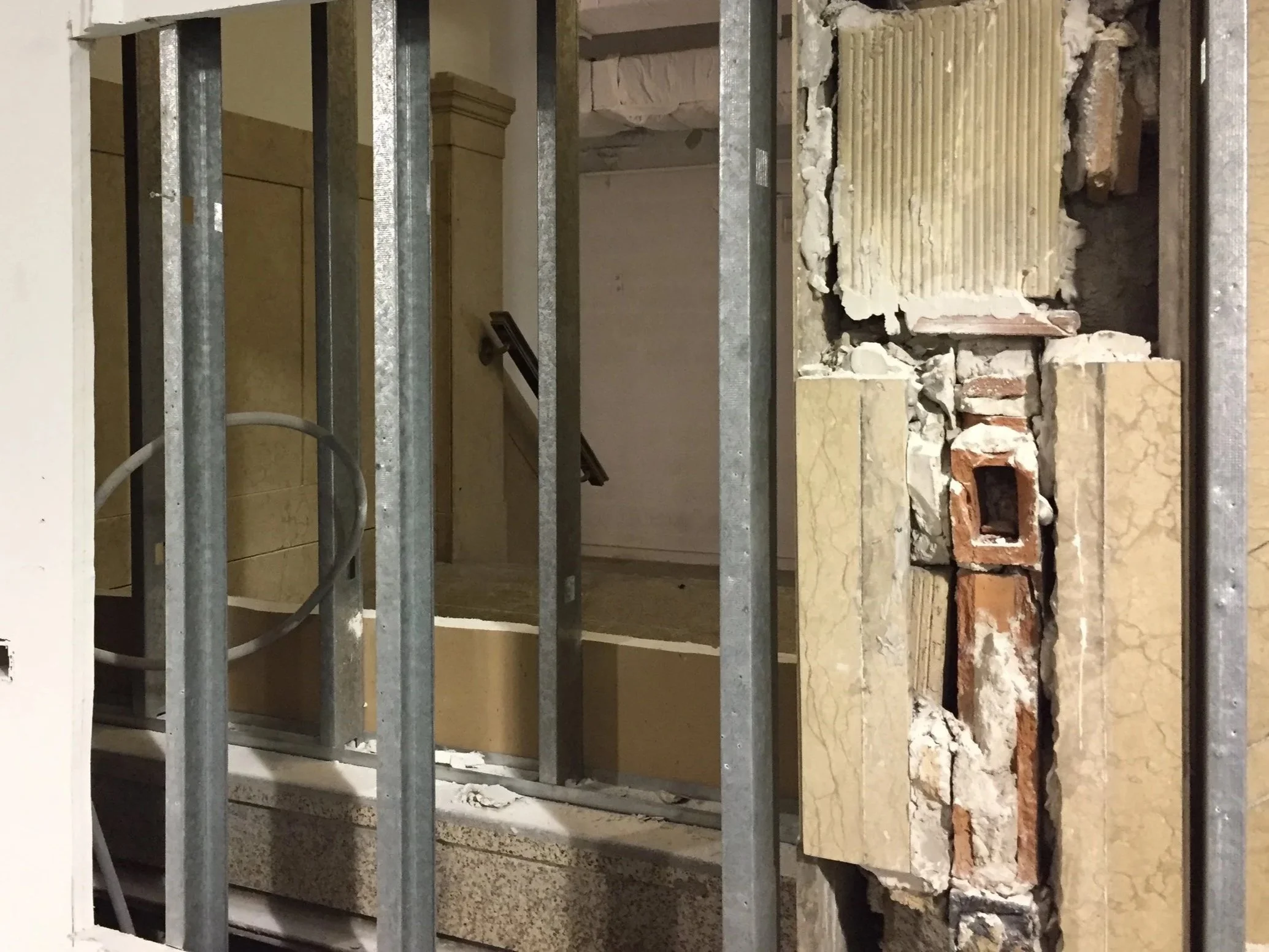
Early analysis focused on understanding the lobby’s original proportions, material hierarchy, and points of emphasis, as well as the cumulative impact of previous alterations. Rather than recreating history, the design worked to clarify it - removing visual noise, reinforcing primary architectural moves, and reestablishing a legible rhythm across walls, openings, and display zones. Material and lighting interventions were used strategically to guide movement, restore depth, and bring renewed clarity & vibrancy to the space.
Craft and Continuity
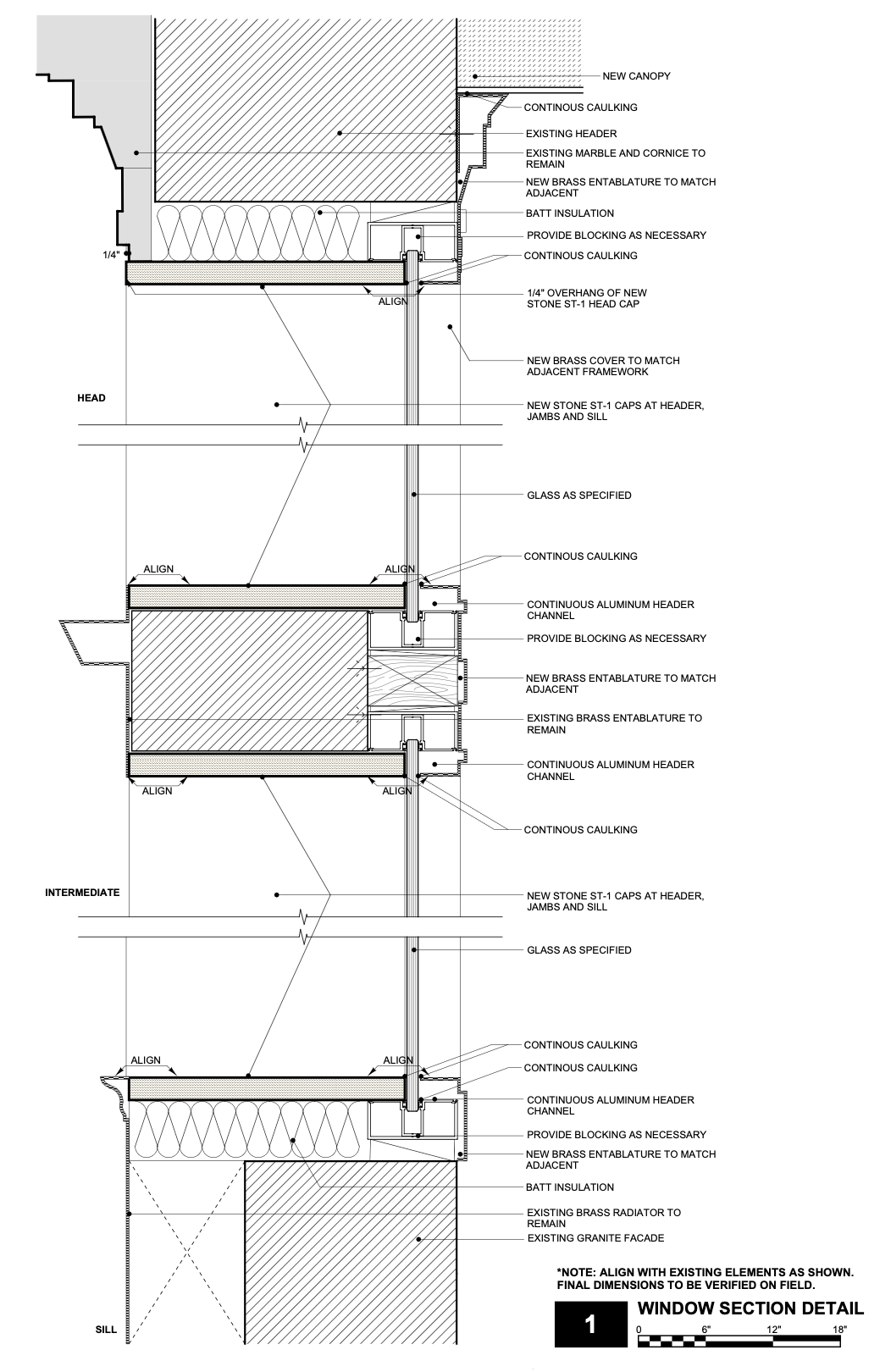
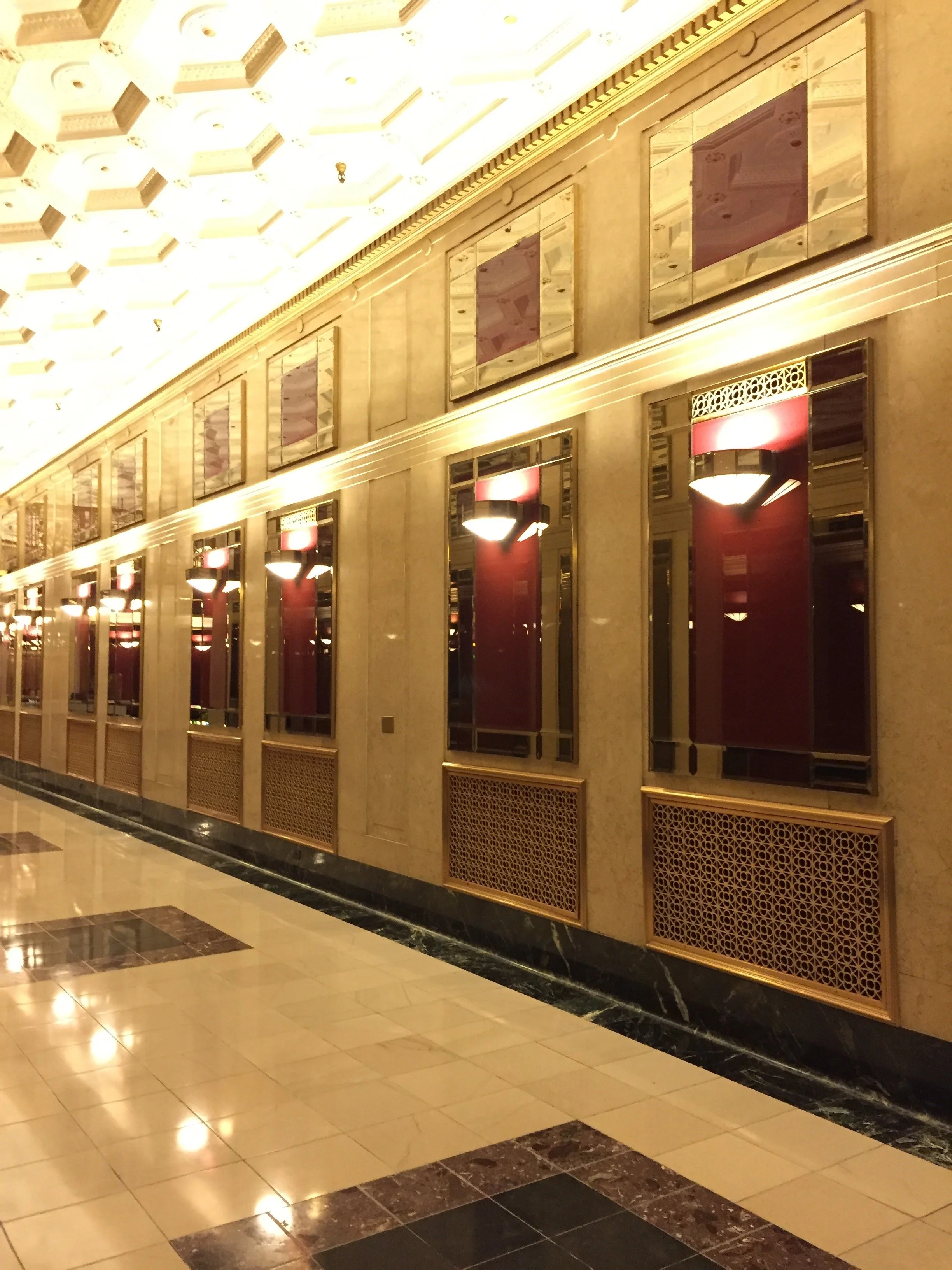
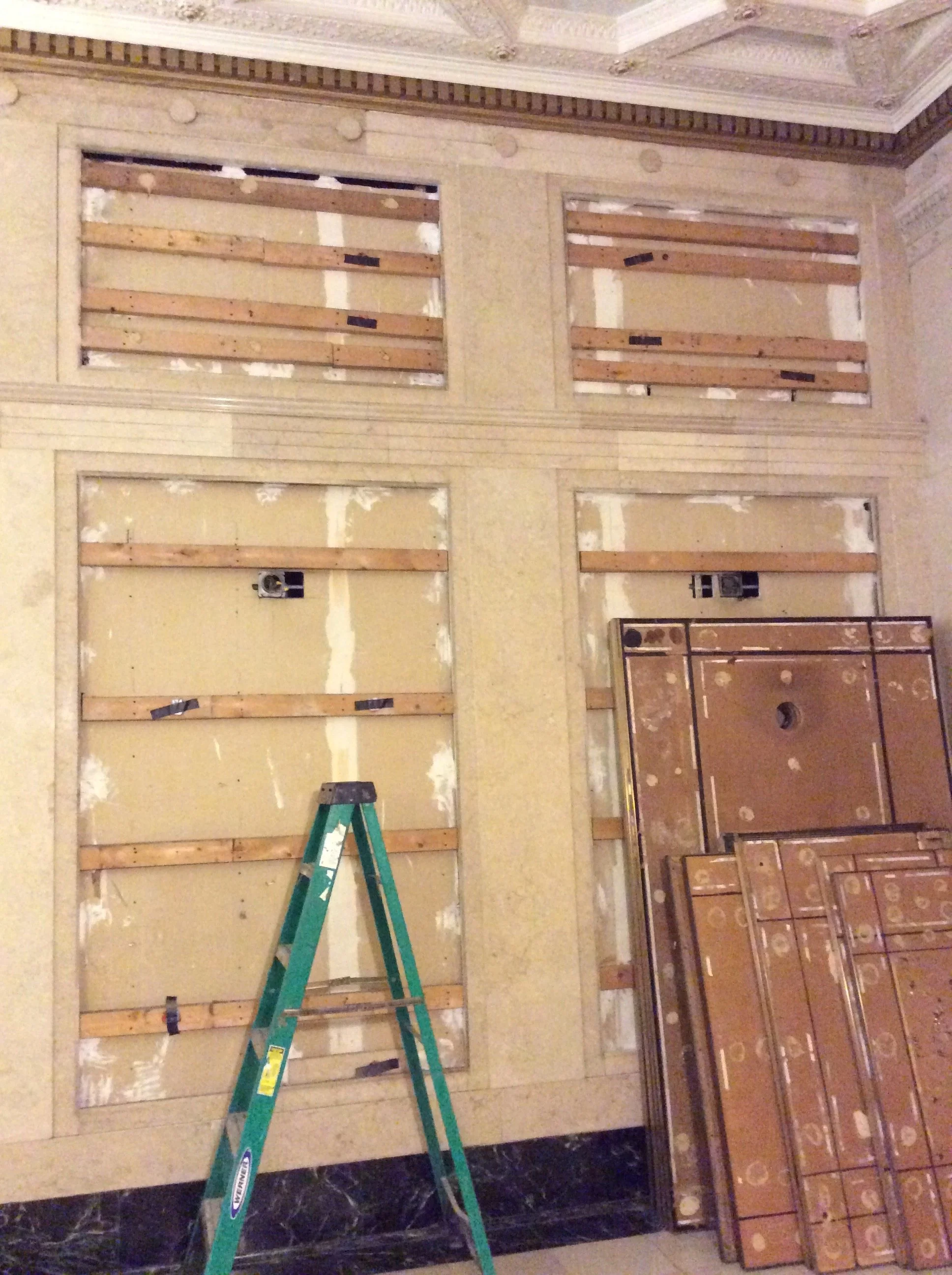
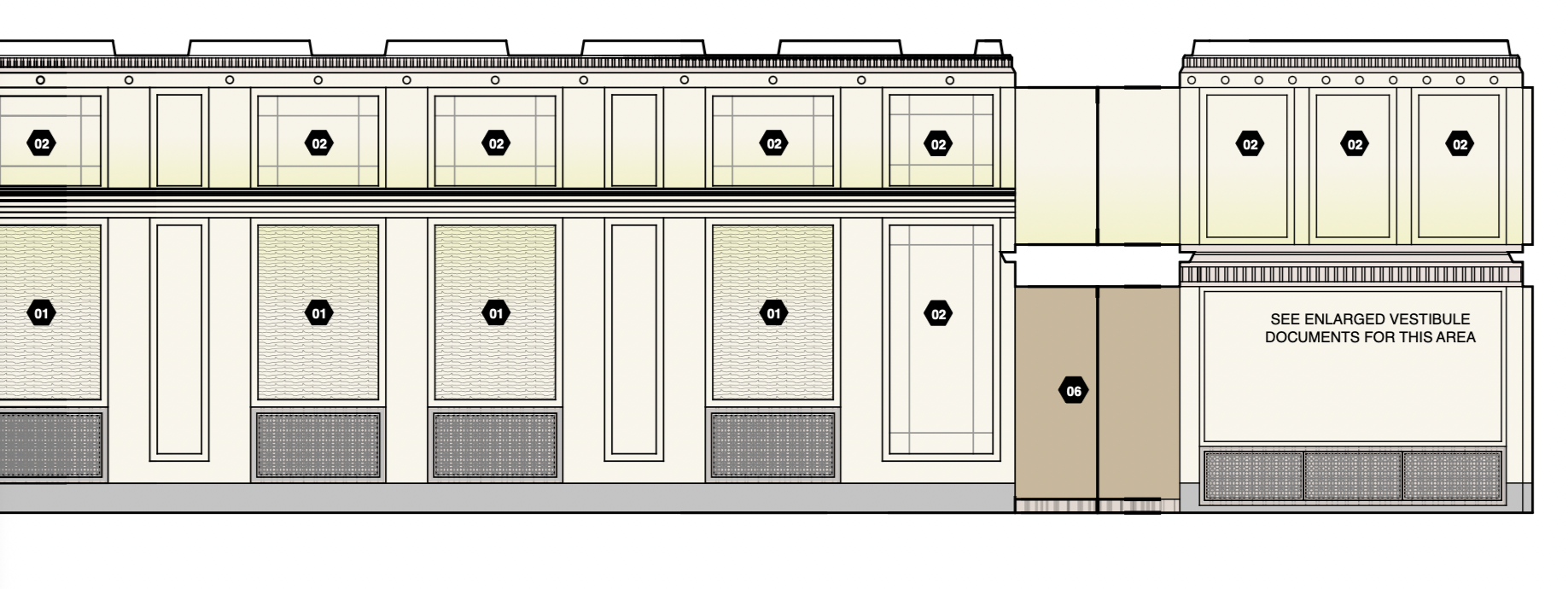
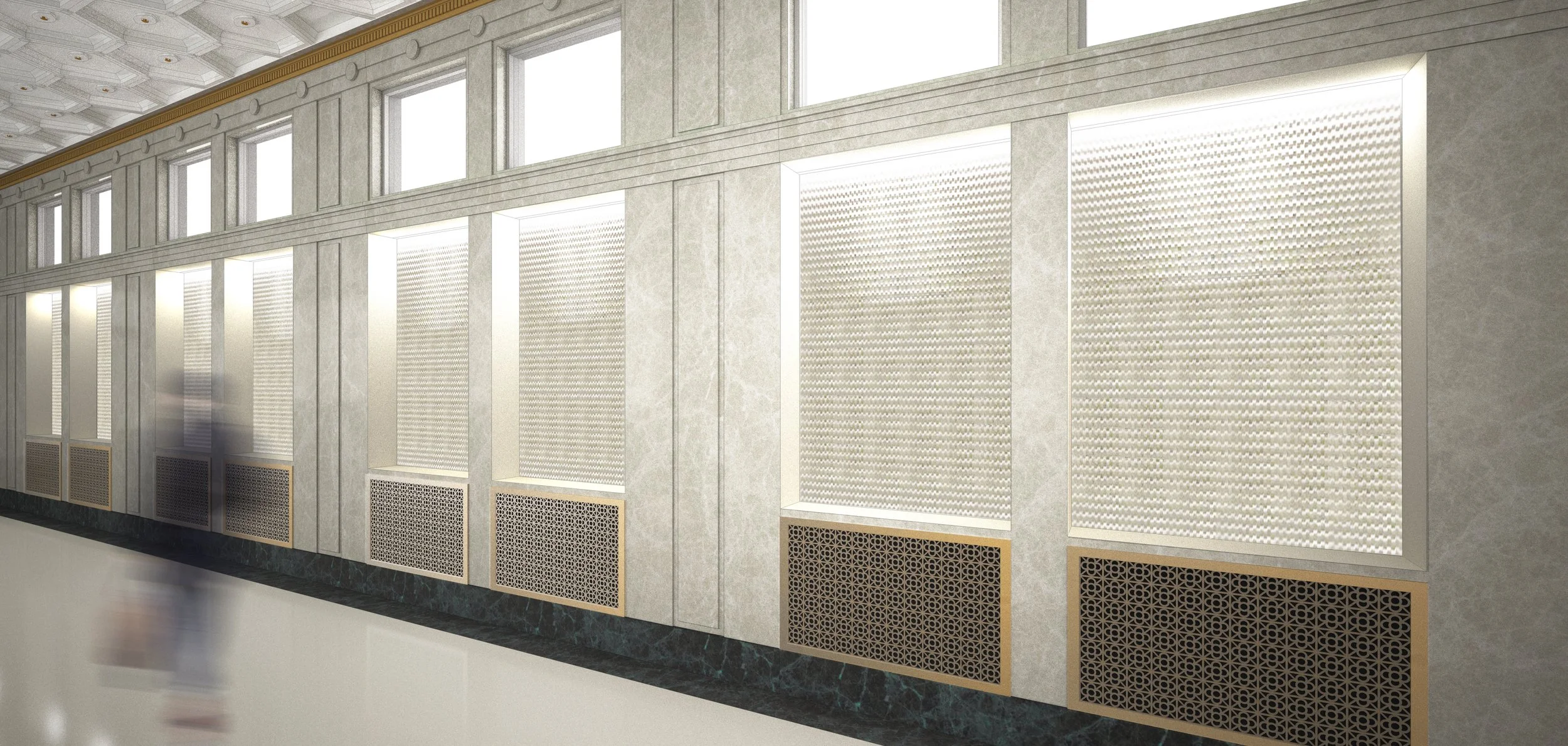
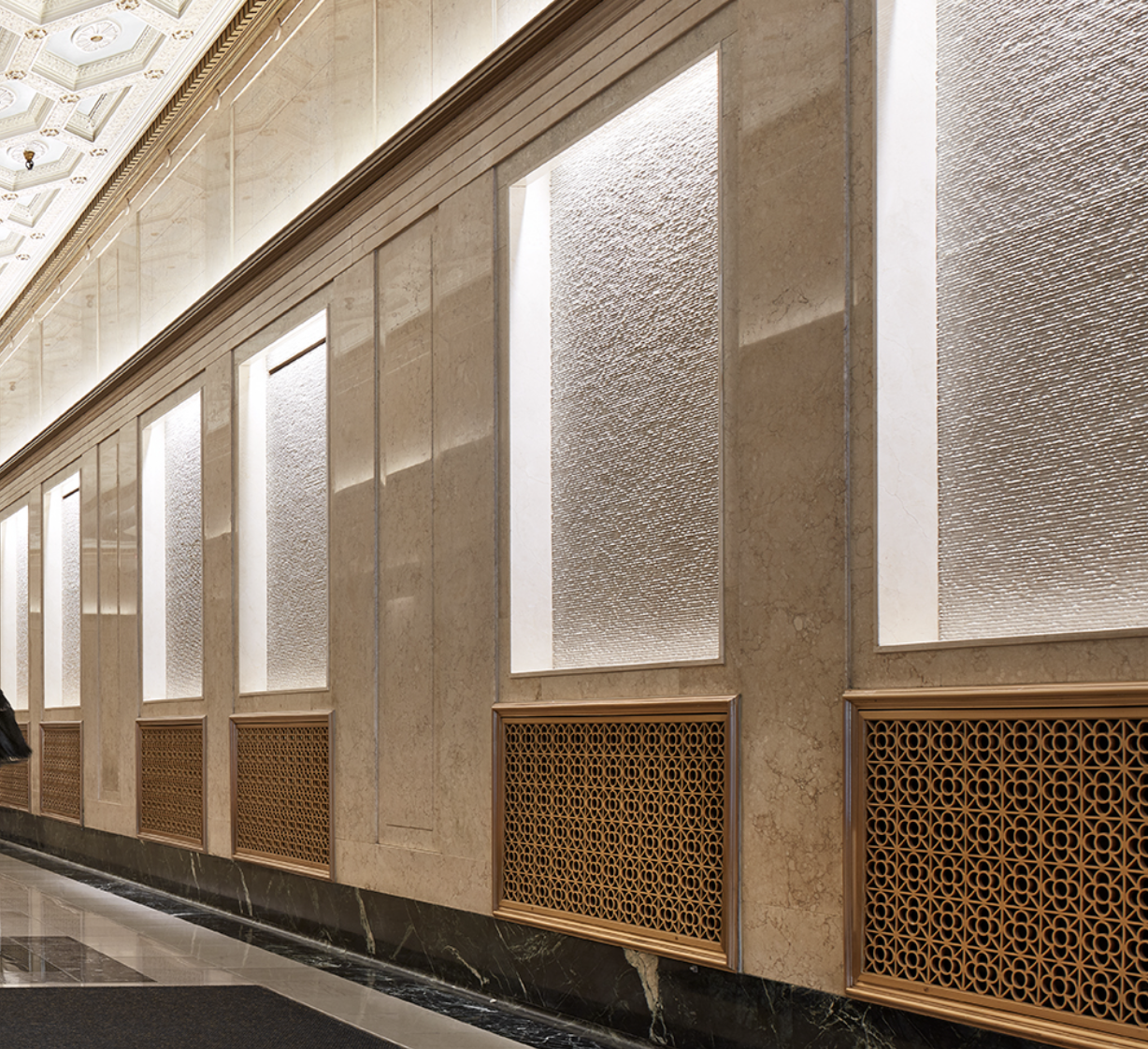
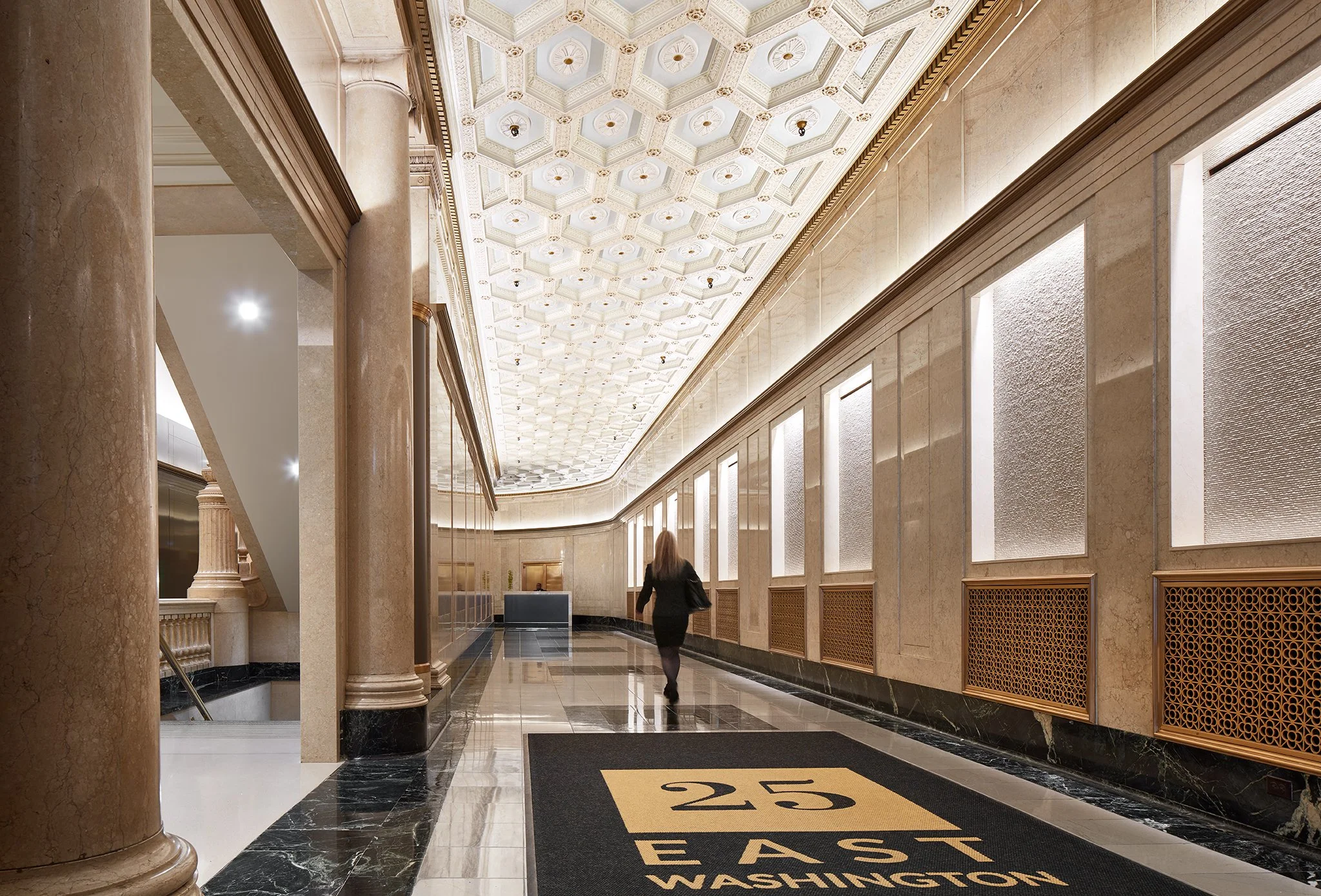
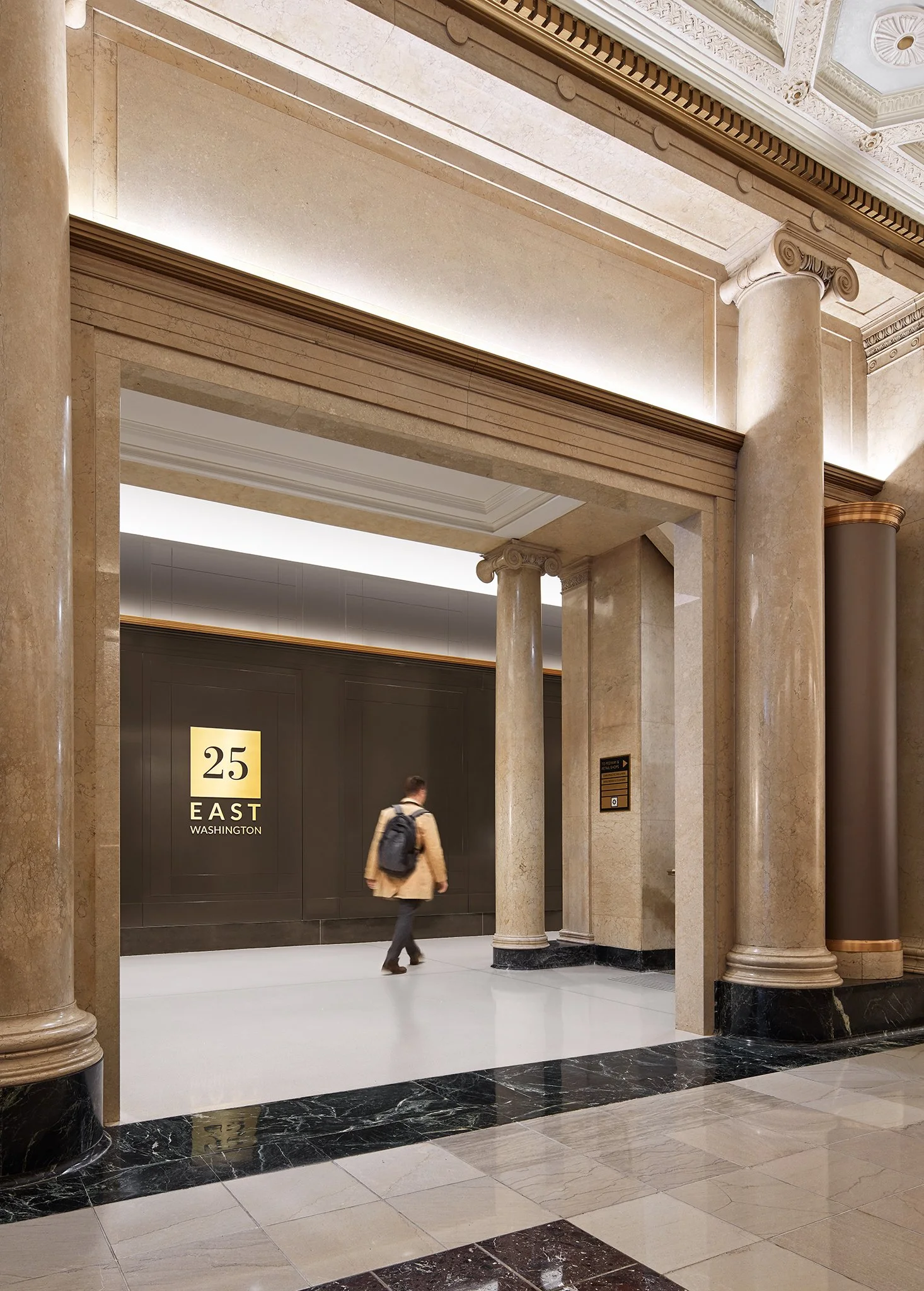
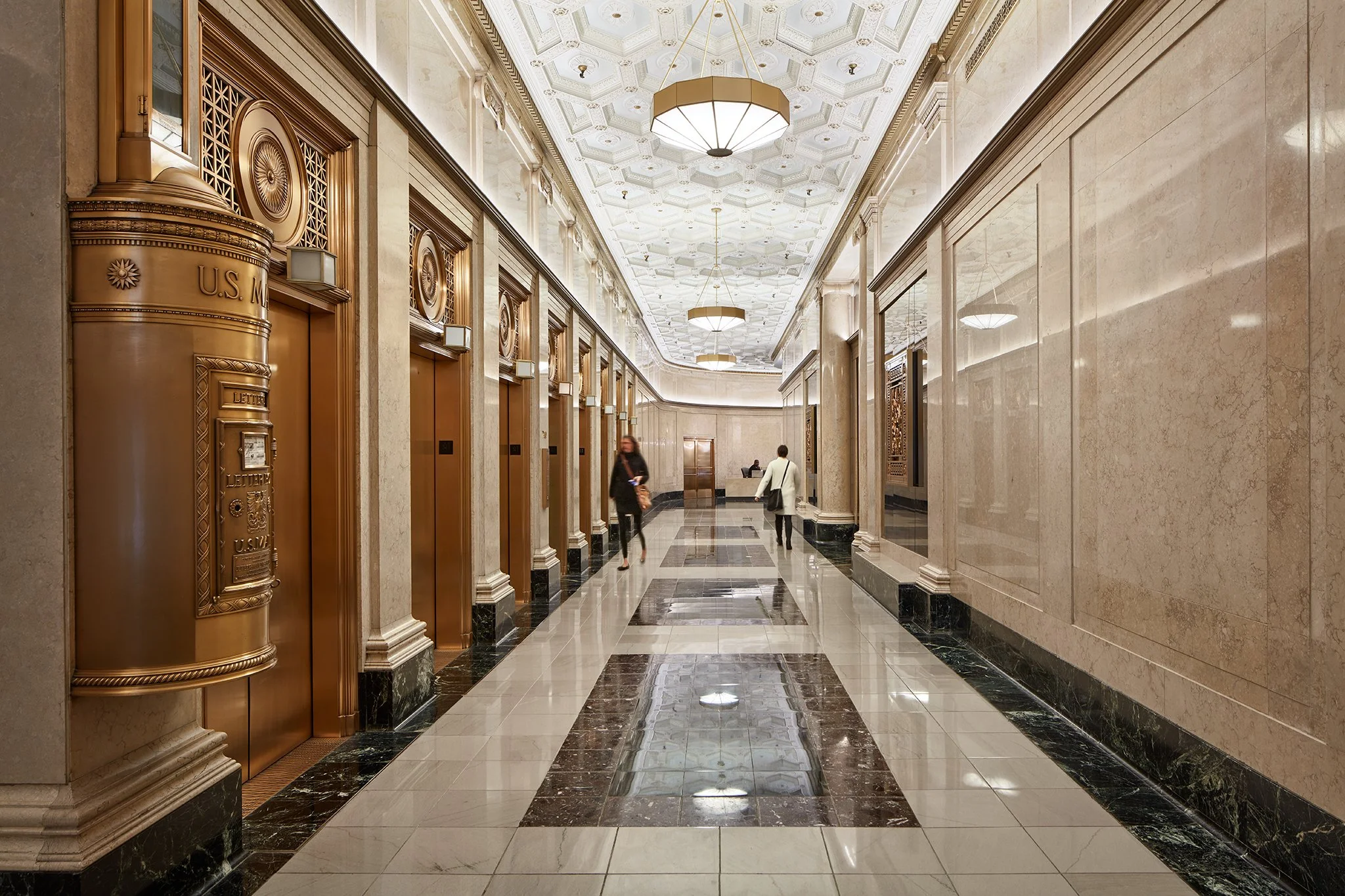
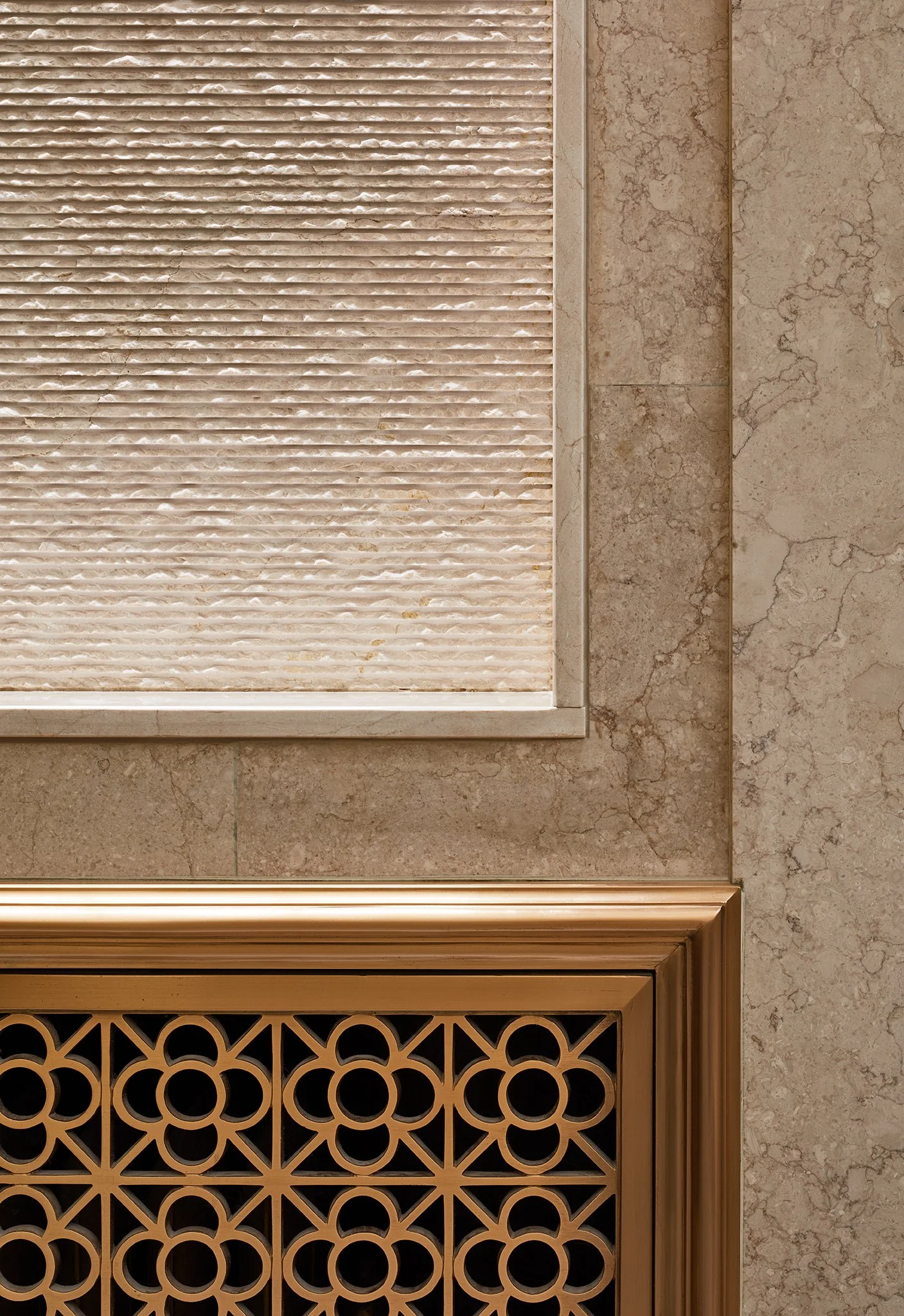
Textured stone & brass detailing form the foundation of the lobby’s renewal. Existing surfaces were carefully restored, and where infill was required, the original quarry in Italy was identified to source matching material. This allowed new stone to align seamlessly with the historic fabric, preserving color, grain, and scale while reinforcing a sense of continuity and permanence. Brass detailing and redefined niches complement the stonework, referencing the rhythm of the original retail vitrines with contemporary precision.
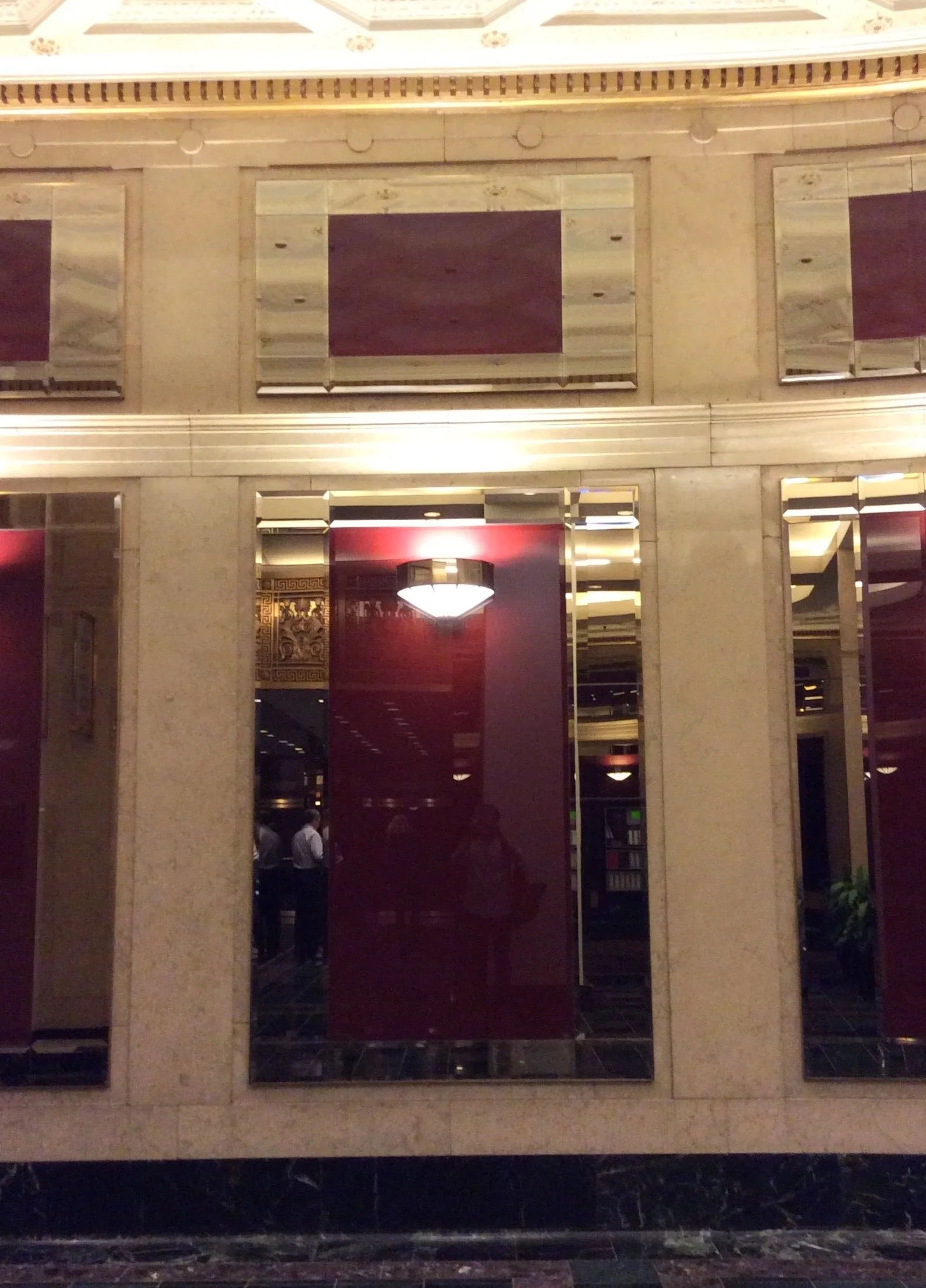
These material transitions are intentionally revealed and reinforced through integrated lighting, which brings depth and clarity to the architecture and allows the lobby to shift subtly throughout the day - setting the stage for a lighting strategy that is both restrained and expressive.
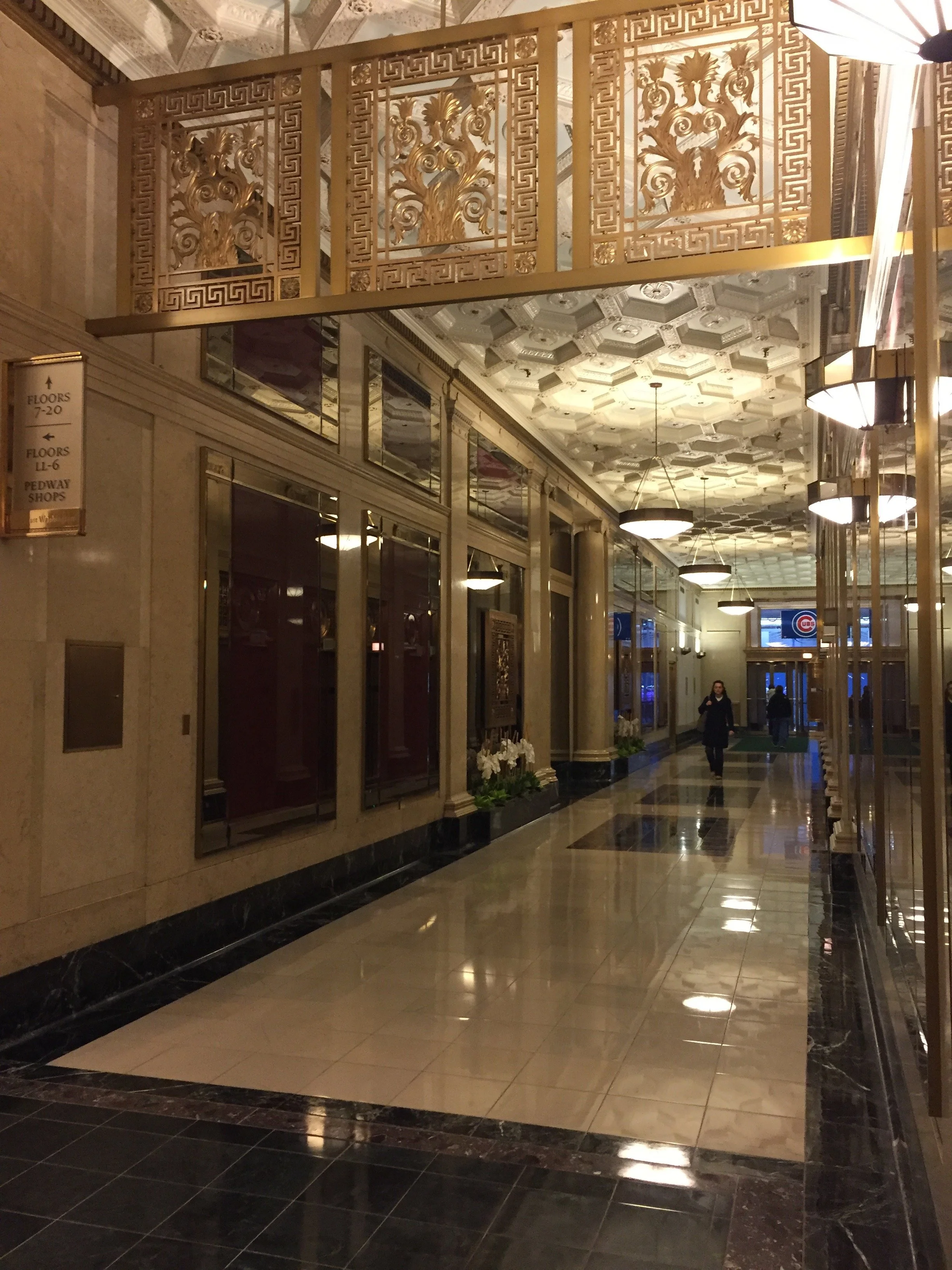
Lighting plays a central role in shaping the overall experience in the space. A new ornamental metal light rail traces the lobby’s primary axis, providing a continuous layer of ambient illumination while reinforcing the building’s historic rhythm and proportion. The light rail illuminates the coffered ceilings above, highlighting their depth and geometry while delivering soft, reflected light throughout the lobby.
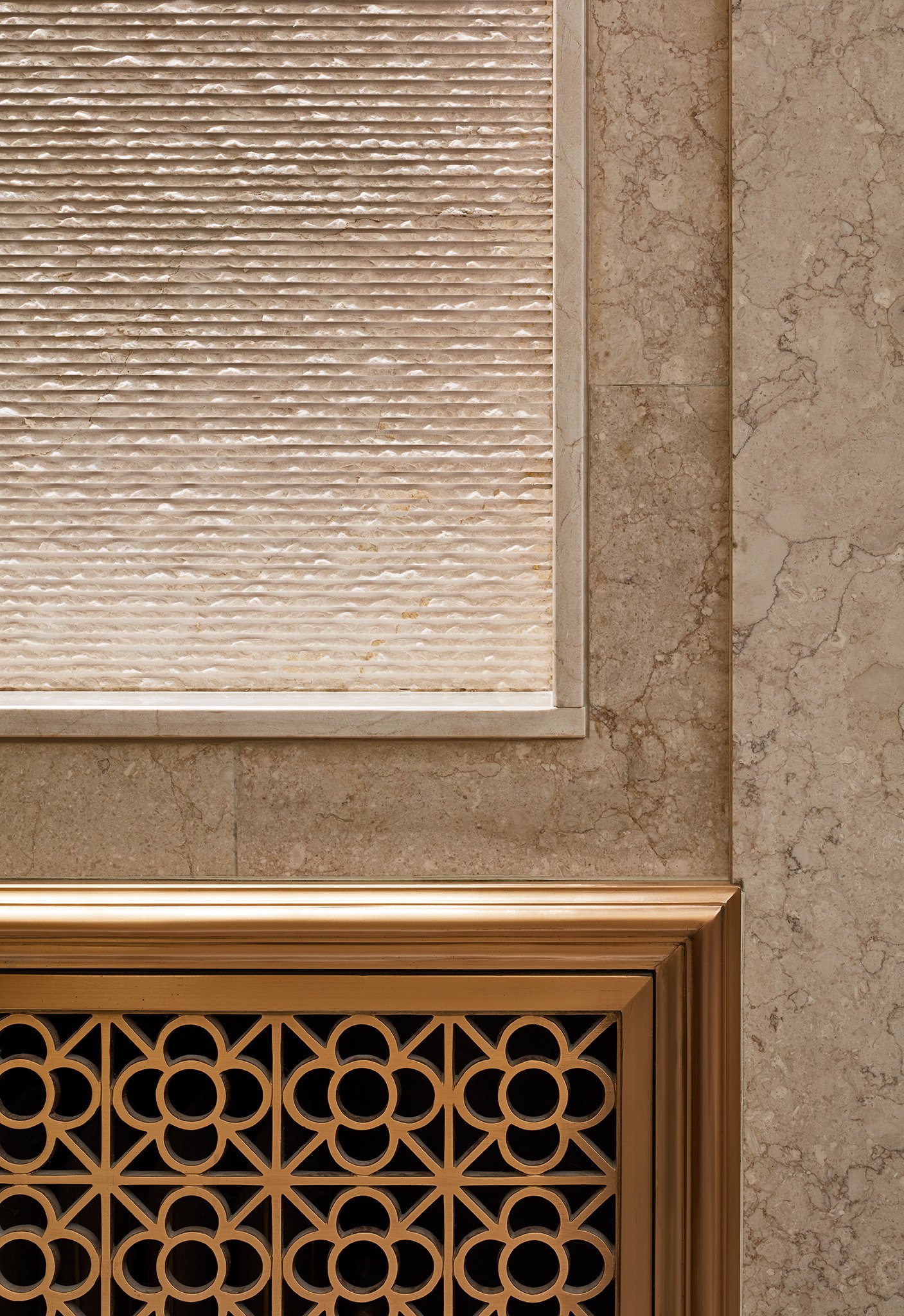
Together, material and light work in concert to allow the lobby to shift subtly throughout the day. The result is an atmosphere that feels composed and enduring - one that reveals texture, craft, and depth over time while maintaining a quiet sense of presence and continuity
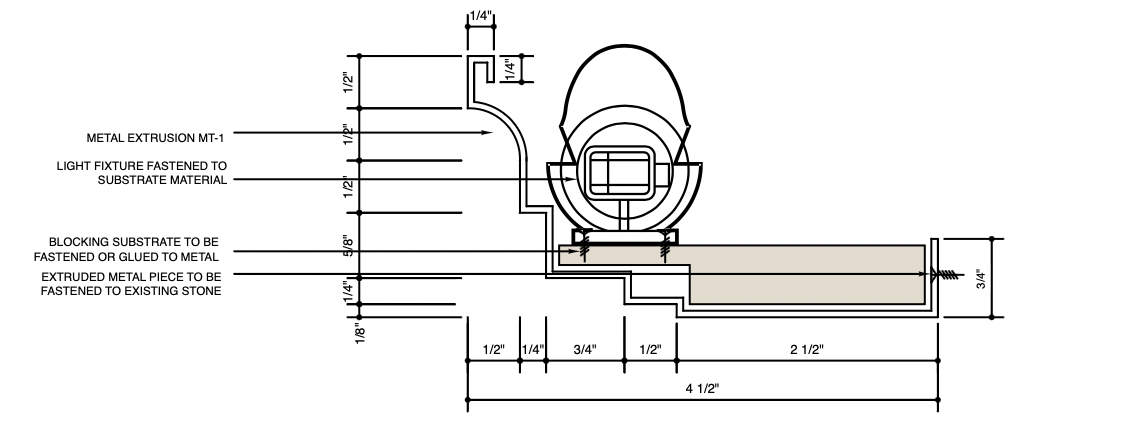
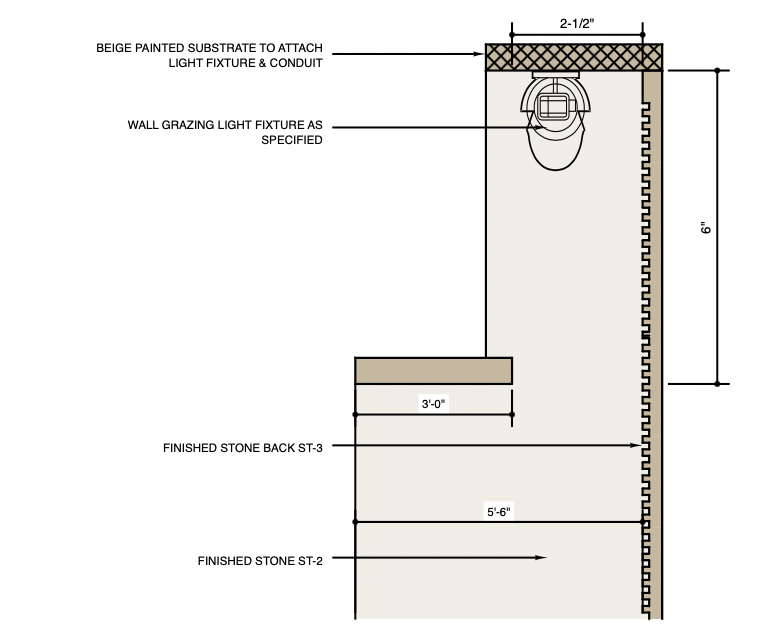
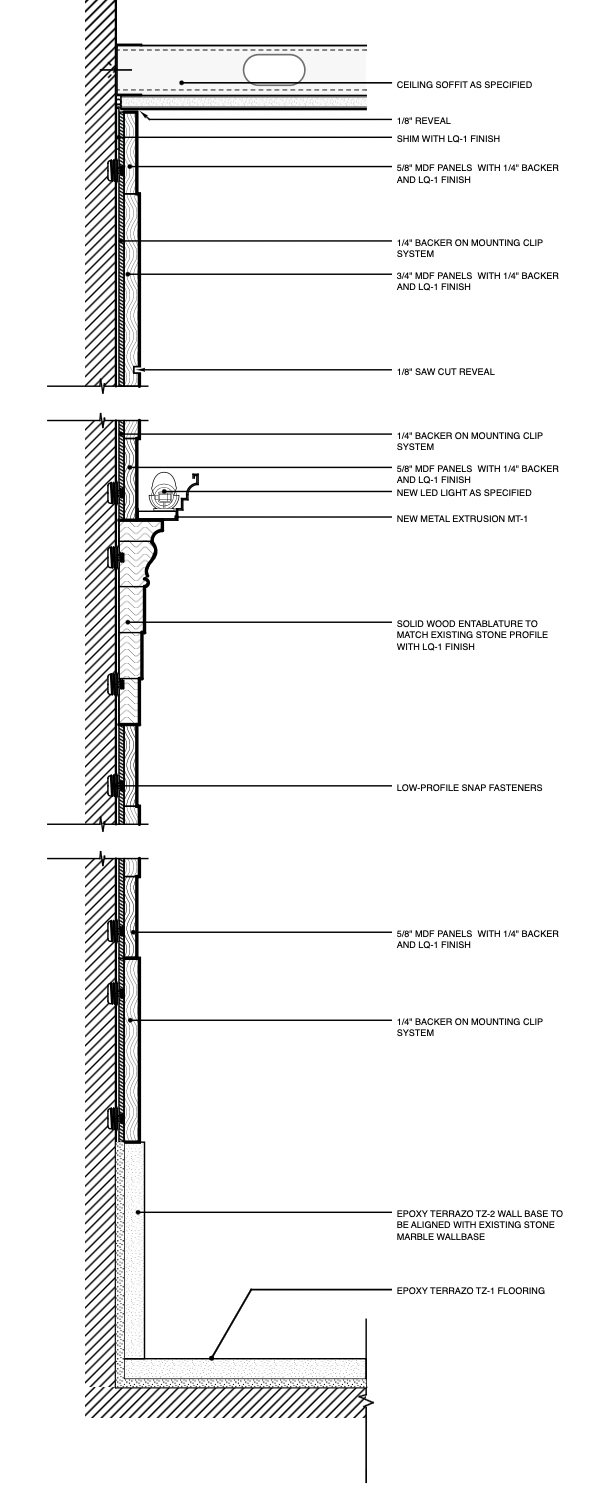
Integrated cove lighting within the niches adds warmth and texture, accentuating material transitions and architectural relief without drawing attention to the fixtures themselves. Linear air diffusers are subtly integrated within these same elements, allowing lighting and mechanical systems to work together discreetly to support comfort and performance.
Existing Conditions
Conceptual Intervention
Renovated Solution
Restraint in Intervention
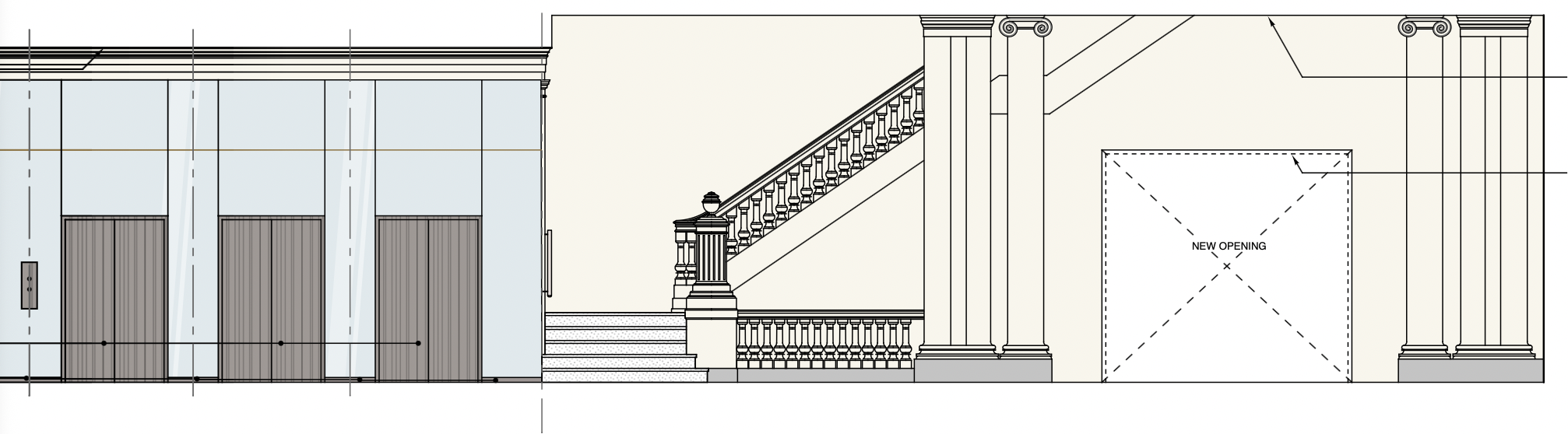
New insertions are intentionally restrained, allowing the historic qualities of the building to remain legible and dominant. Contemporary requirements for branding, wayfinding, and display are introduced with care, scaled and detailed to feel integral rather than applied, and always secondary to the building’s original architectural order.
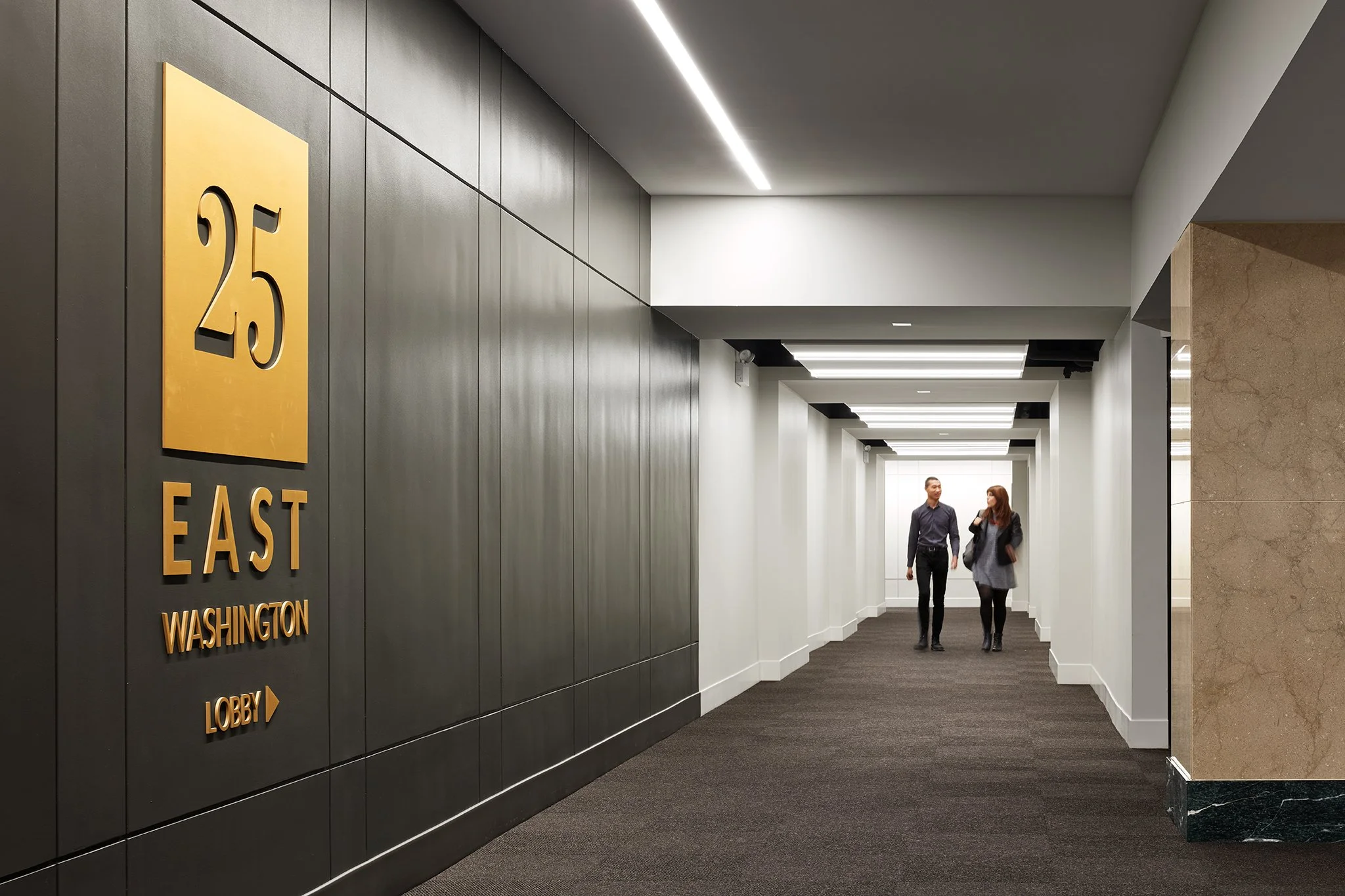
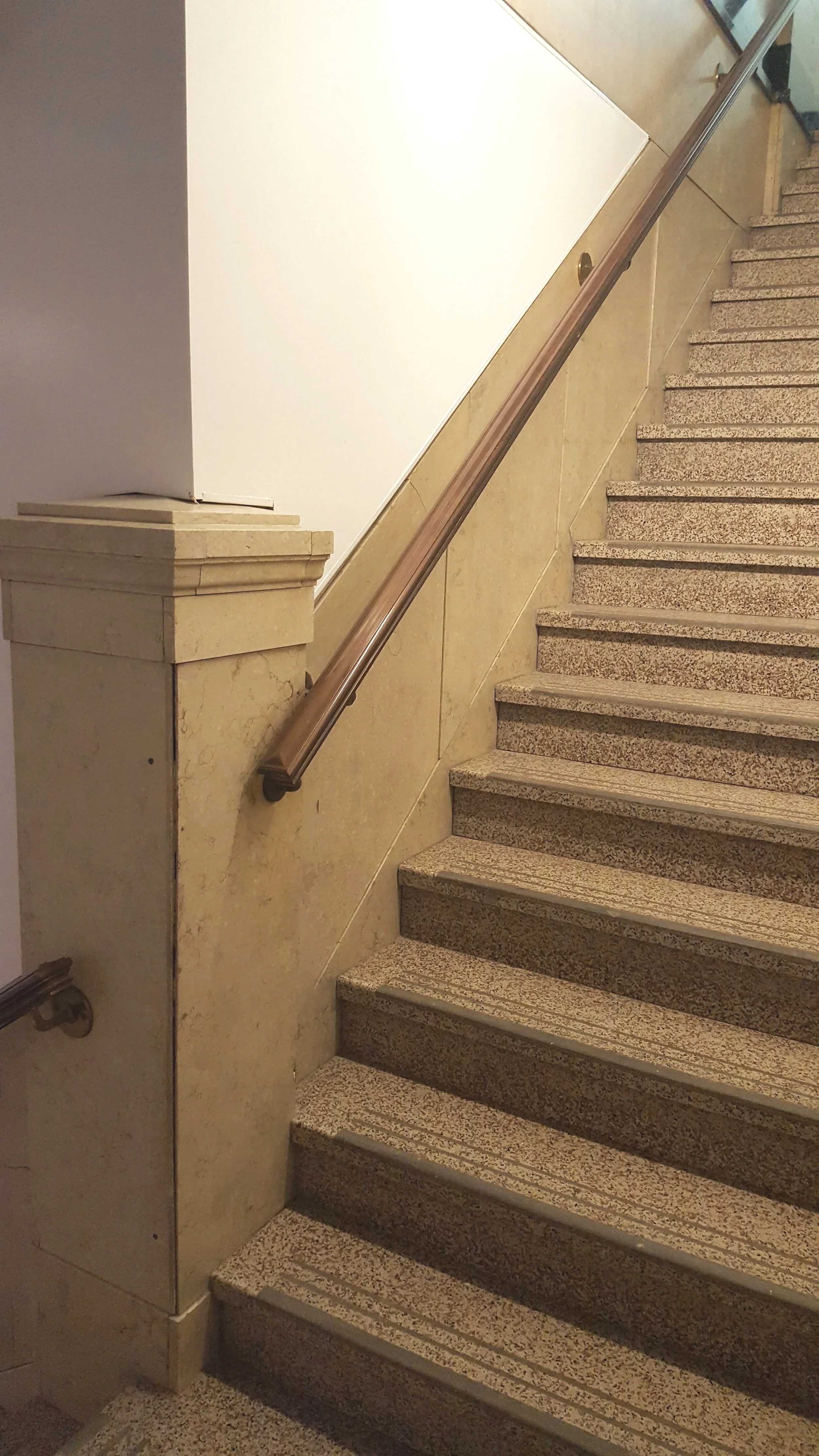
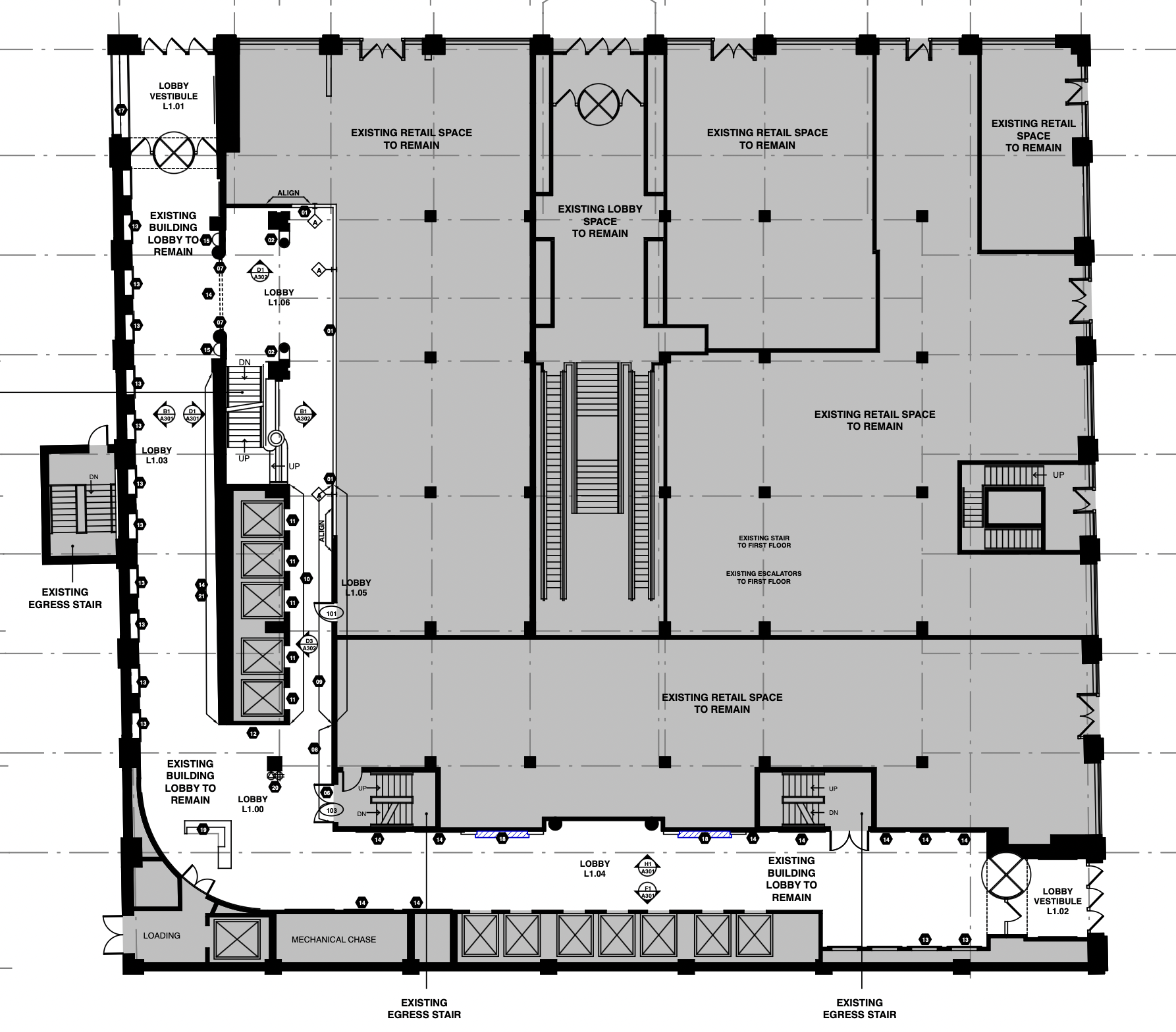
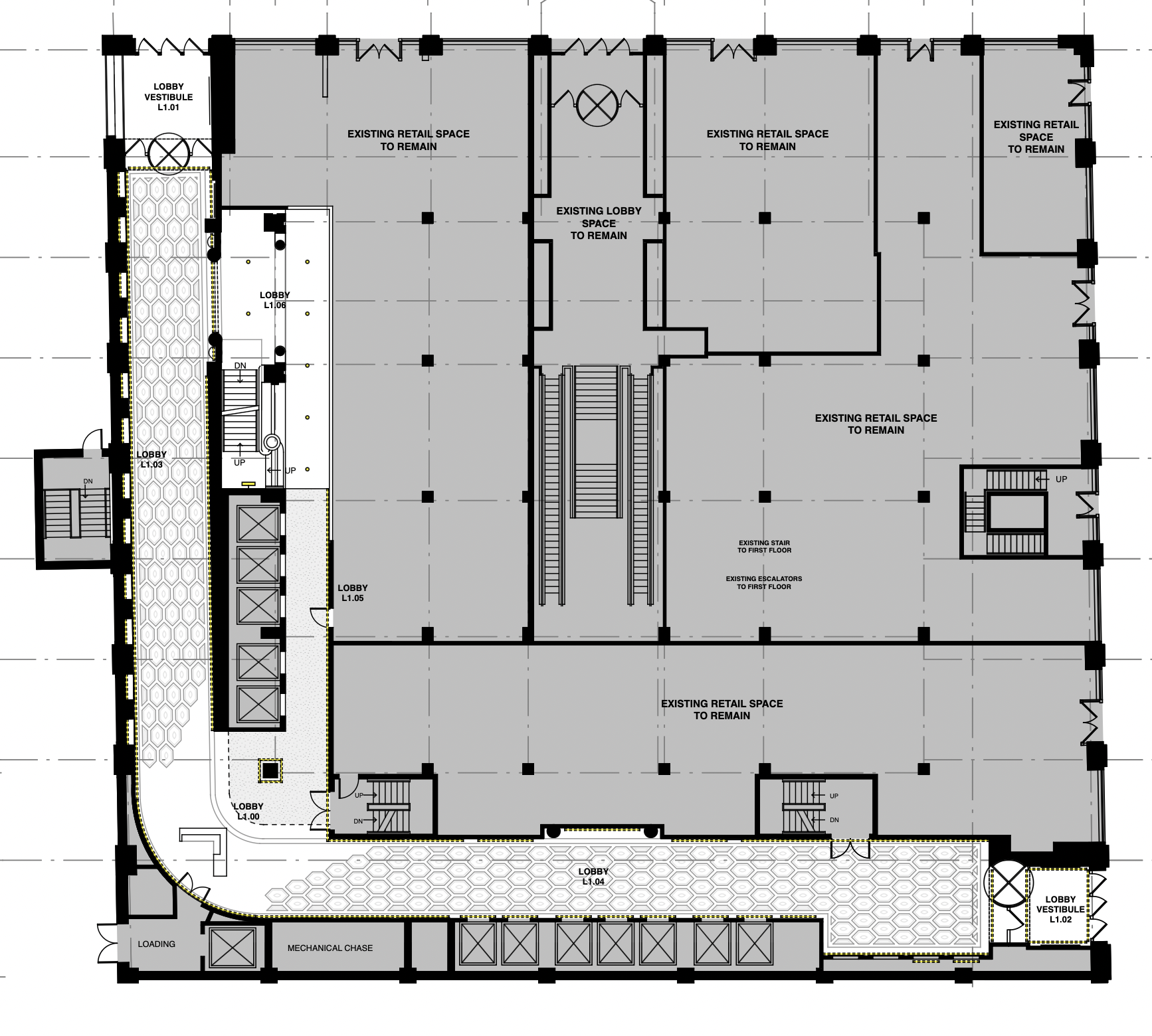
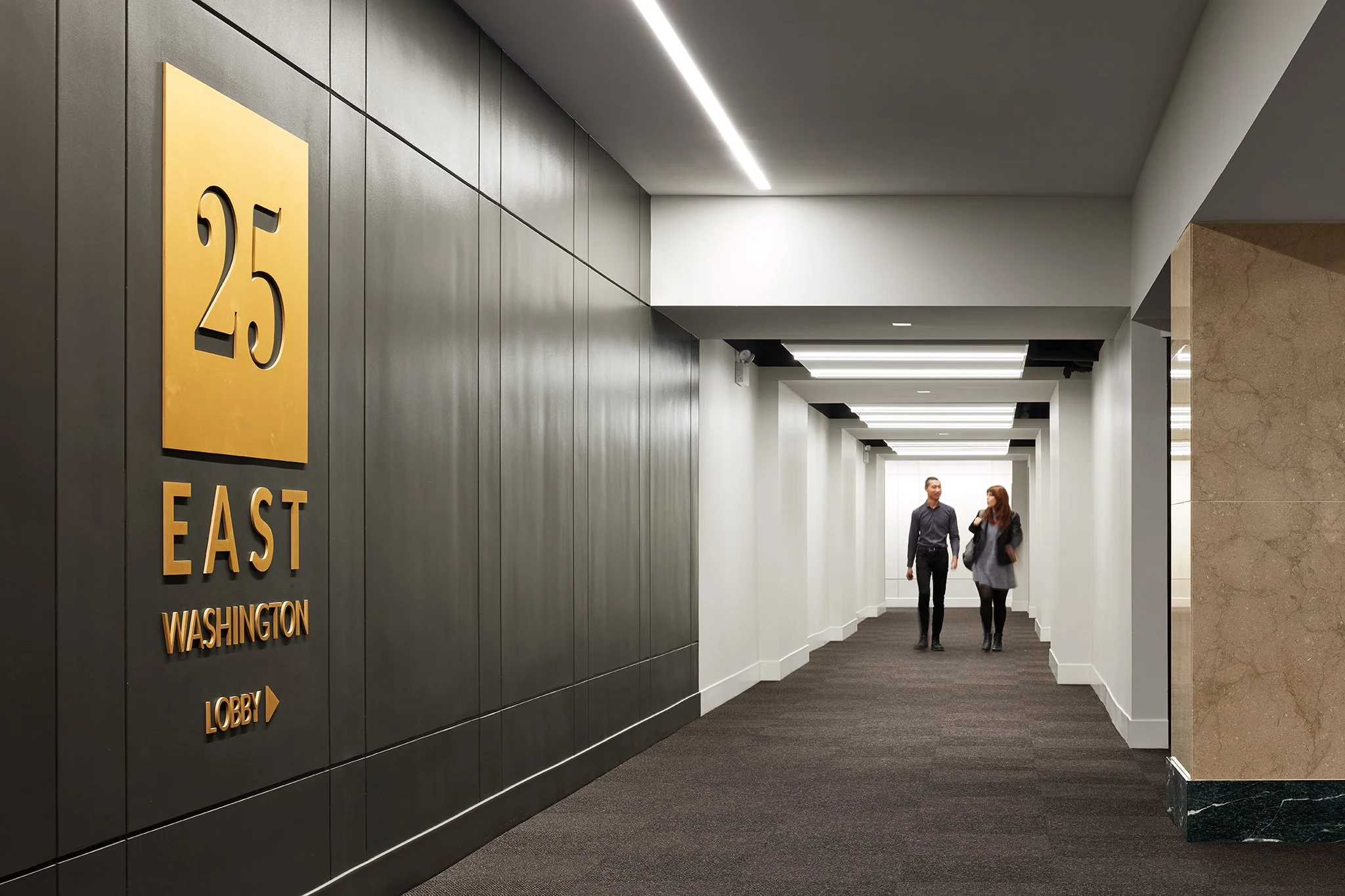
That same discipline extends to the lower-level connection to the Chicago Pedway. While clearly subordinate to the lobby above, this secondary point of entry was given equal attention to material quality, lighting, and circulation. The design elevates the everyday experience of arrival from below without competing with the ceremonial role of the main lobby, reinforcing a coherent hierarchy across the building’s public spaces.
Together, these interventions support daily use and circulation while preserving the lobby’s role as the building’s front door - demonstrating how restraint, when applied consistently, can strengthen both function and character.
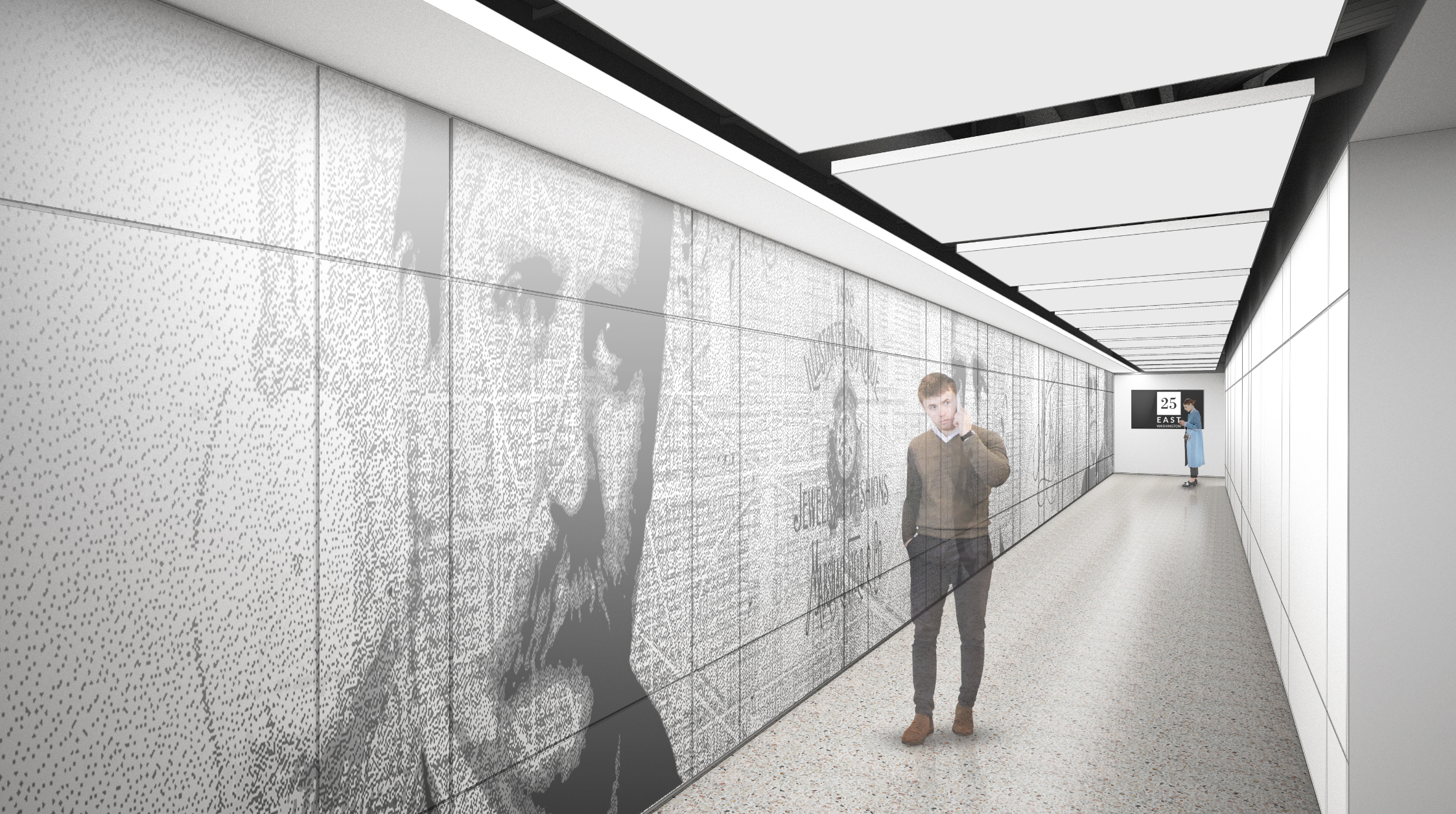
Pedway Connection
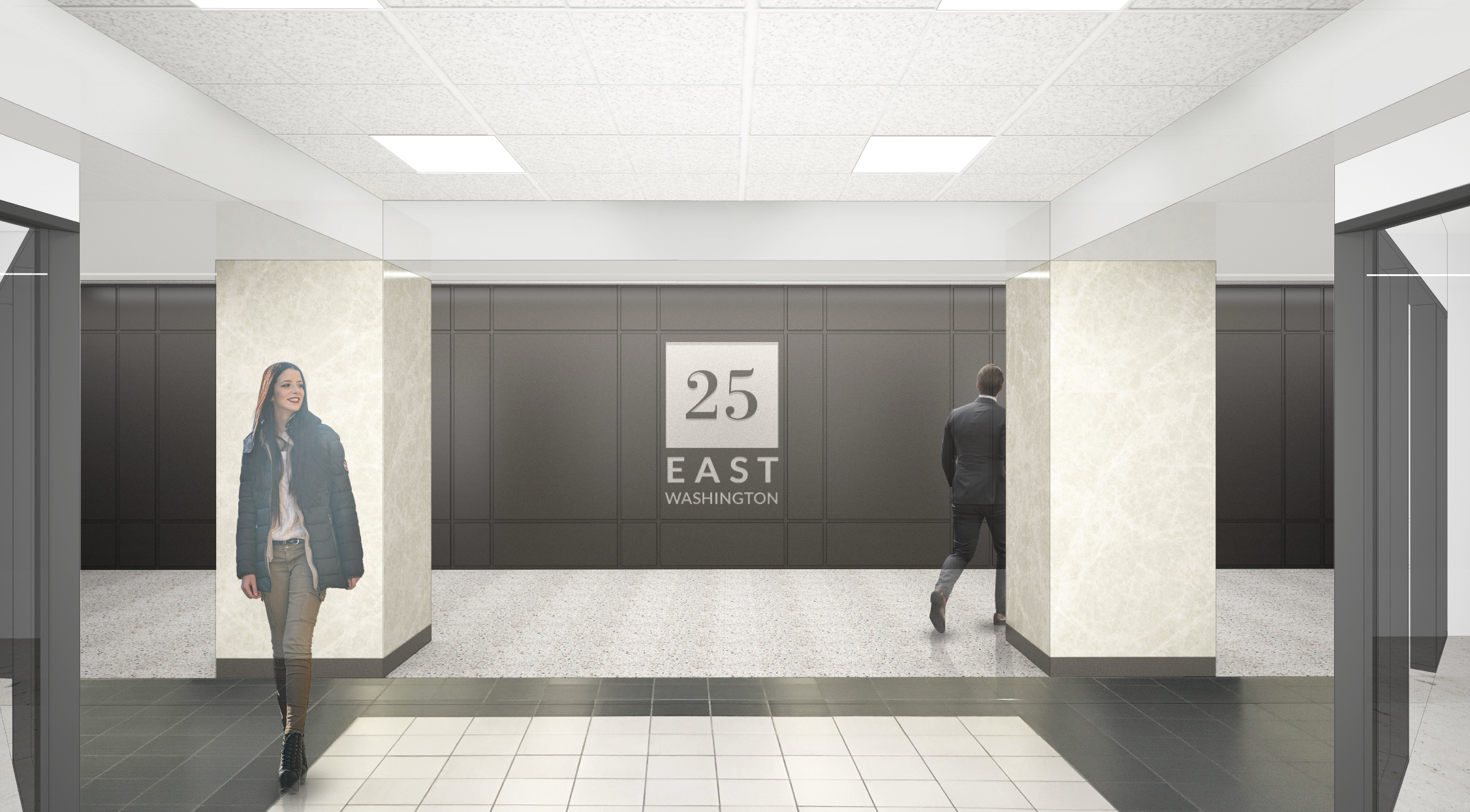
Pedway Connection
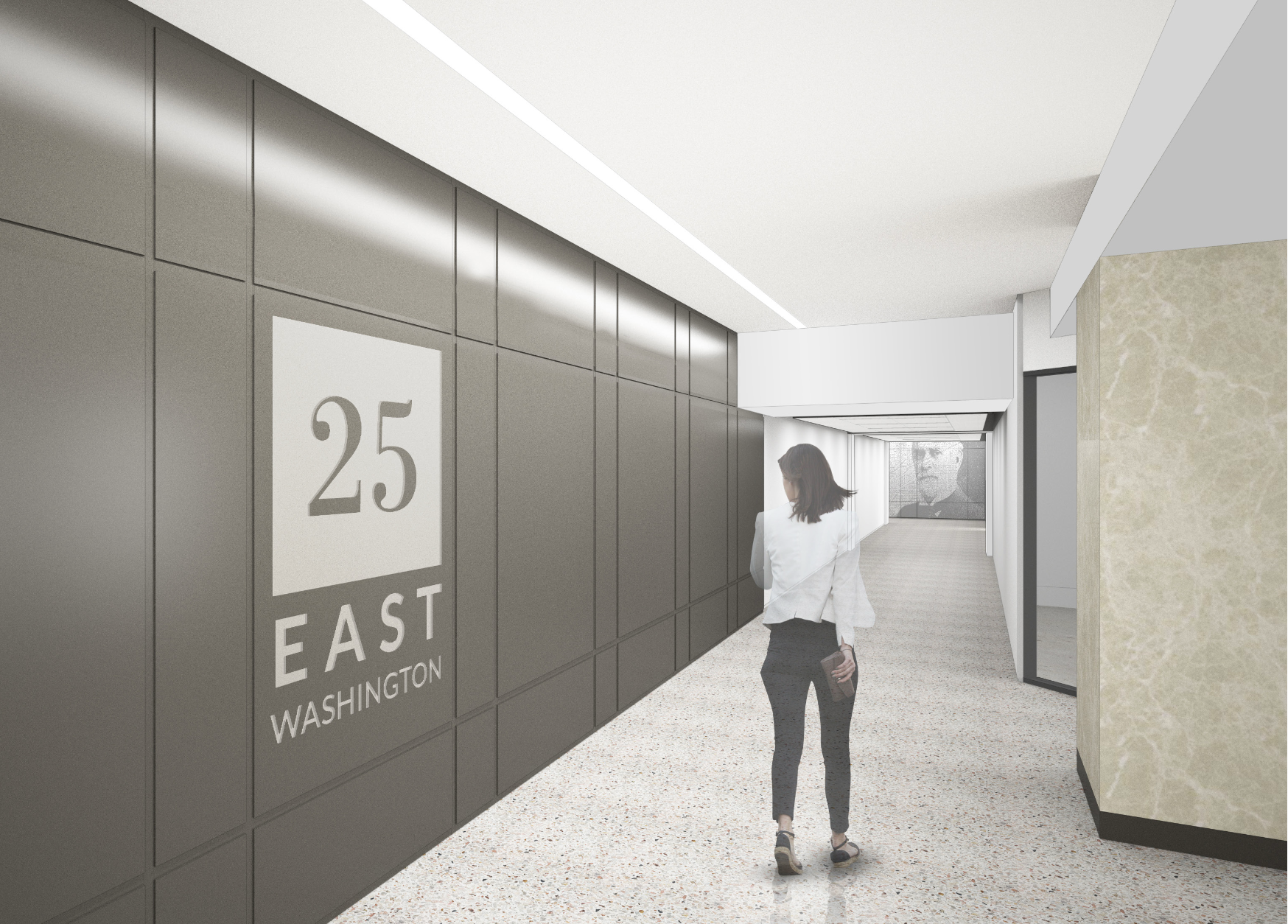
Pedway Connection
Setting the Tone
The completed lobby feels both timeless and relevant - rooted in its Beaux-Arts origins while clearly positioned for continued life and use. Through a restrained palette of stone, metal, and light, the space expresses a classic, enduring elegance that reflects the building’s architectural lineage.
More than a renovation, the lobby now establishes a clear benchmark for all future capital projects within the building. Its material discipline, attention to proportion, and quiet confidence set a consistent design standard that carries forward into subsequent work, including the amenity floor and other shared spaces. In doing so, the project demonstrates how preservation and modernization can coexist through care, continuity, and intent - guiding the building’s next chapter with clarity and purpose.
-
Name : Historic Lobby Renovation
Location: 25 East Washington St, Chicago, IL
Building : Historic Beaux-Arts Landmark (1914, Daniel Burnham)
Size : 10,000sf
Role : Project Architect, Owner’s Design Lead
Program : Hospitality, lobby restoration, historic preservation
-
• Stone restoration
• Ornamental metal & lighting
• Exterior and interior branding
• Significant millwork upgrades
• Entry vestibule & canopy
• Bike and locker room
• Chicago Pedway connection
-
General Contractor : Bulley & Andrews
MEP : IMEG
-
2021 Award of Merit • International Assoc of Lighting Designers
2021 National Lighting Bureau Tesla Award
2020 Illumination Design Award of Merit IES
PHOTOGRAPHY
Steve Hall and Kendall McCaugherty, Hall + Merrick Photographers, Kevin Kamien
2017-2019