
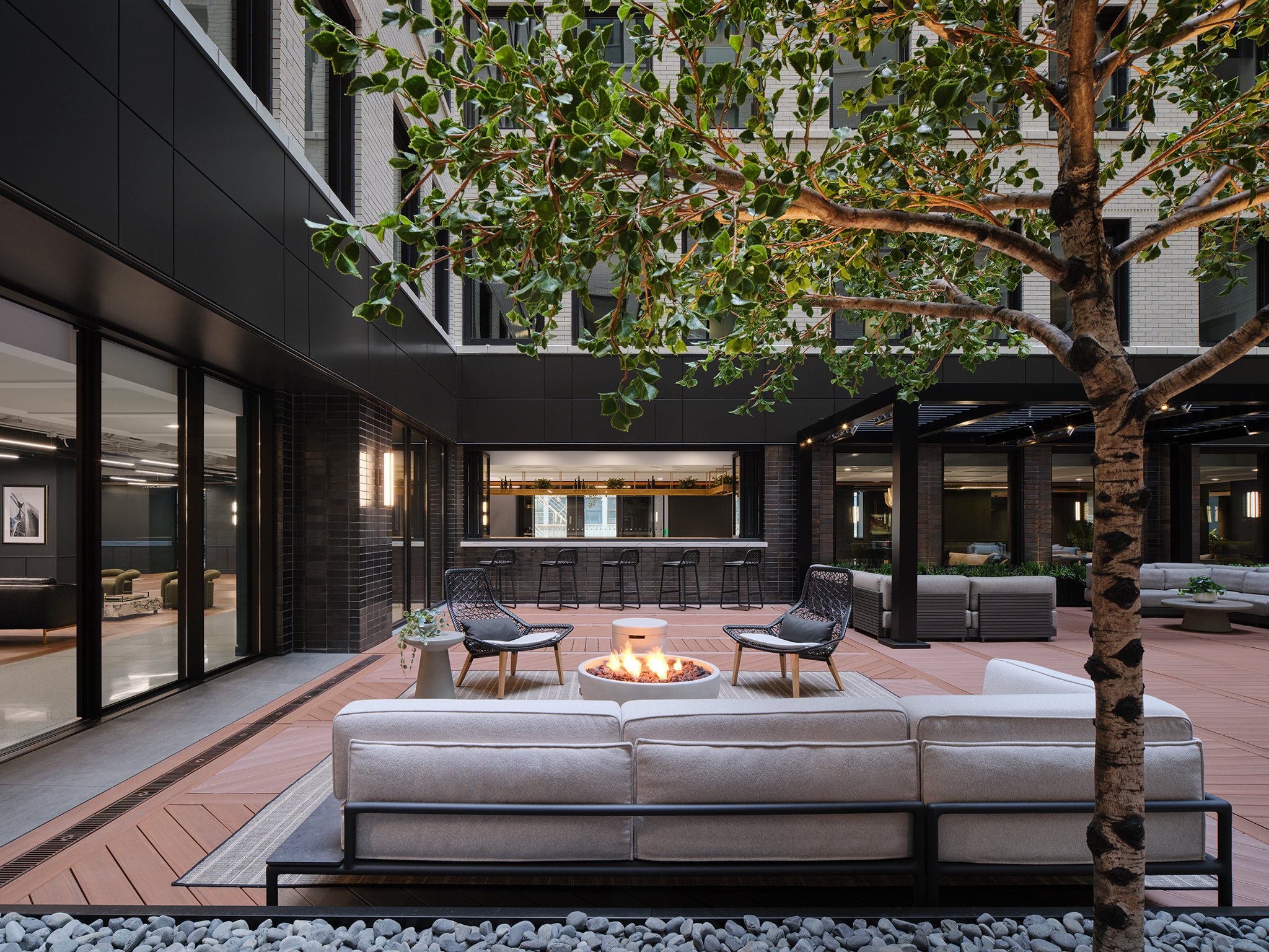
The Atrium Club
25 East Washington
services performed at geniant Eastlake
A Building Within a Building
The seventh floor at 25 East Washington transforms an underutilized office level into a hospitality-driven amenity environment at the heart of Chicago’s Loop. Conceived as a building within a building, the project reframes what an urban workplace can offer by creating spaces that support connection, flexibility, and respite without sacrificing professionalism or performance. The goal was not simply to renovate, but to understand the floor as a system shaped by its history, structure, and use.
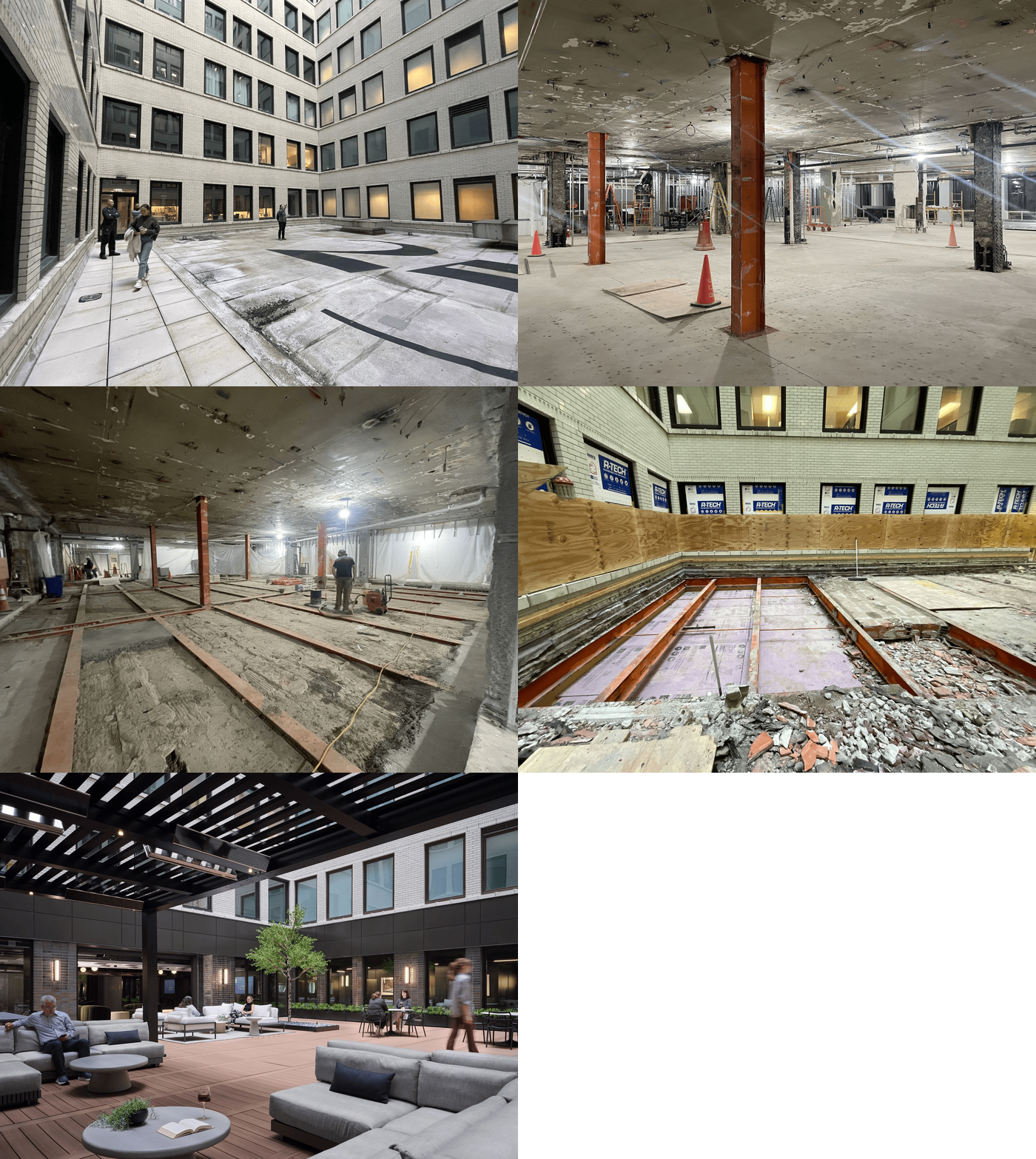
Before design began, the team undertook a comprehensive existing-conditions investigation across both the seventh and eighth floors. This included detailed field surveys of structure, slab conditions, roof assemblies, and legacy mechanical systems, along with careful documentation of how the two floors interacted vertically. Years of layered construction and deferred modifications had created complex and sometimes opaque conditions that required direct verification rather than assumption.
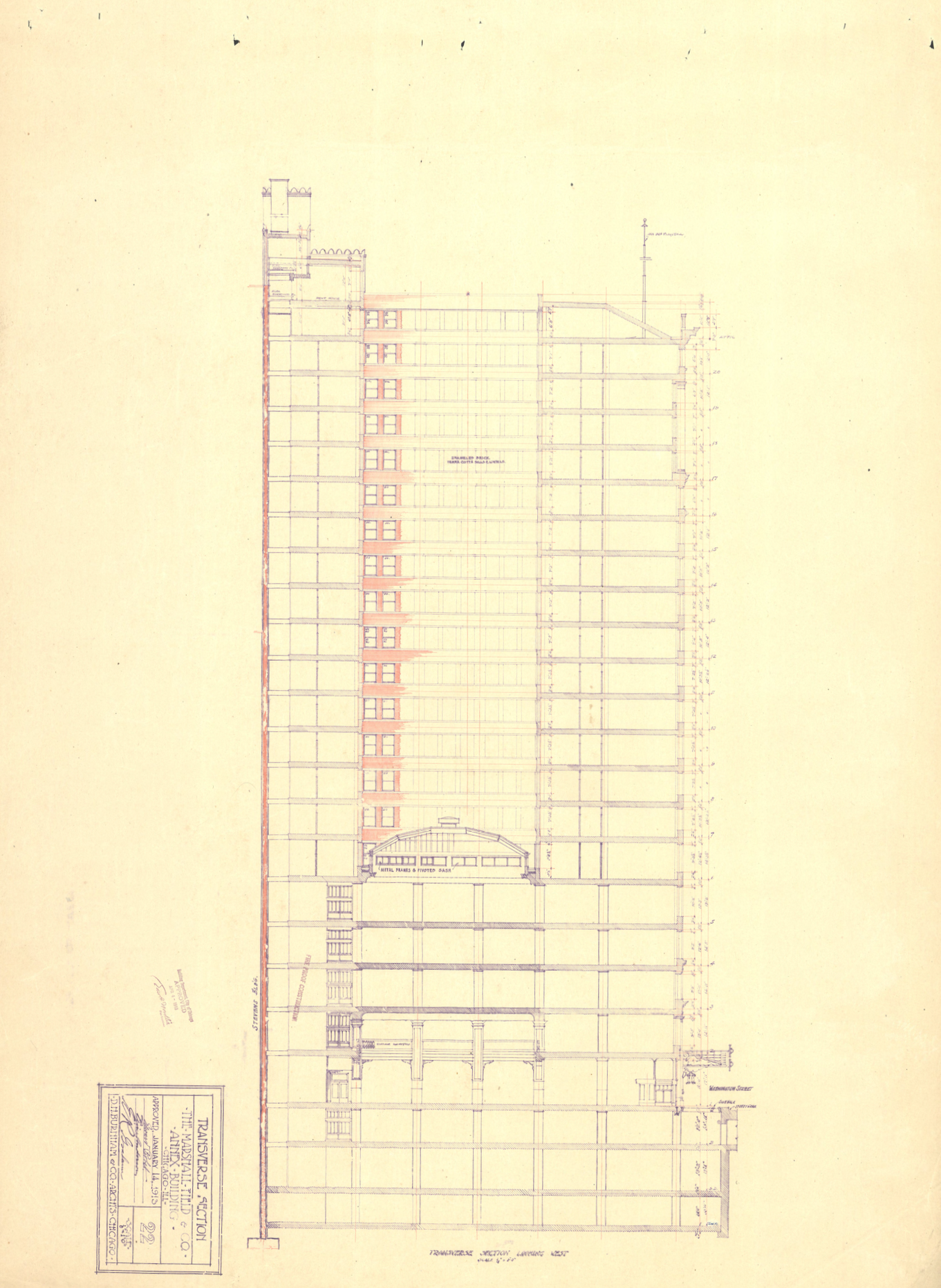
Historic Documentation Review
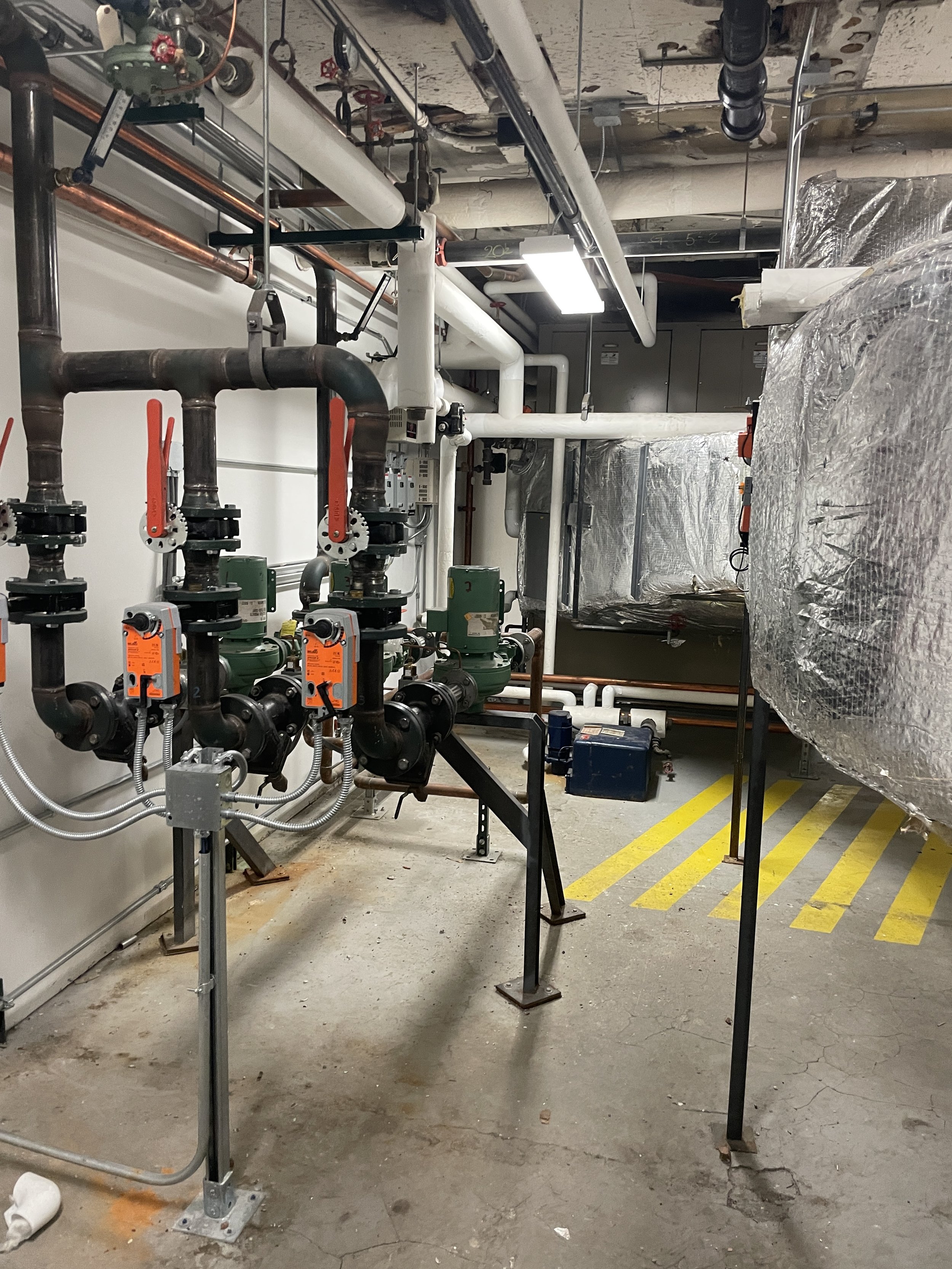
Infrastructure Analysis
Through coordinated site walks, selective exposure, and multiple consultant-led analysis, the team identified structural capacities, drainage paths, waterproofing constraints, and opportunities for daylight and exterior access. This due diligence was essential in evaluating the feasibility of removing the eighth floor to introduce a new open-air courtyard. By grounding the design in firsthand knowledge of the building’s actual construction, the project moved forward with clarity and confidence, transforming risk into informed opportunity.
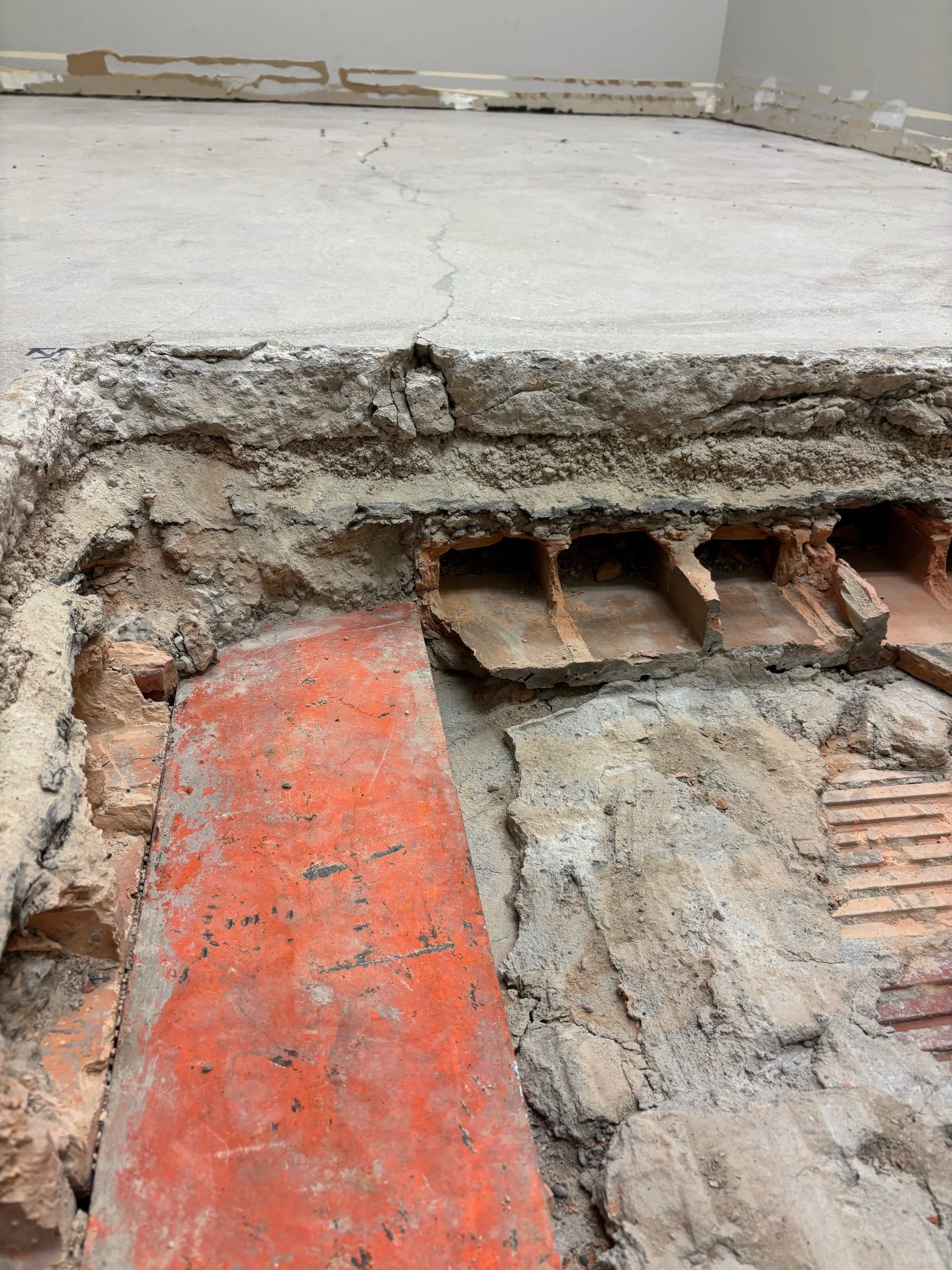
Site Investigation
Programming Through Insight
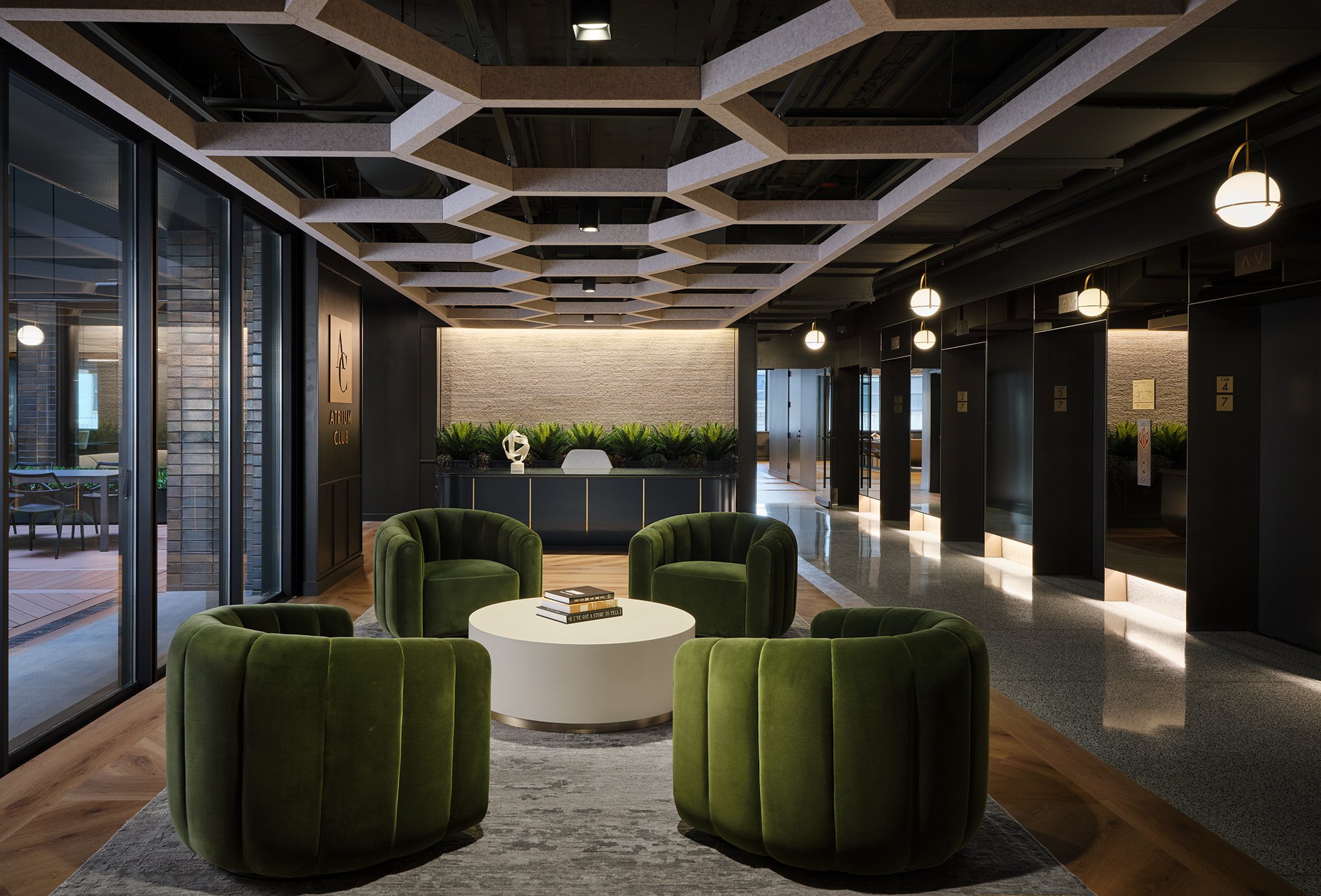
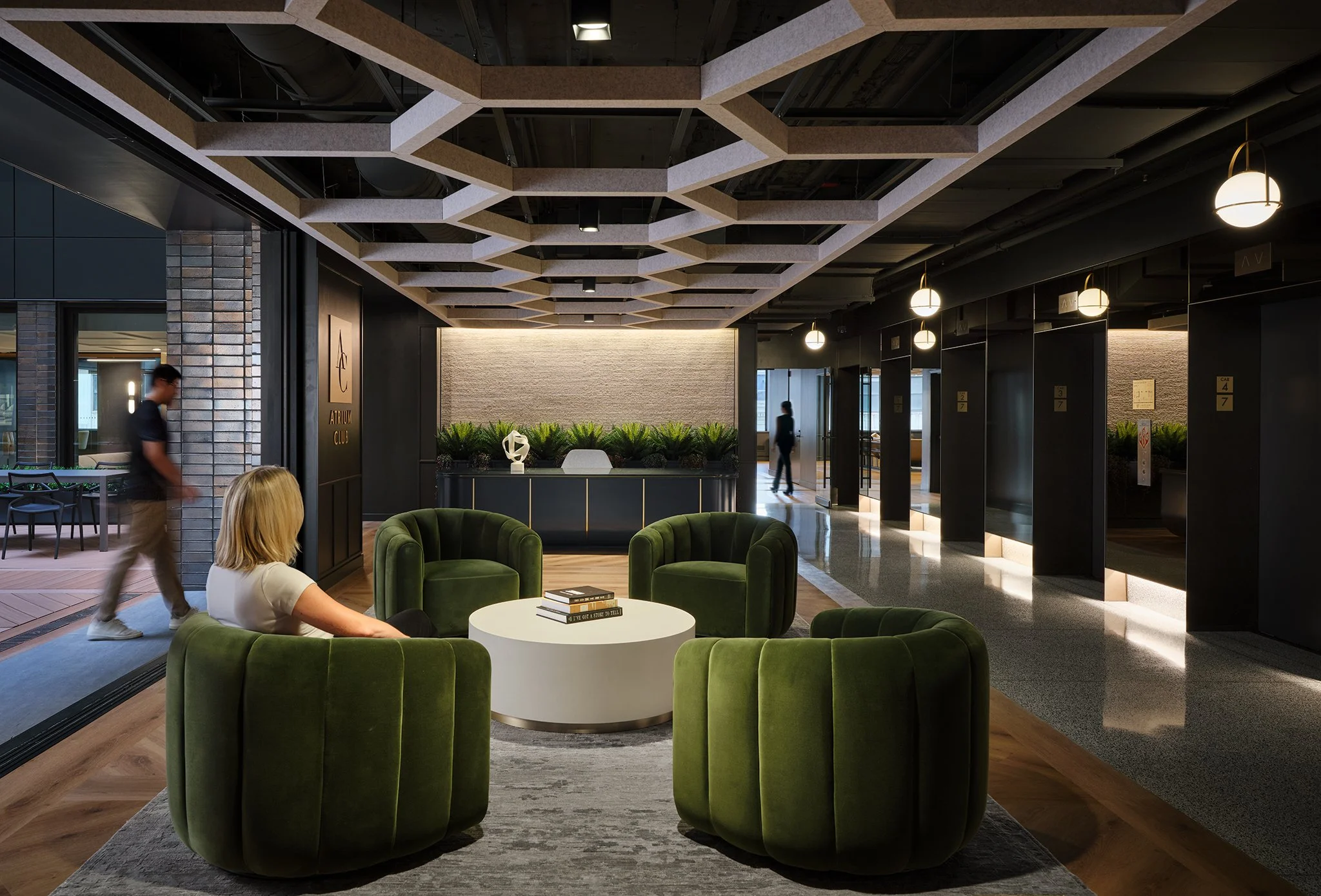
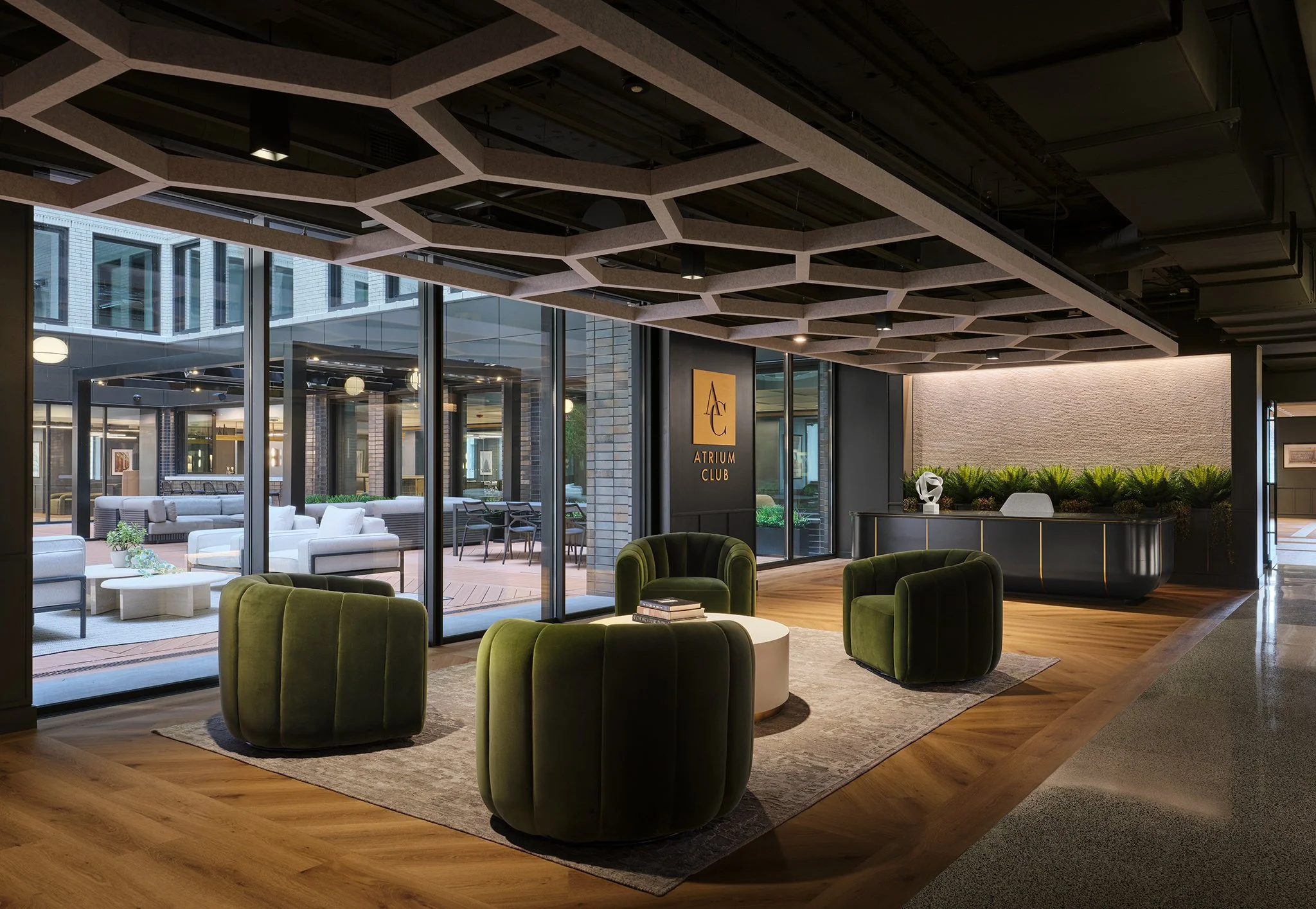
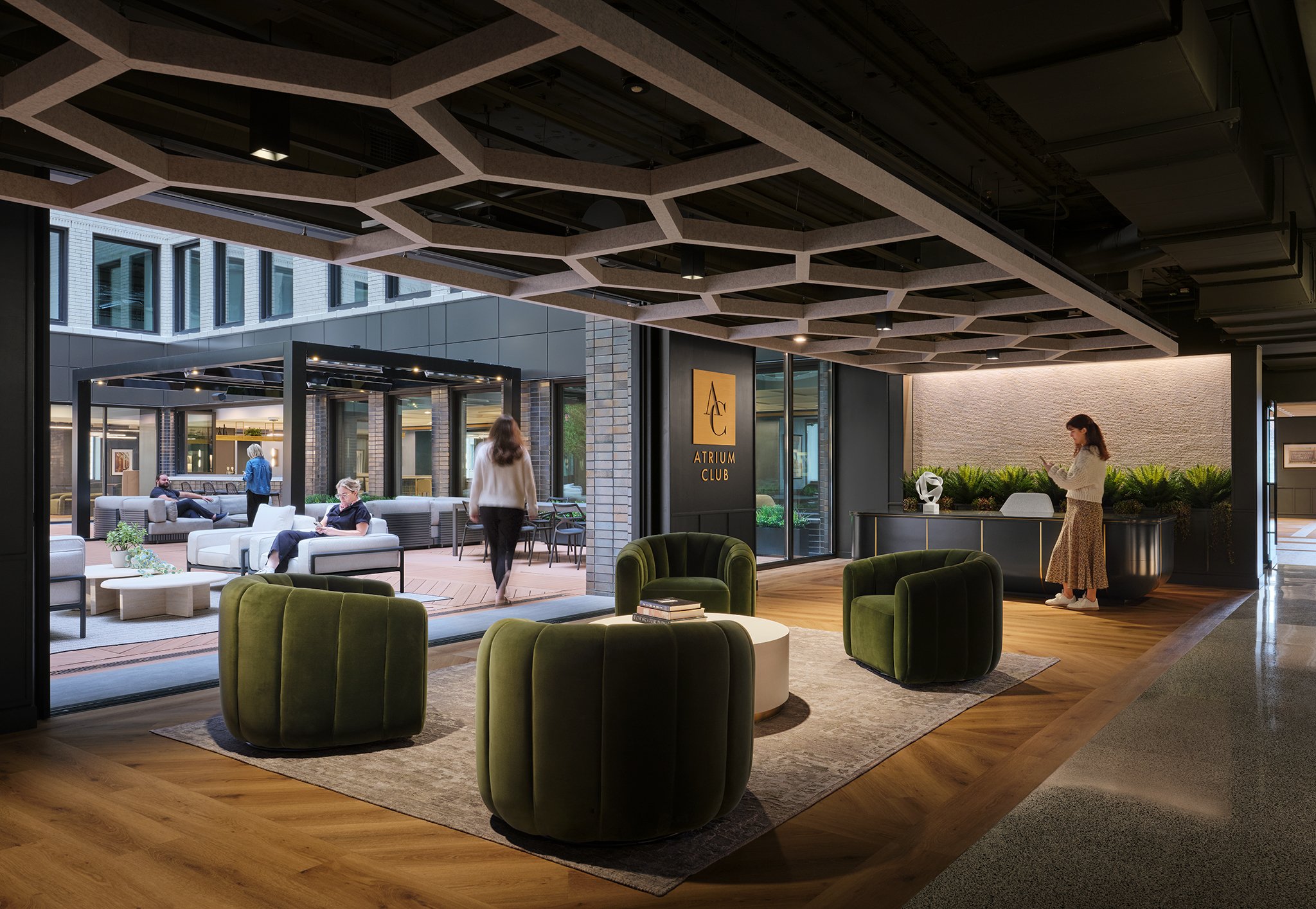
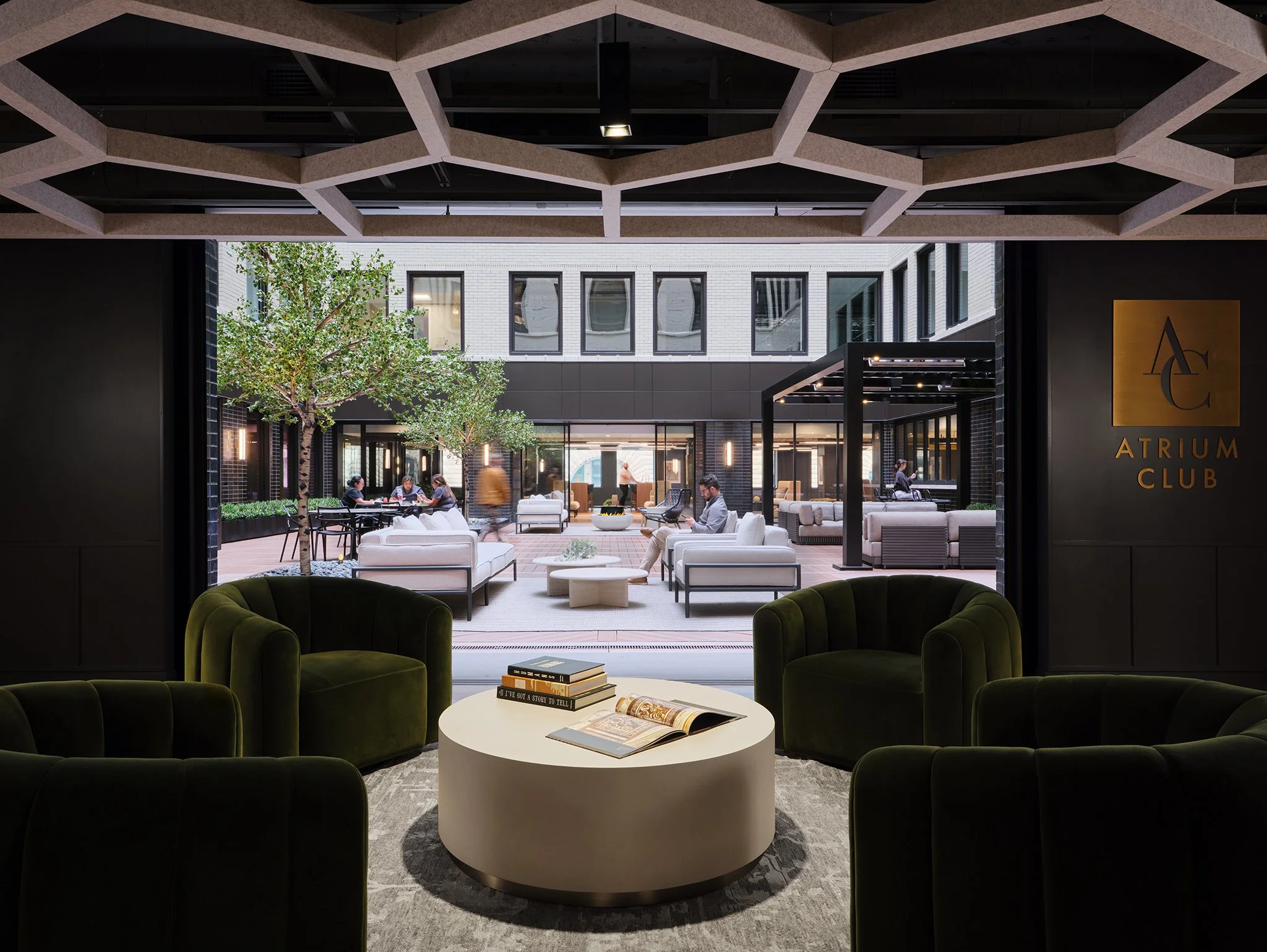
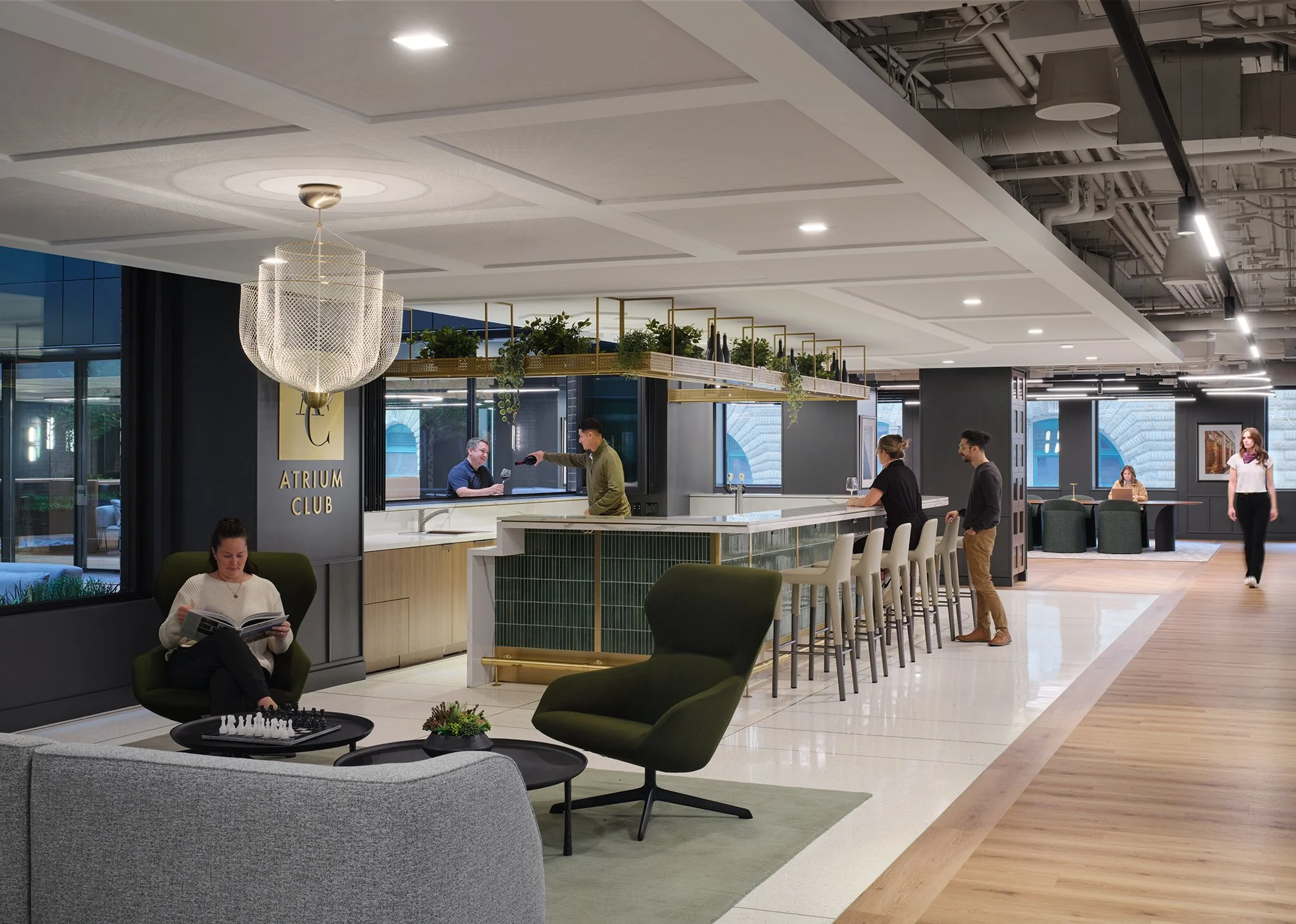
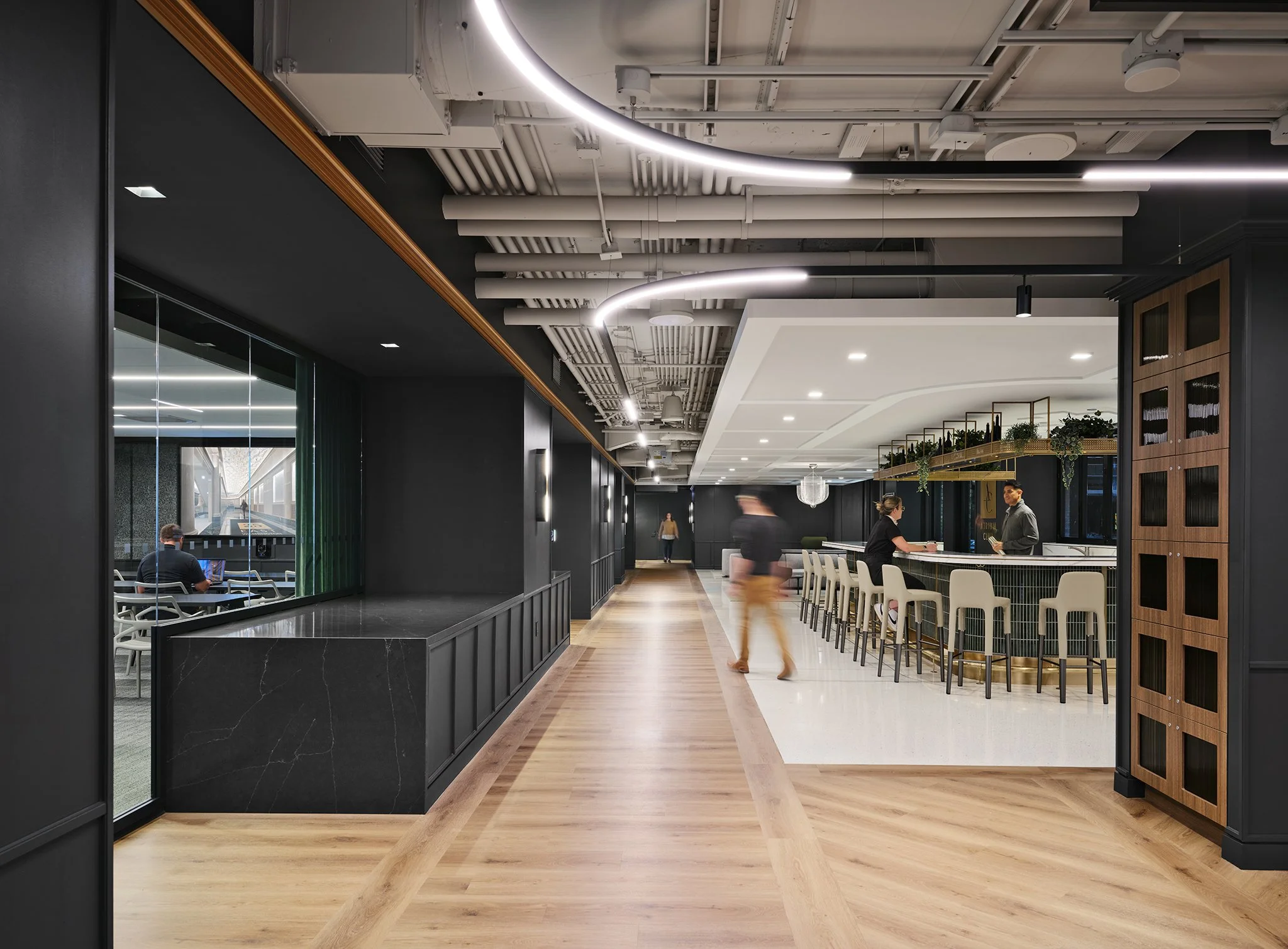
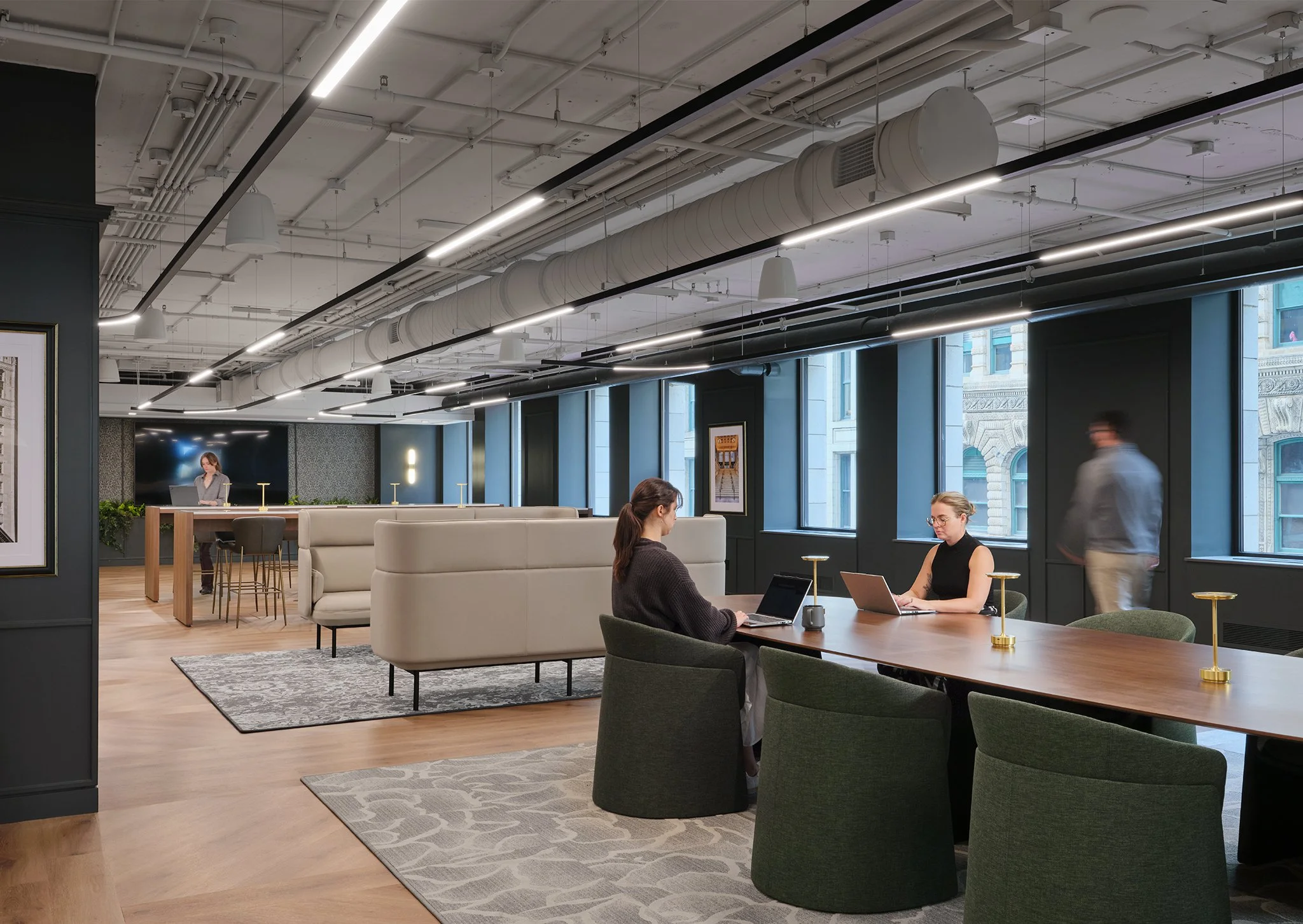
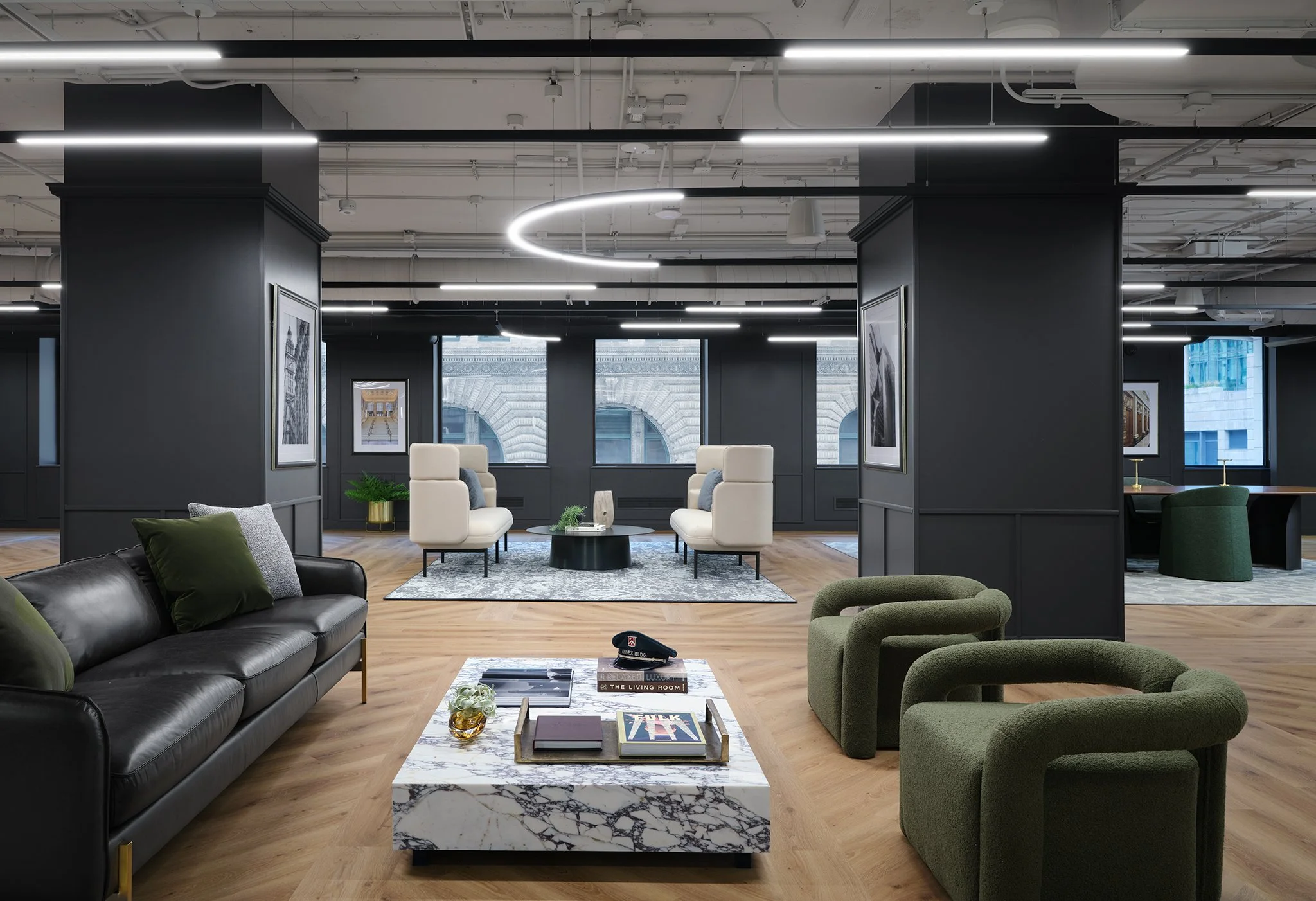
The layout of the amenity floor was guided by observation and use patterns rather than preconceived hierarchy. Arrival establishes a clear rhythm, drawing material cues from the historic lobby below and extending sight lines toward the open-air courtyard. Movement through the floor transitions naturally between social, focused, and restorative zones, mirroring the cadence of a typical workday.
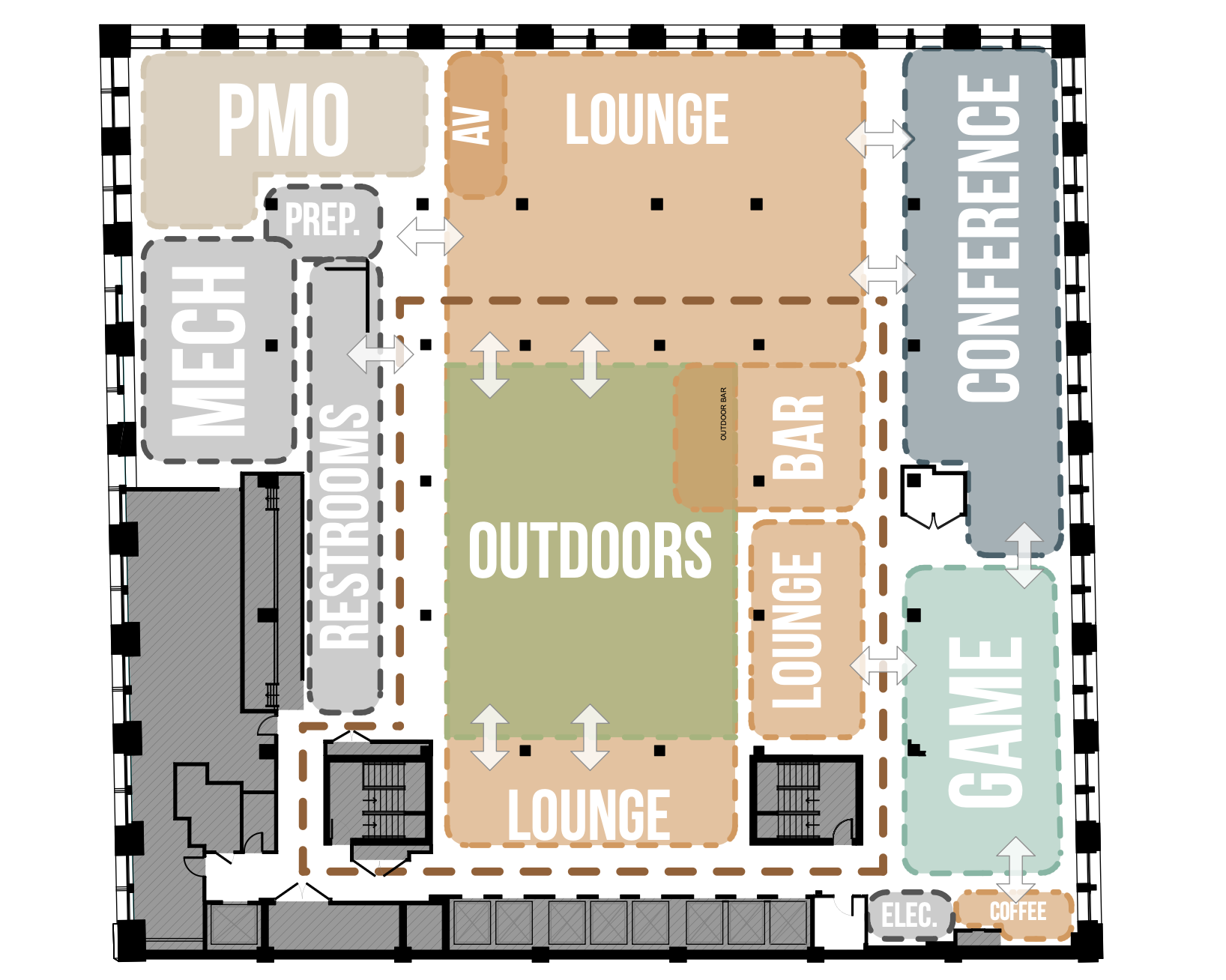
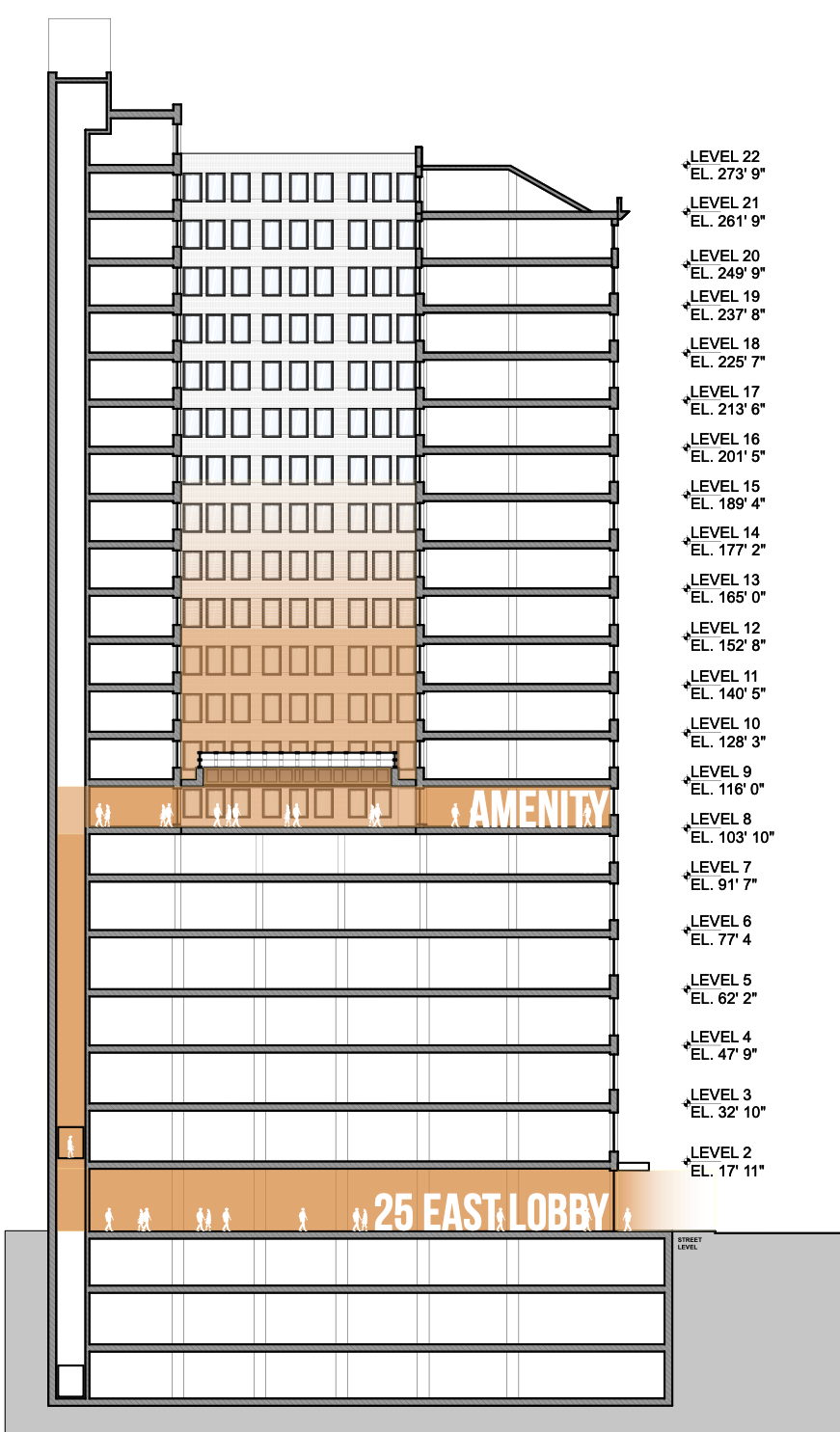
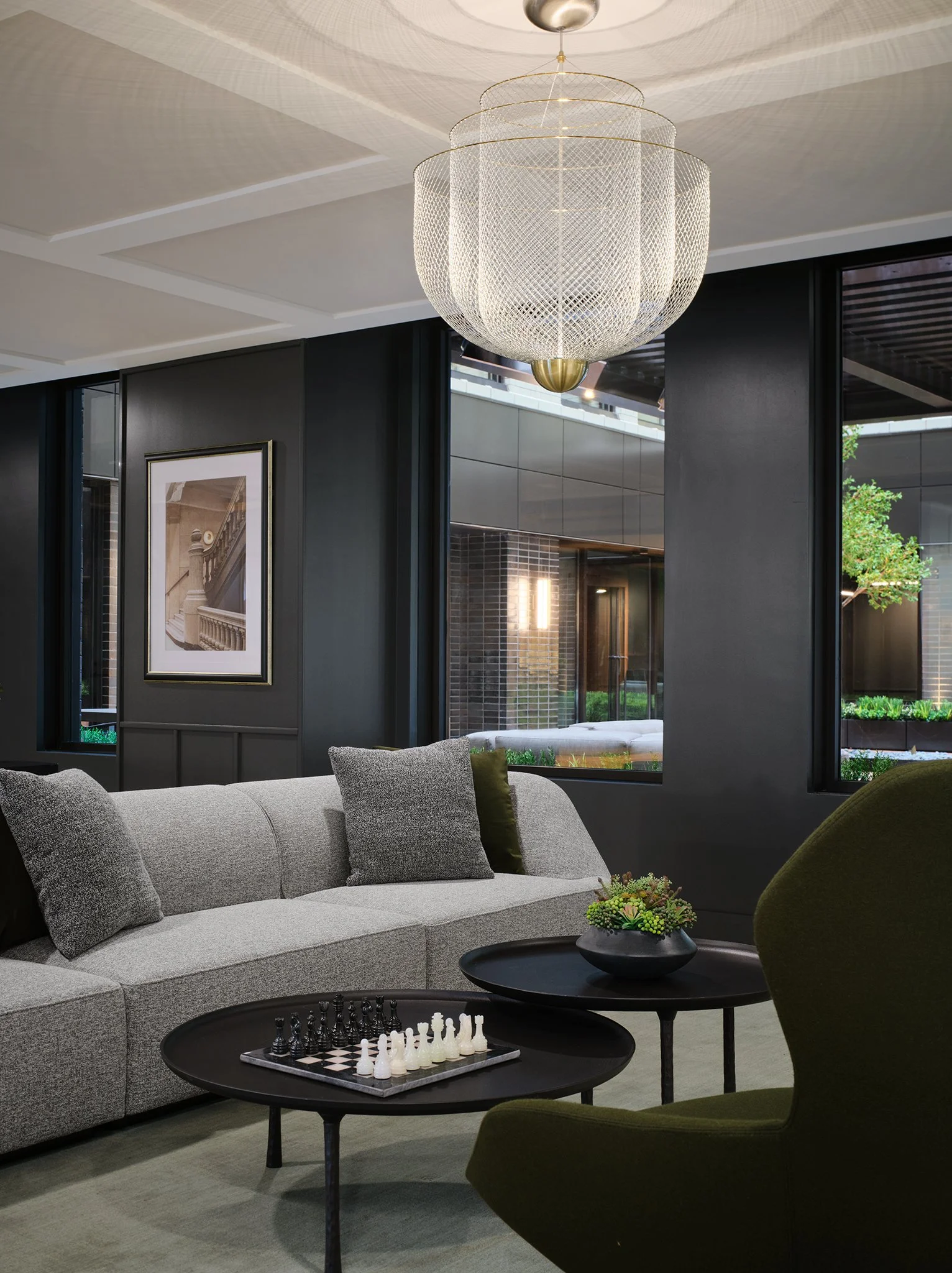
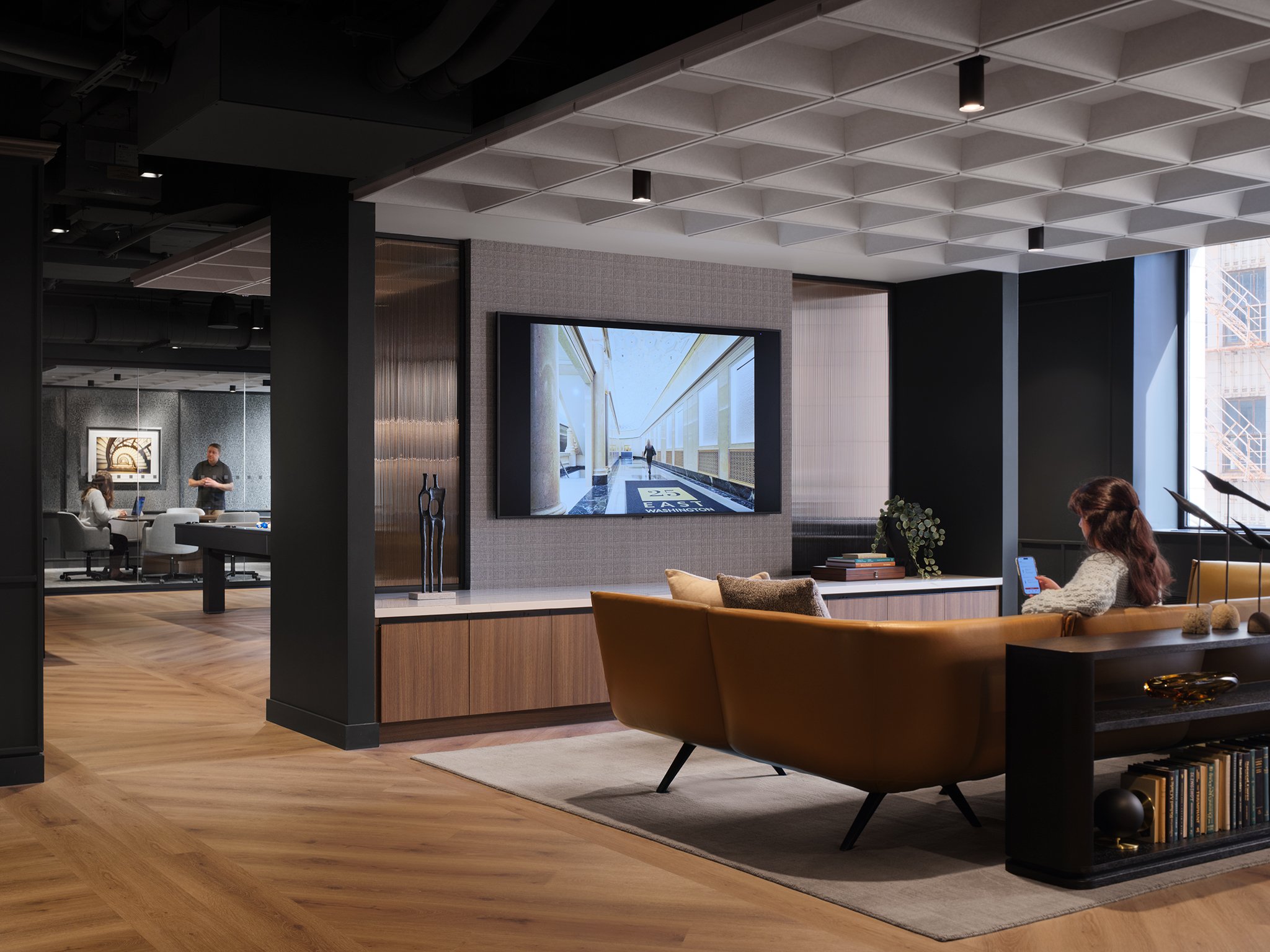
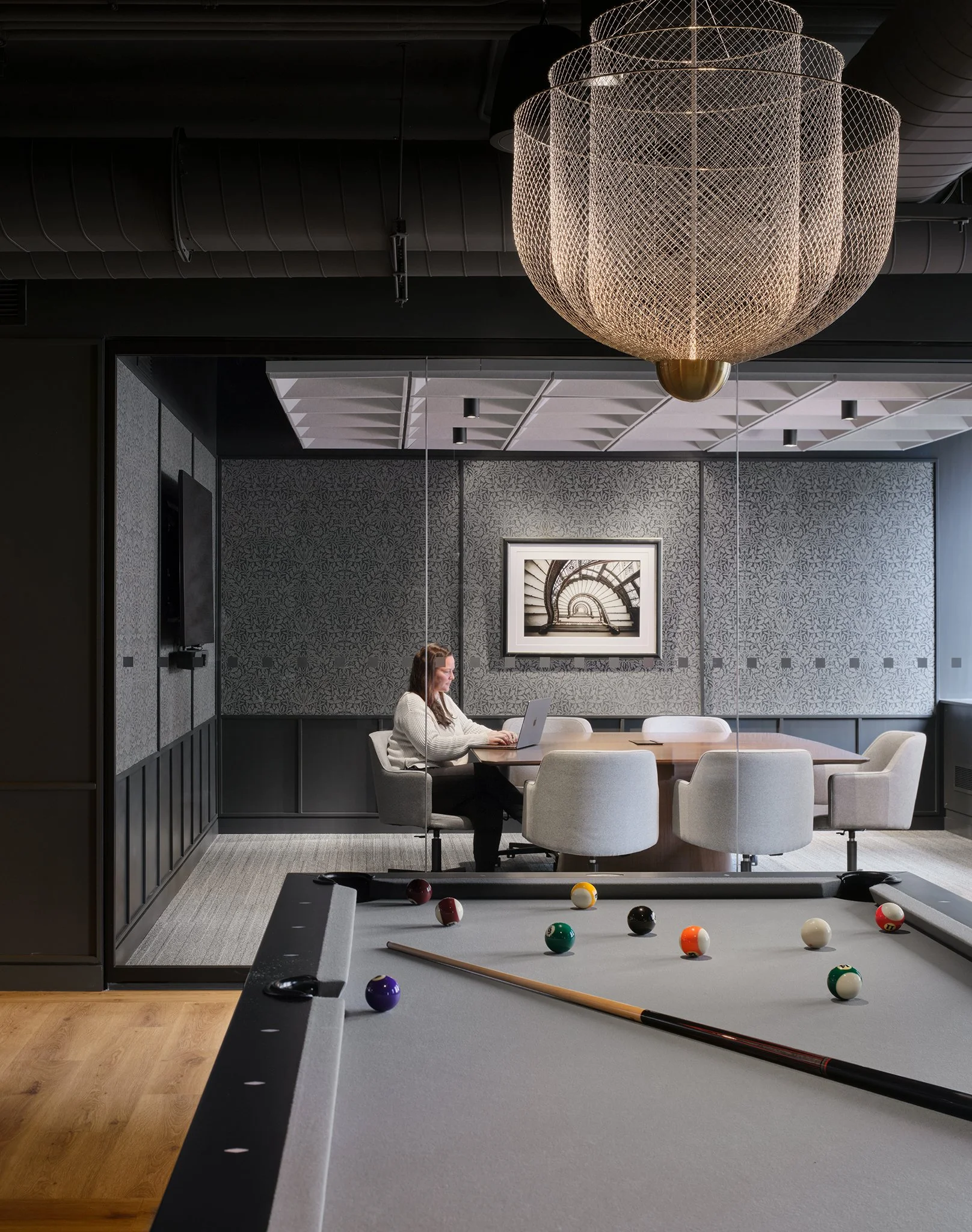
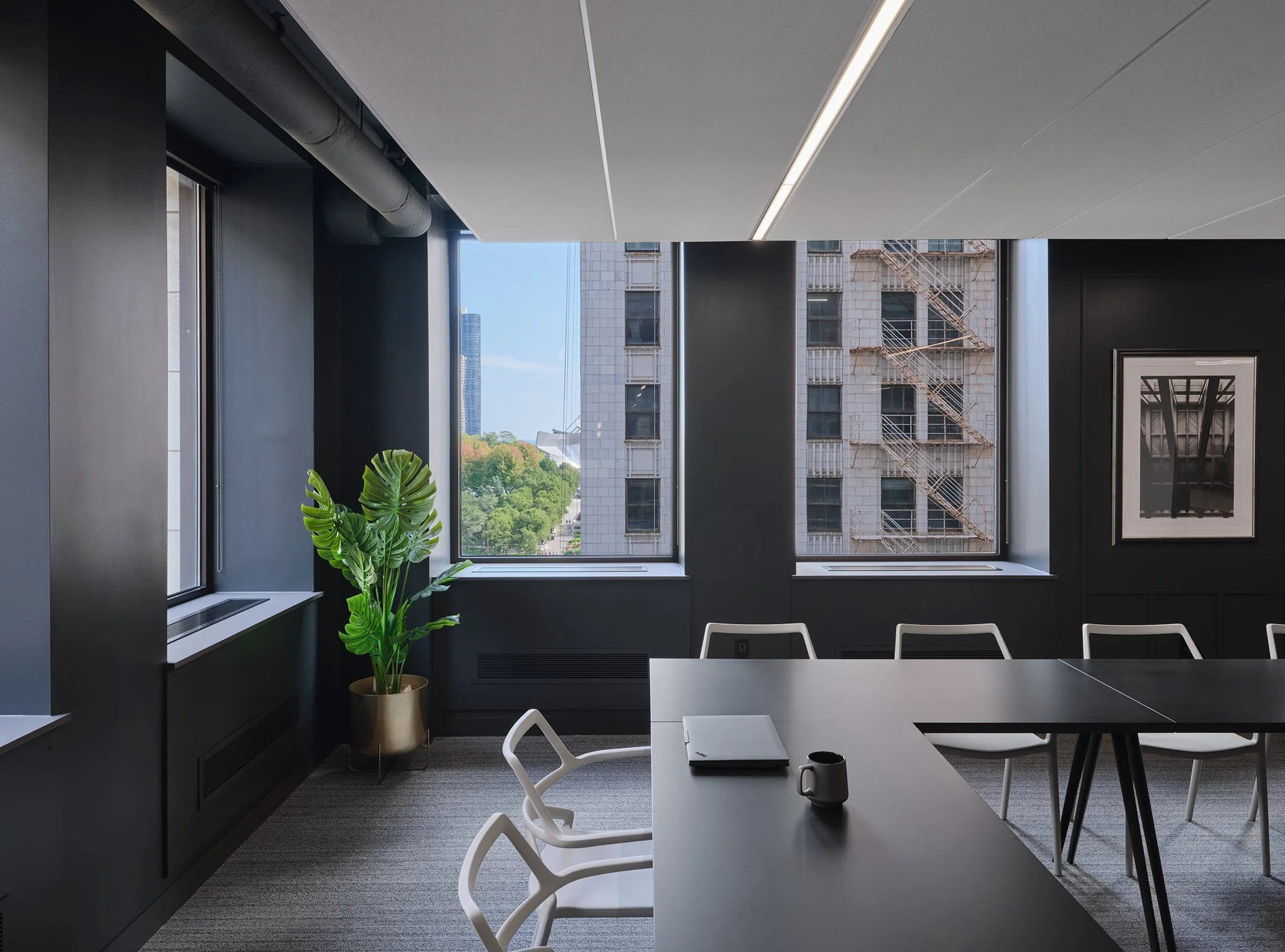
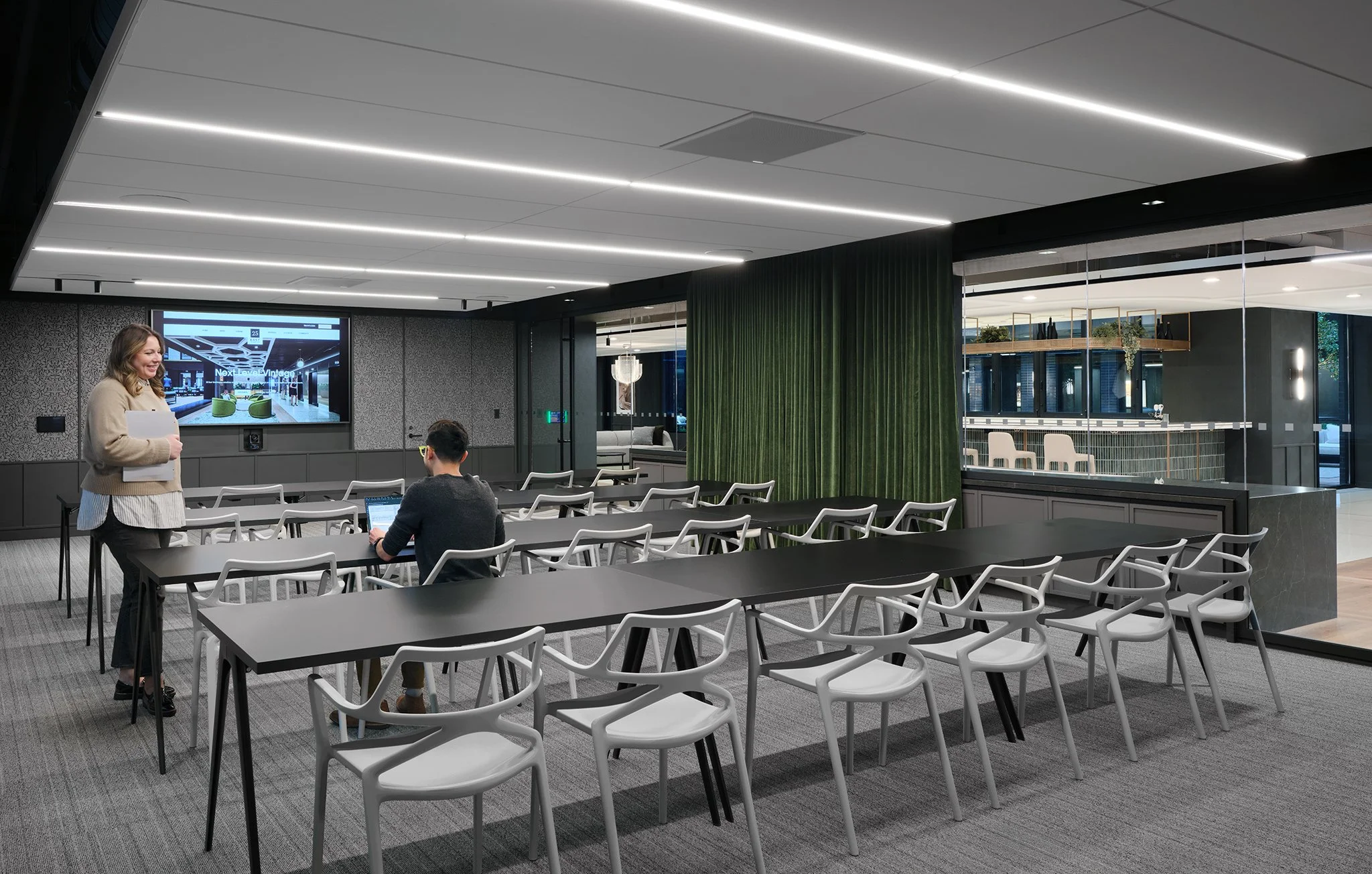
The conferencing center is acoustically isolated and positioned to function independently, while the bar and lounge form the social heart of the floor, oriented toward daylight and activity. Together, these spaces create an environment that feels effortless to use, yet performs at a high level for tenants and guests alike.
Complexity as Craft
Delivering this vision required a comprehensive rethinking of the building’s infrastructure within a century-old framework. Through intensive BIM coordination, new air-handling units, structural reinforcement for the outdoor deck, and redistributed mechanical and electrical systems were integrated while maintaining active building operations. A critical focus of this effort was achieving a flush, universally accessible walkout to the courtyard, requiring precise alignment of structure, waterproofing, drainage, and floor elevations across the seventh floor.
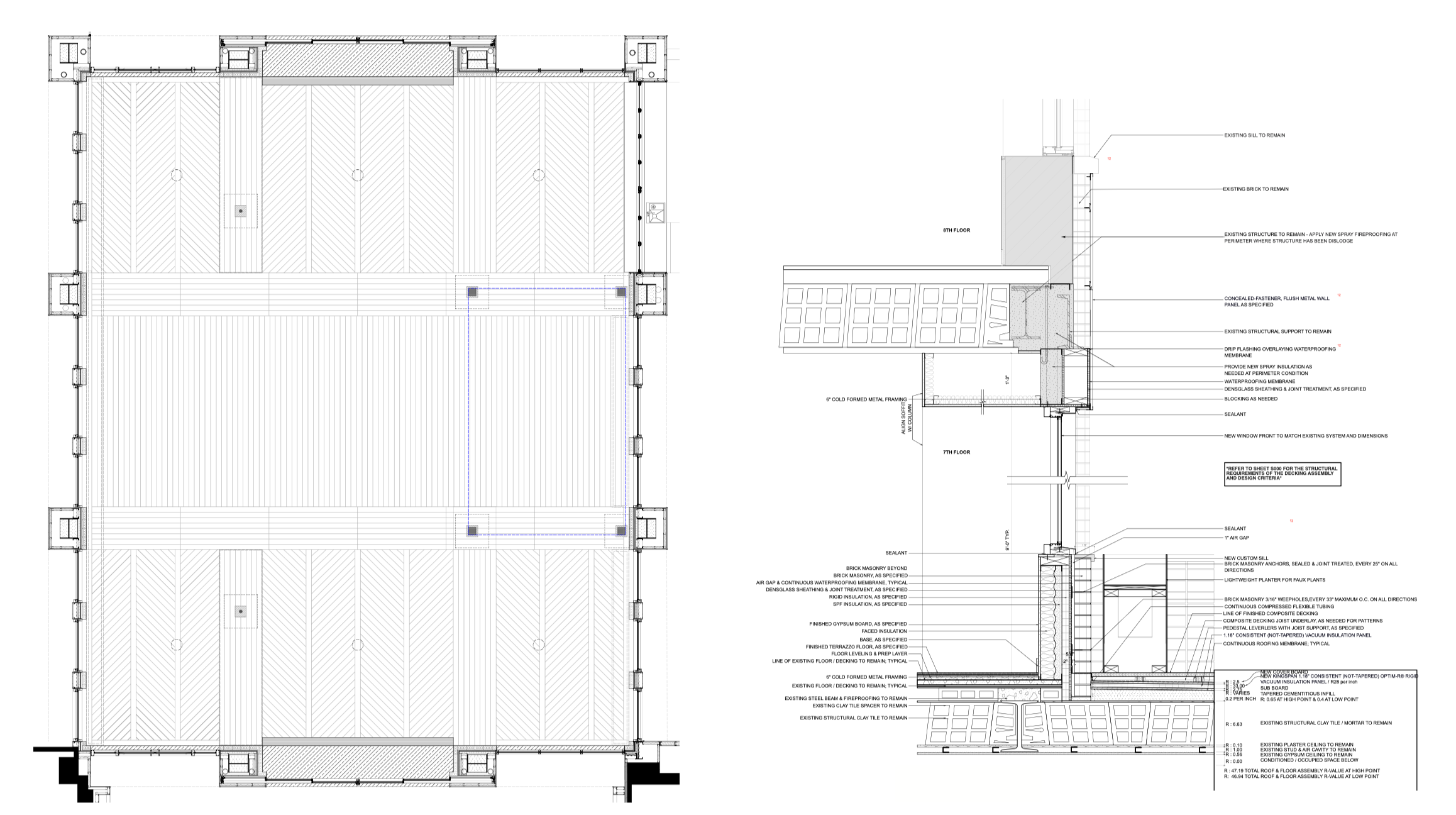
Rather than working against the building, the design works with it, navigating building systems around the courtyard, while preserving other ceiling volumes and historic proportions through careful coordination and real-time problem solving. Much of this complexity disappears from view. What remains is a calm, composed environment where interior and exterior connect seamlessly, systems perform quietly and reliably, and the user experience feels effortless from arrival to open air.
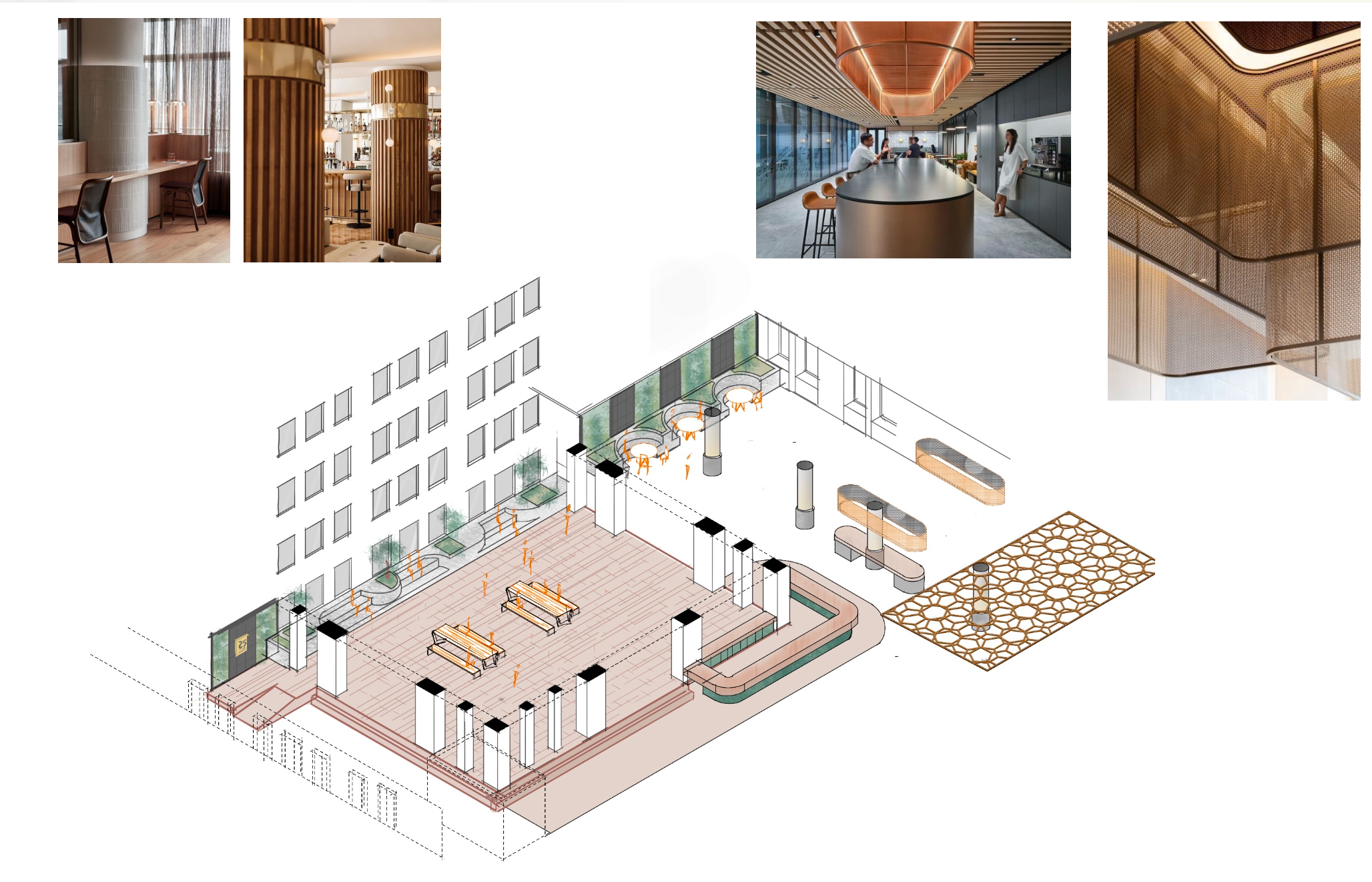
Visualization Studies & Design Development
Early visualization studies were used as a design and decision-making tool, allowing the team to test ideas before construction and align expectations across stakeholders. By pairing proposed imagery with existing conditions, the studies clarified how spatial changes, material choices, and lighting strategies would transform the floor from arrival through the core and out to the exterior.
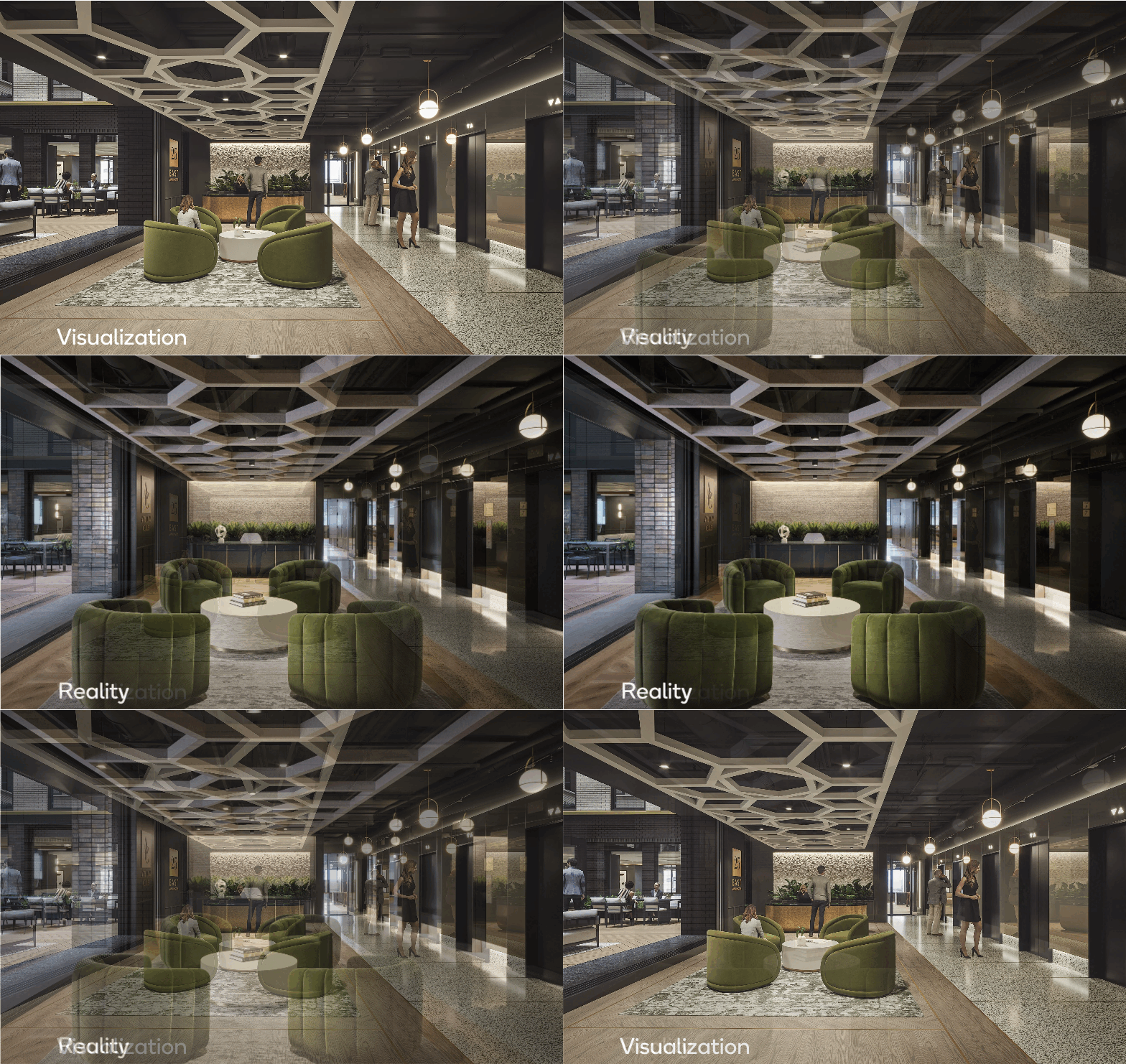
Lobby Visualization / Execution
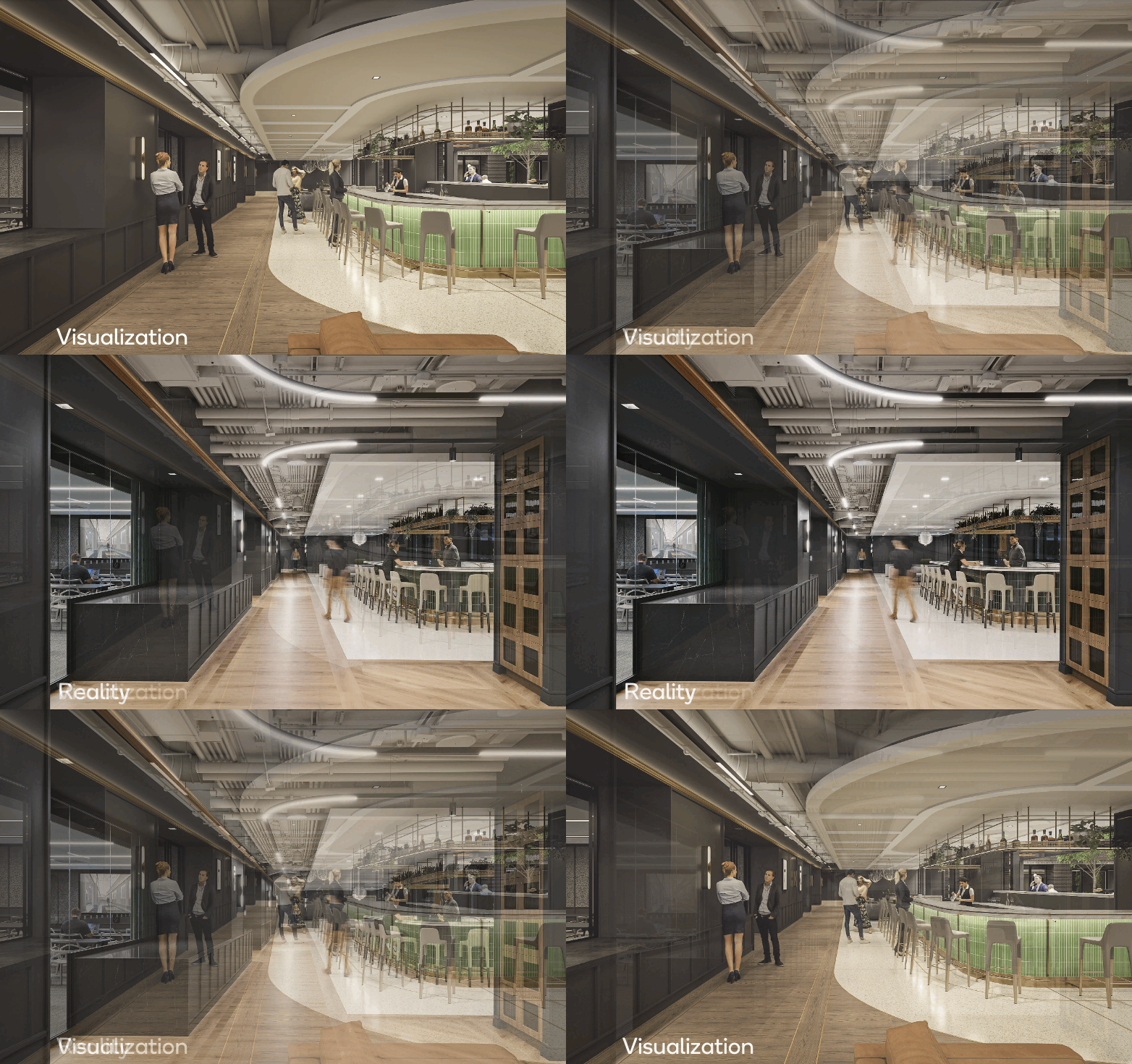
Bar Visualization / Execution
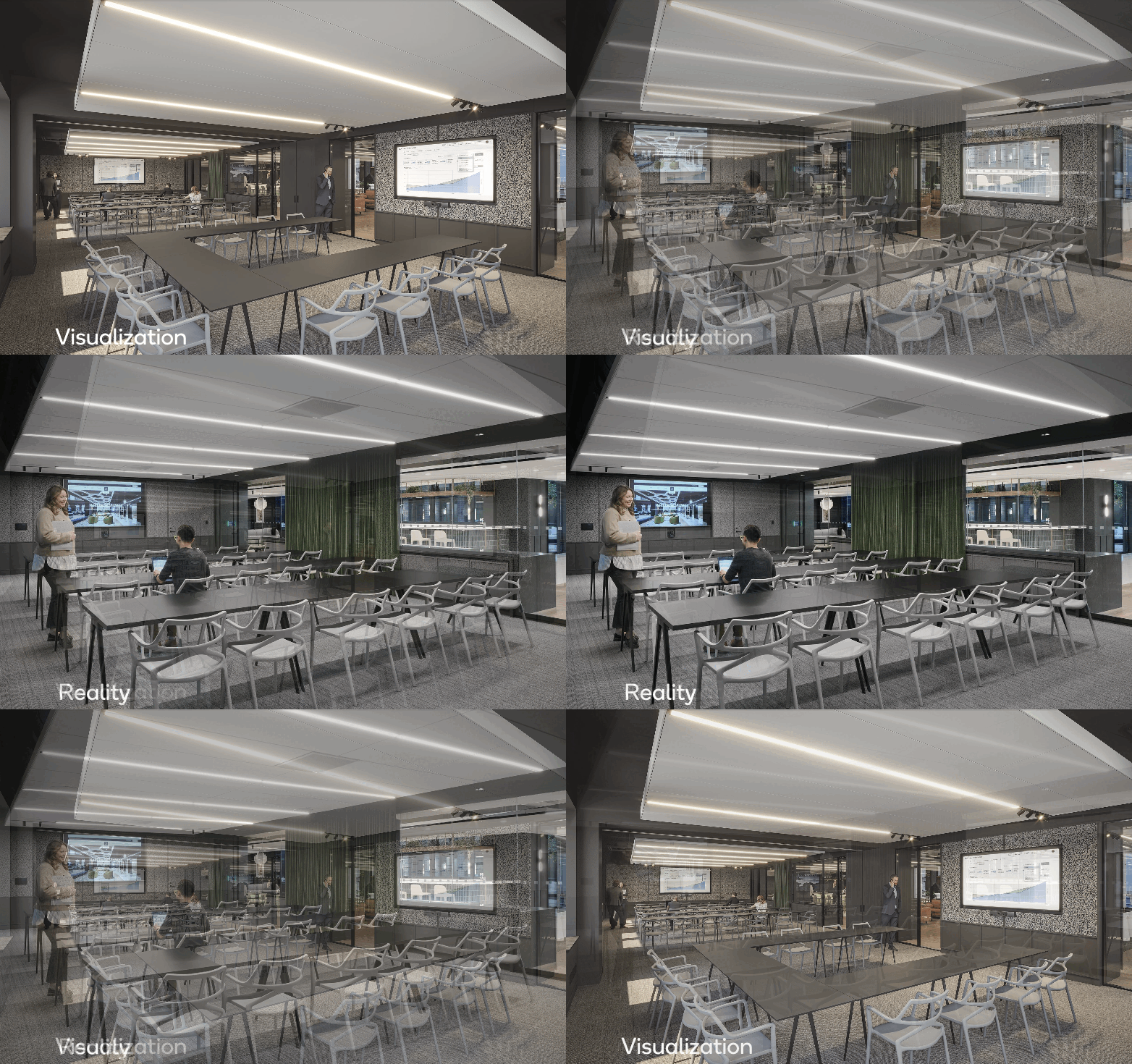
Conference Visualization / Execution
Seasonal studies examined how light, landscape, and exterior conditions would shape the experience throughout the year. Rather than designing only for peak summer moments, the visual analysis ensured that views, transparency, and atmosphere remained compelling in winter, shoulder seasons, and low-light conditions. Continuous sightlines from lobby to interior spaces and outward to the courtyard and city reinforce a sense of openness and connection regardless of season.
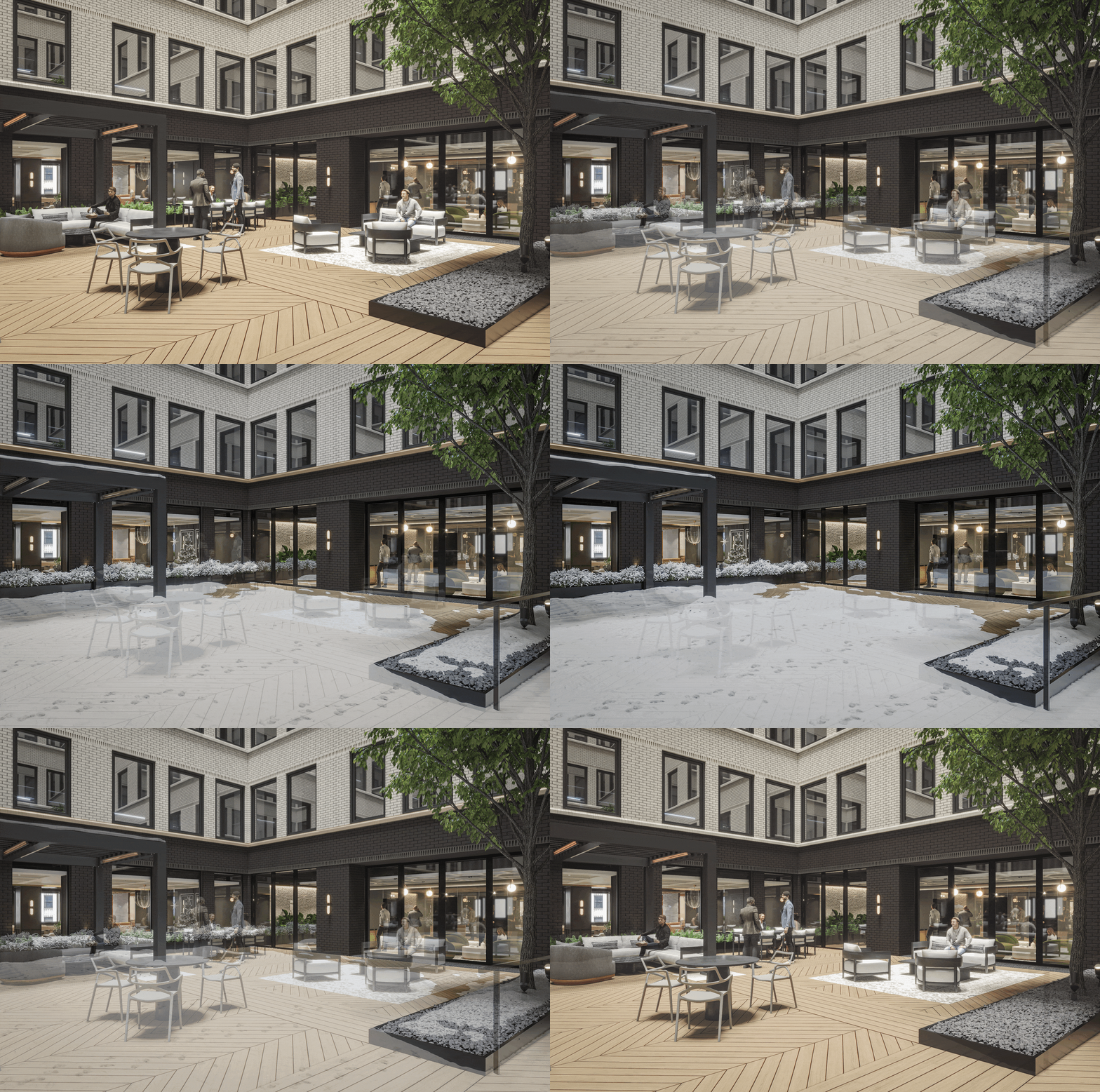
Seasonal Study
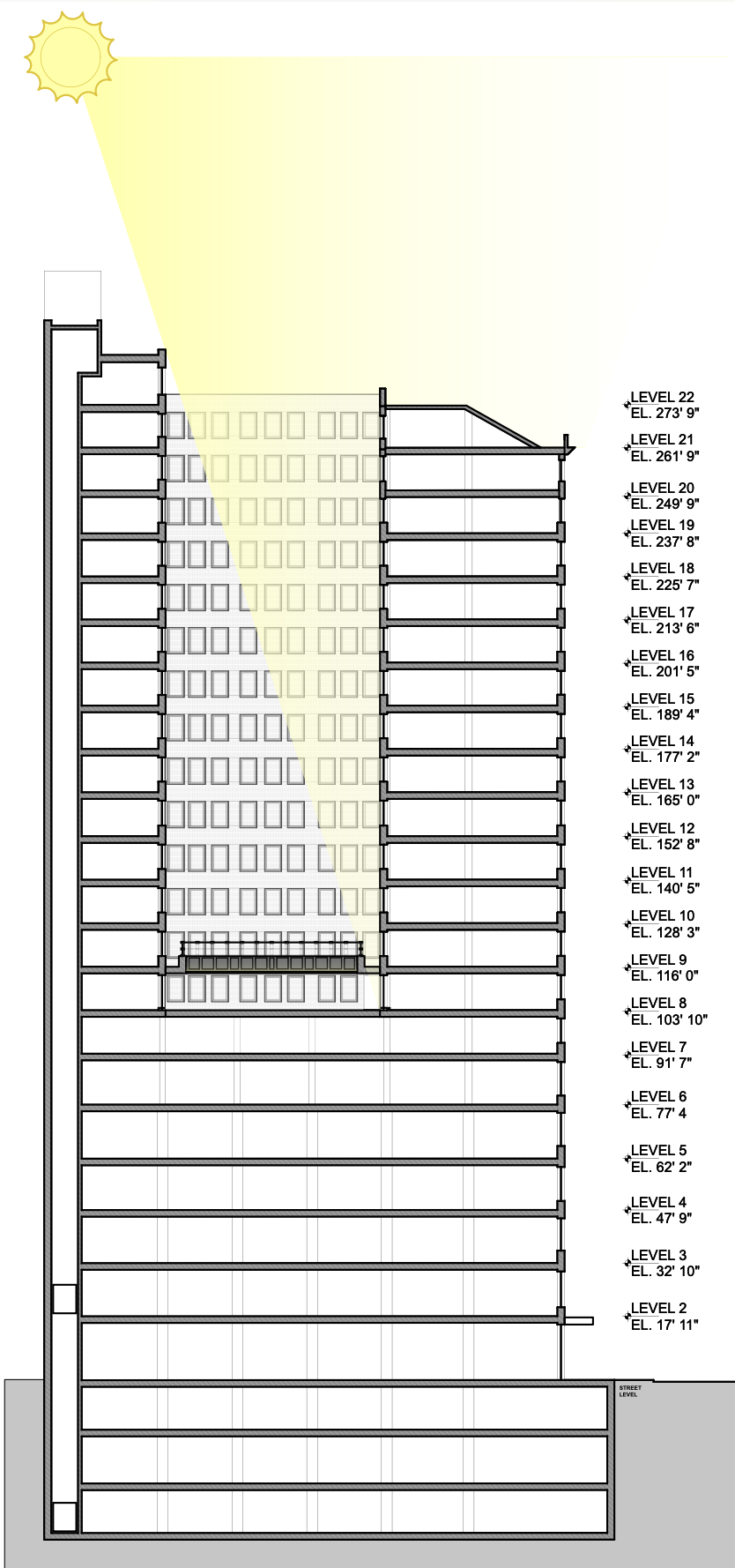
Together, these studies helped create a cohesive, immersive environment where interior and exterior experiences & materials are visually linked, resulting in a space that feels dynamic, grounded, and engaging year-round.
Material Integrity and Long-Term Value
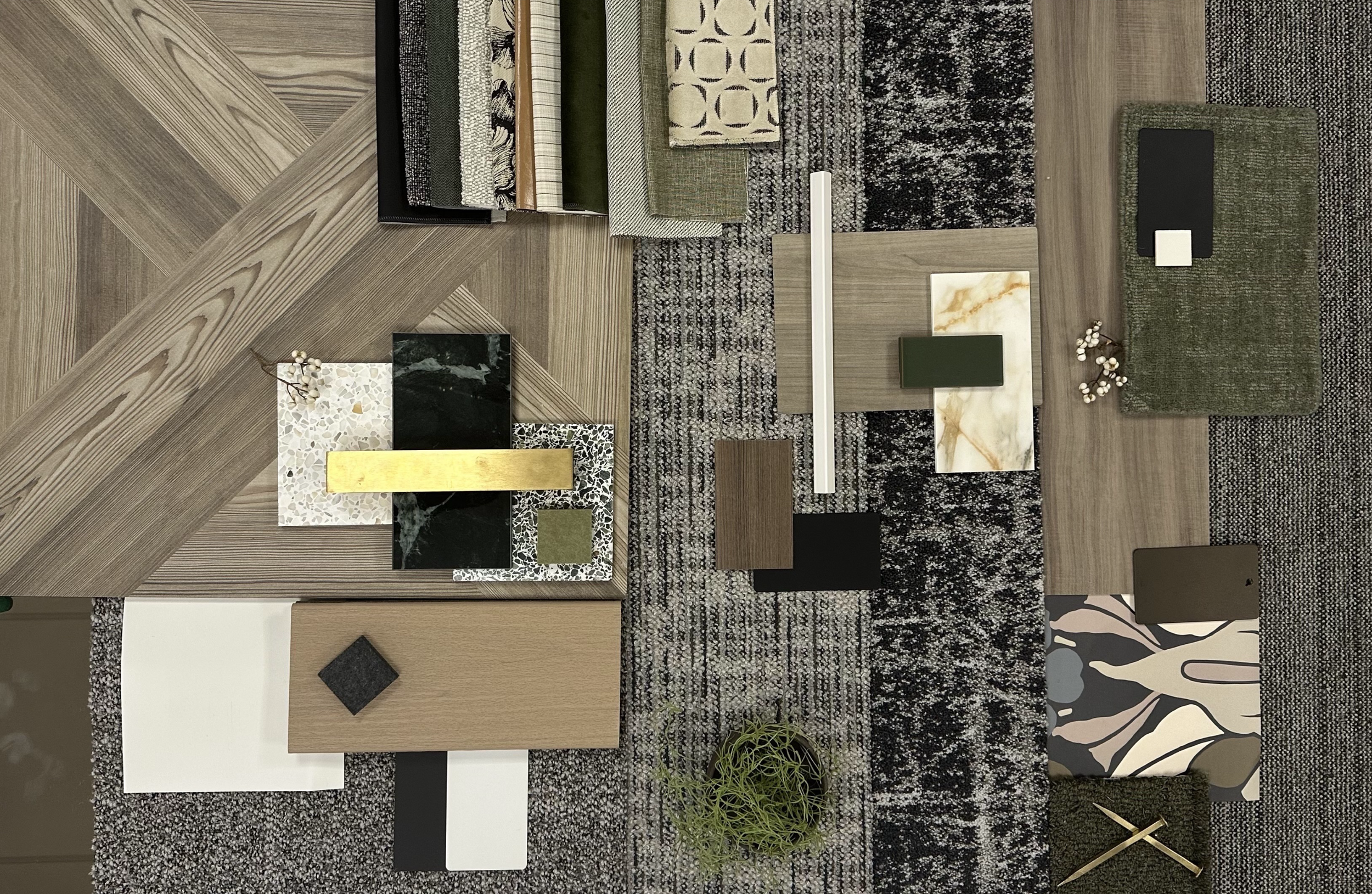
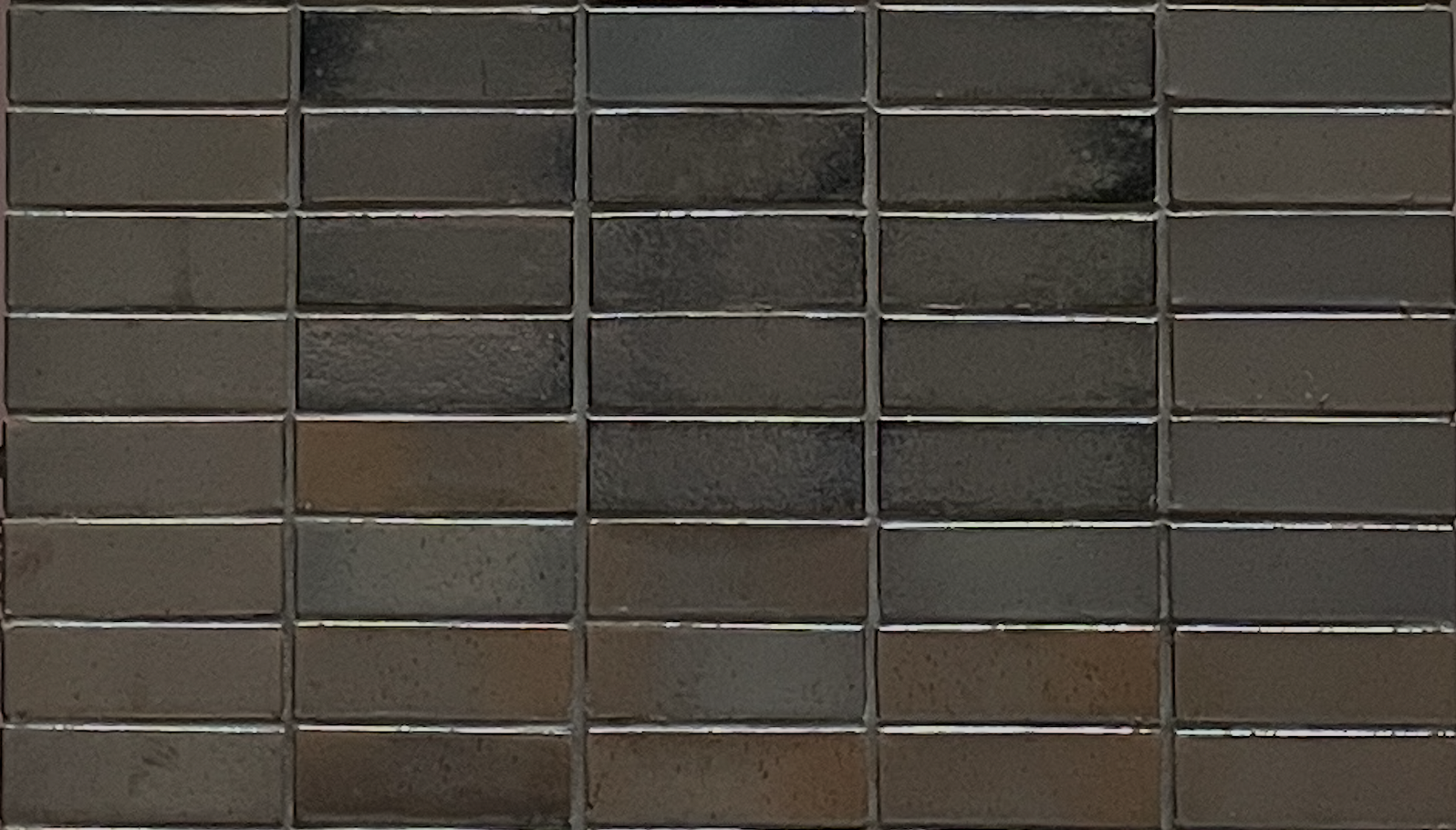
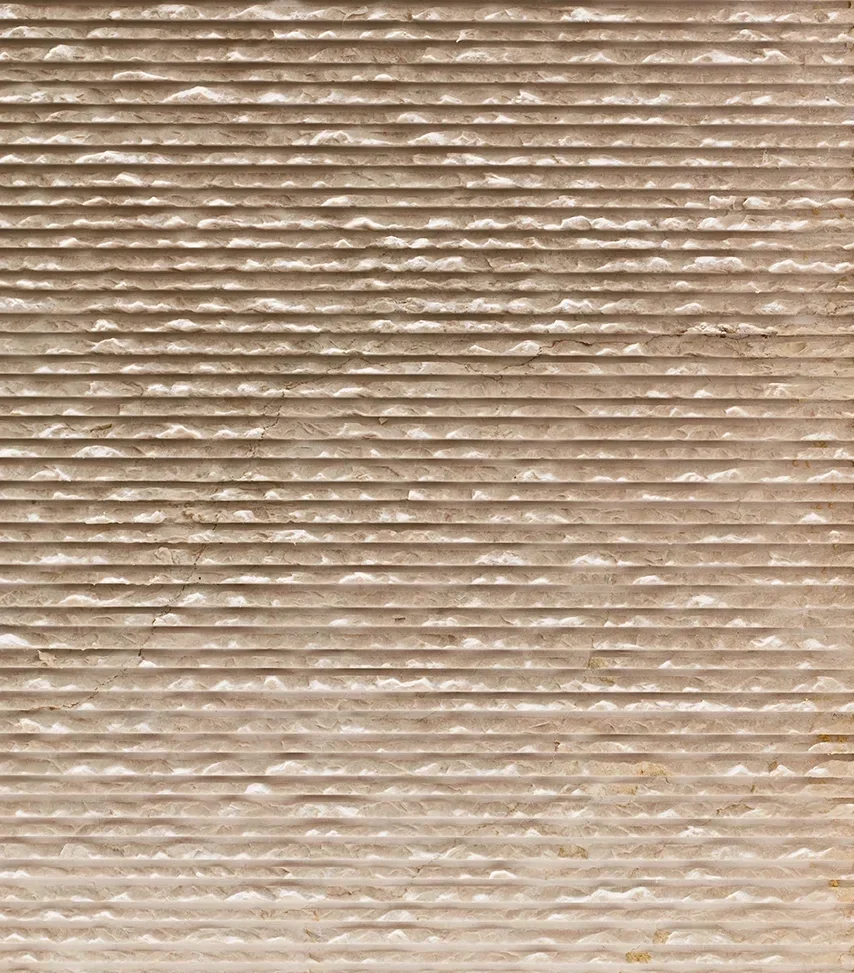
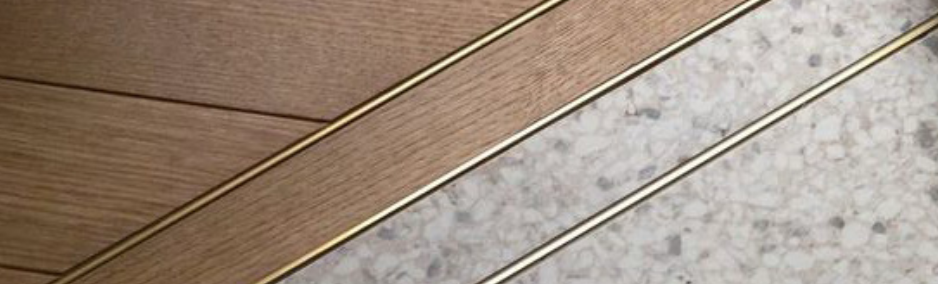
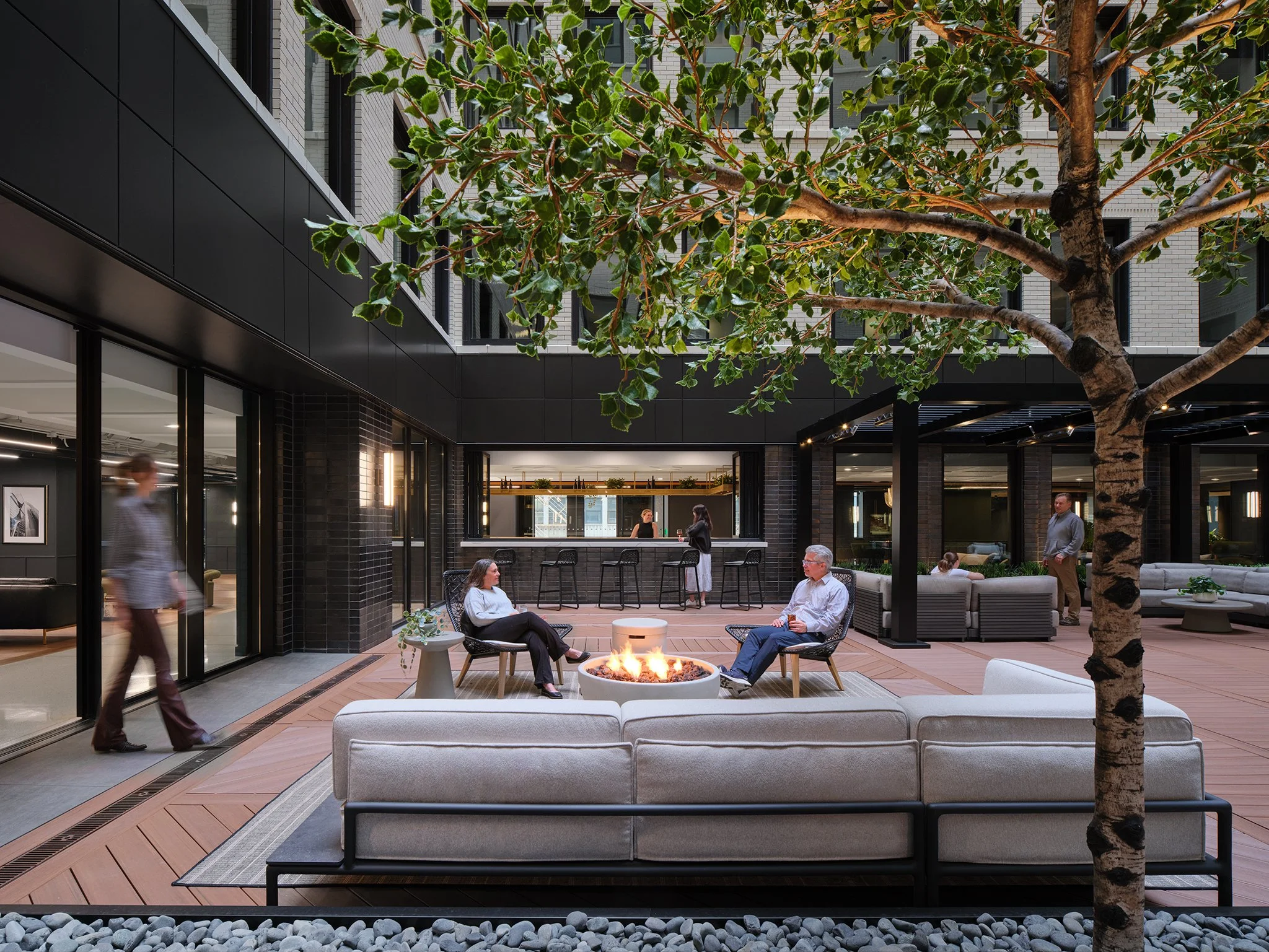
Material selection prioritized durability, authenticity, and longevity. Global sourcing allowed new finishes to align closely with the building’s historic masonry palette while elevating texture and quality, particularly within the courtyard where glazed brick defines the space. Each surface was chosen to age well and reinforce the building’s architectural lineage rather than follow short-term trends.
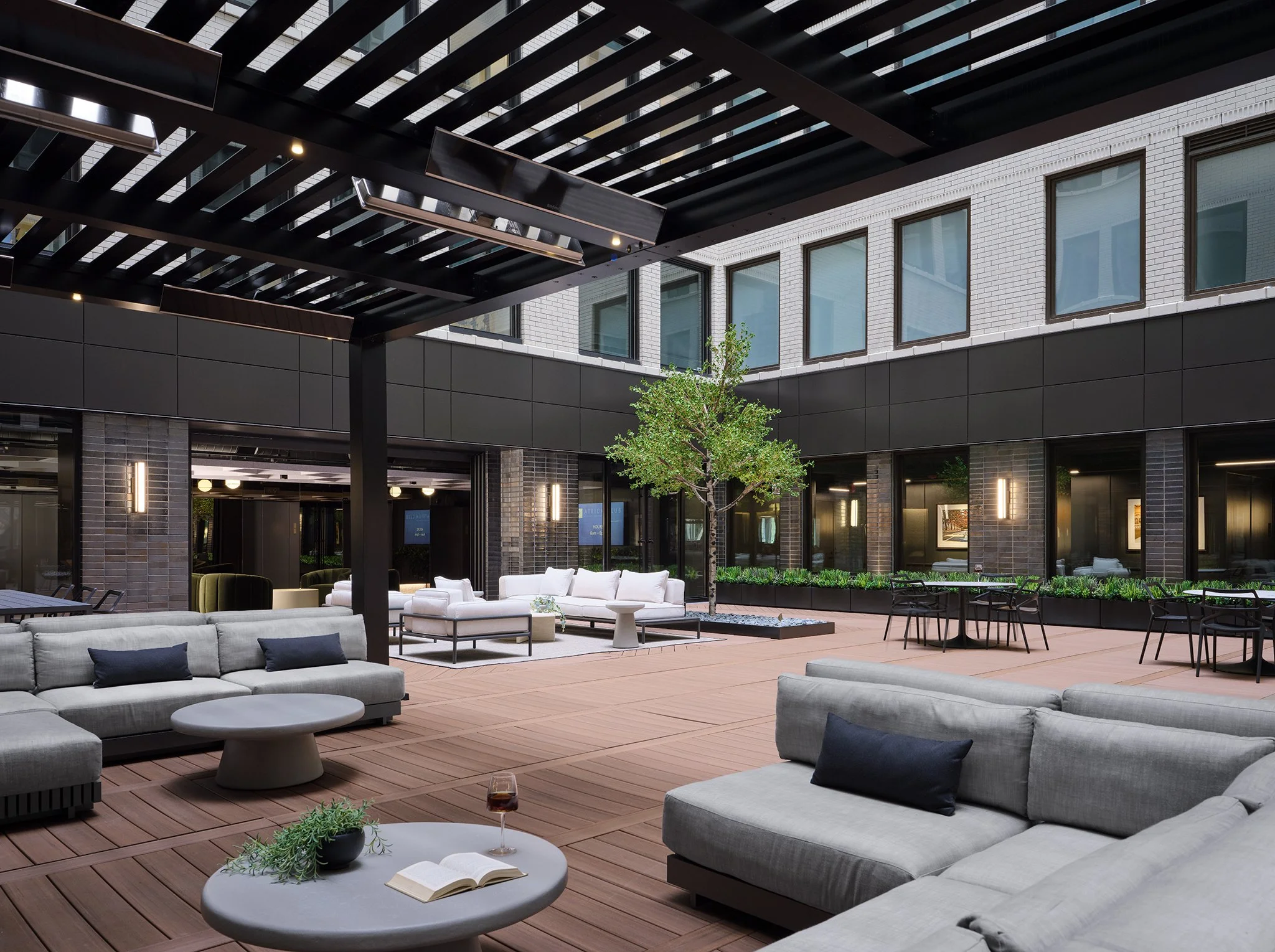
Beyond aesthetics, the amenity floor has become a cultural and economic anchor for the building. Increased tenant engagement, leasing momentum, and event activation demonstrate how thoughtful design can translate spatial quality into long-term value. What was once an ordinary floor is now a destination that supports both people and performance.
The Courtyard
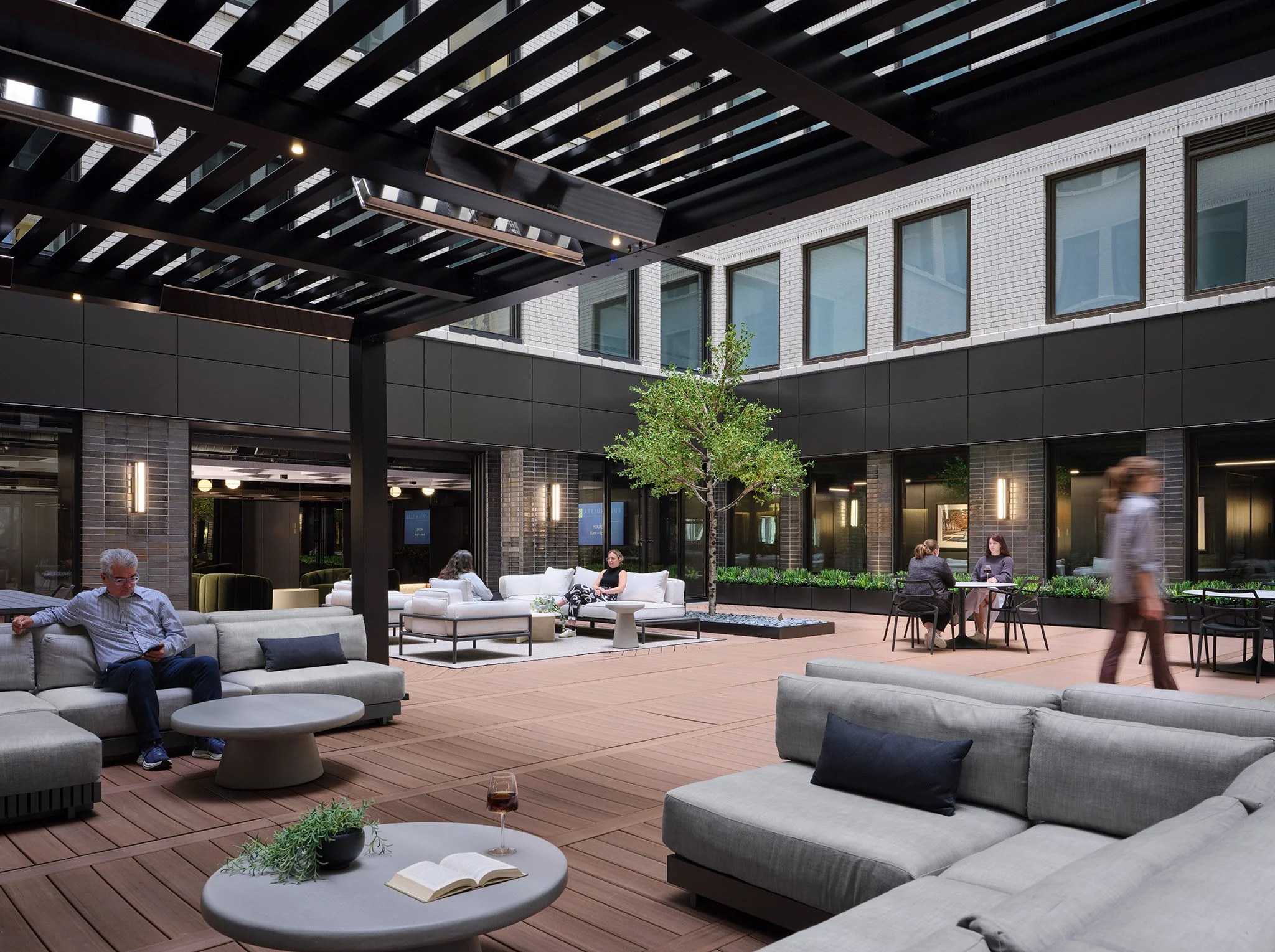
At the center of the project is a carefully orchestrated architectural intervention that required both strategic demolition and surgical reconstruction. Work began with the selective demolition and repair of the existing seventh-floor deck, exposing primary structural elements and addressing decades of layered conditions. This preparation was essential to accommodate a new tapered concrete pour, precisely engineered to establish proper elevations, drainage, and a seamless transition between interior and exterior spaces.
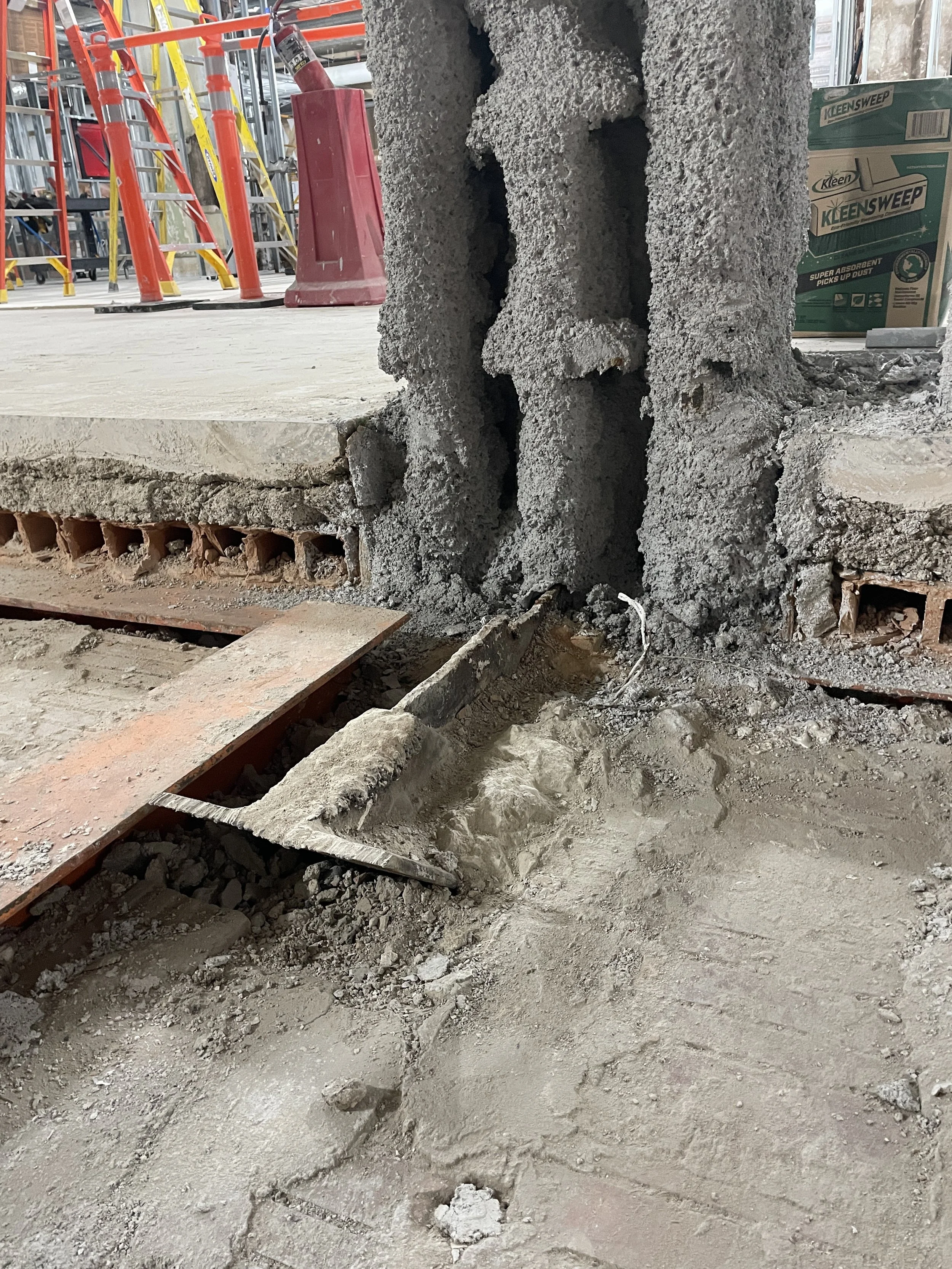
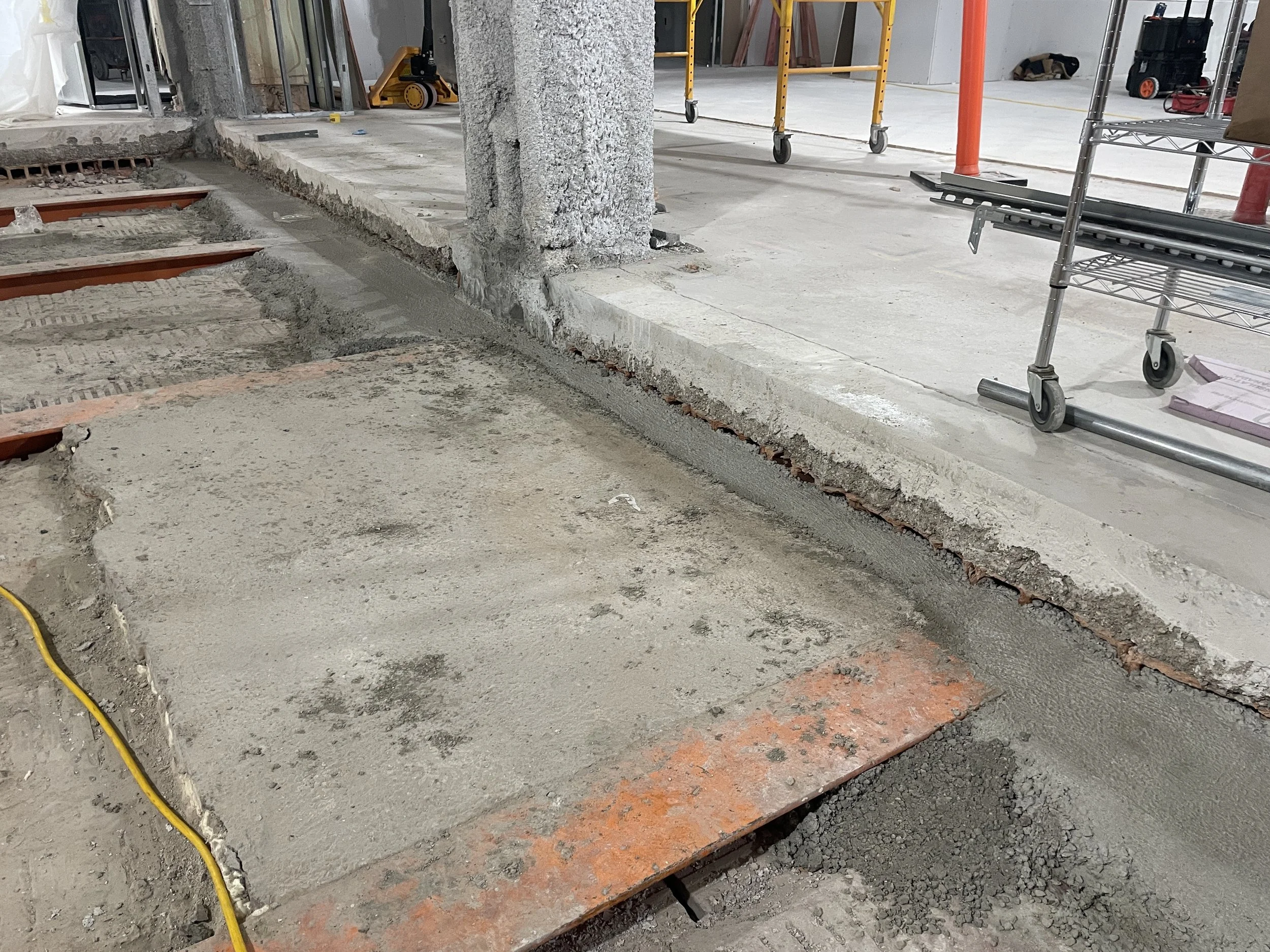
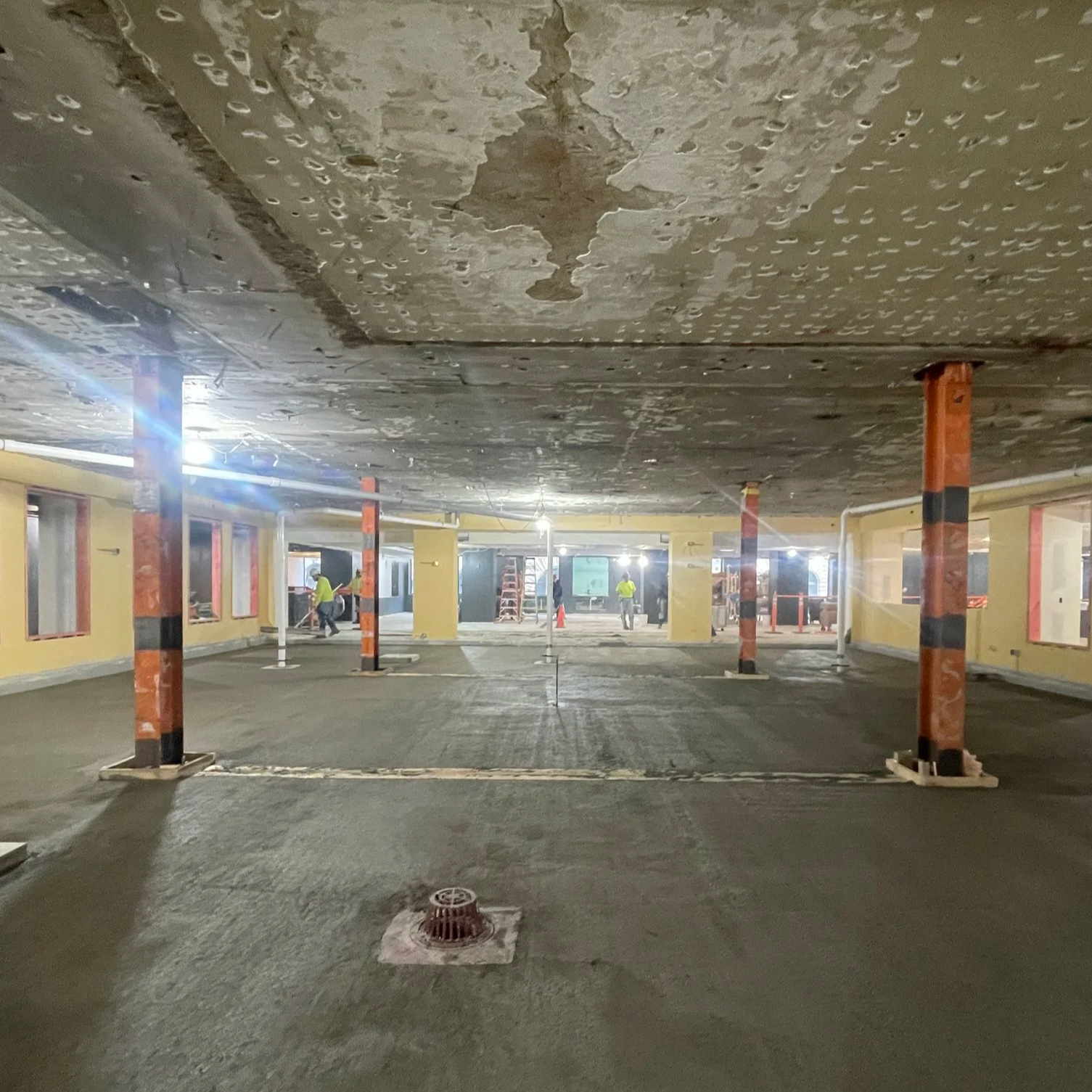
Once the seventh-floor deck & structure was rebuilt, a temporary catch deck was installed to safely support the subsequent removal of the eighth-floor roof assembly. This step allowed the team to methodically demolish the roof structure above, opening the seventh floor to light, air, and sky for the first time in the building’s recent history. Executed within an active, occupied building, the work required exacting coordination across trades, careful sequencing, and constant verification in the field.
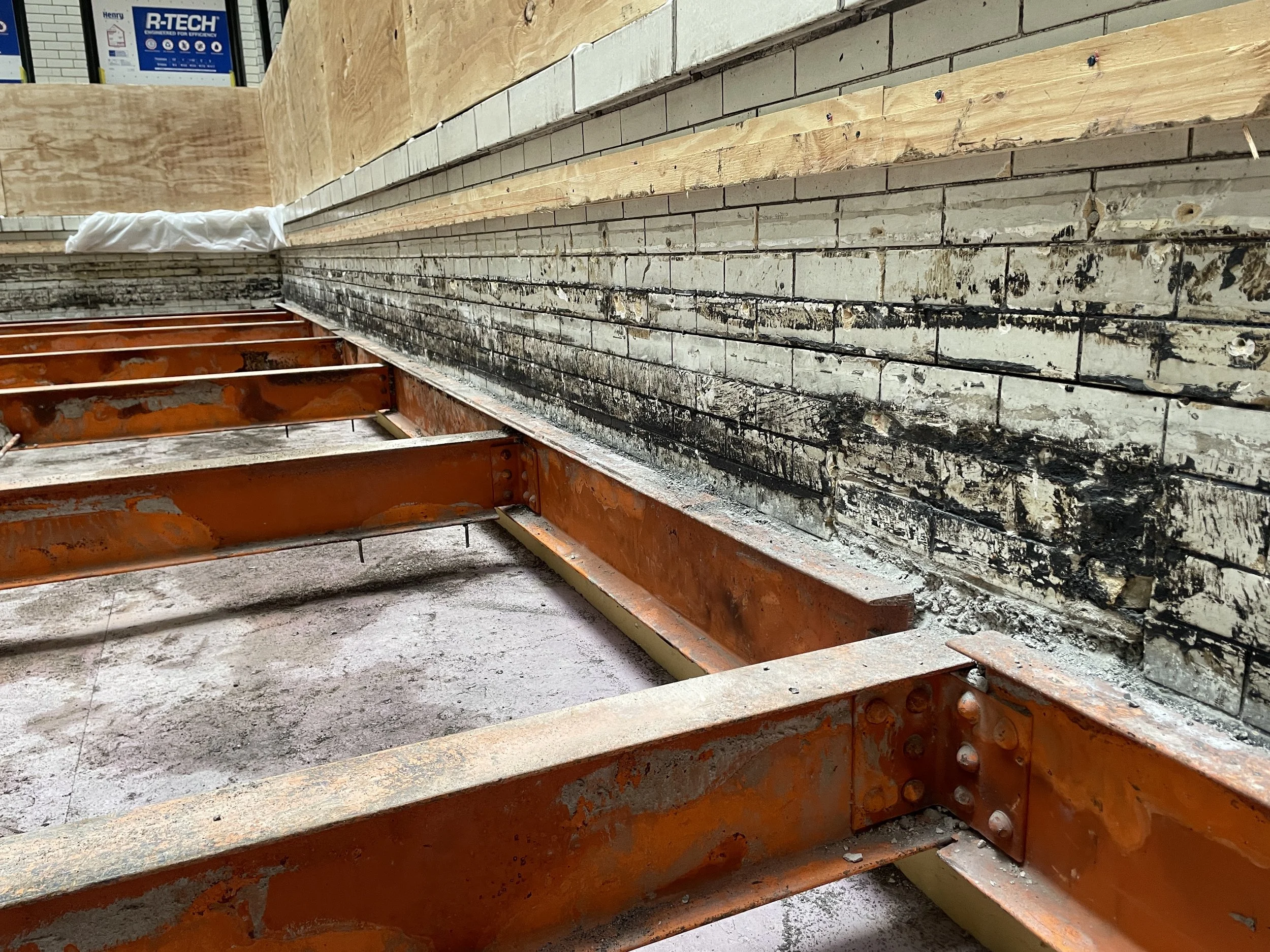
The result is a fully open-air courtyard that feels effortless and intuitive, despite the complexity required to achieve it. Carved from a historic mid-rise with restraint and precision, the space embodies Next-Level Vintage - a moment where thoughtful intervention respects the building’s legacy while unlocking new experience, value, and possibility.
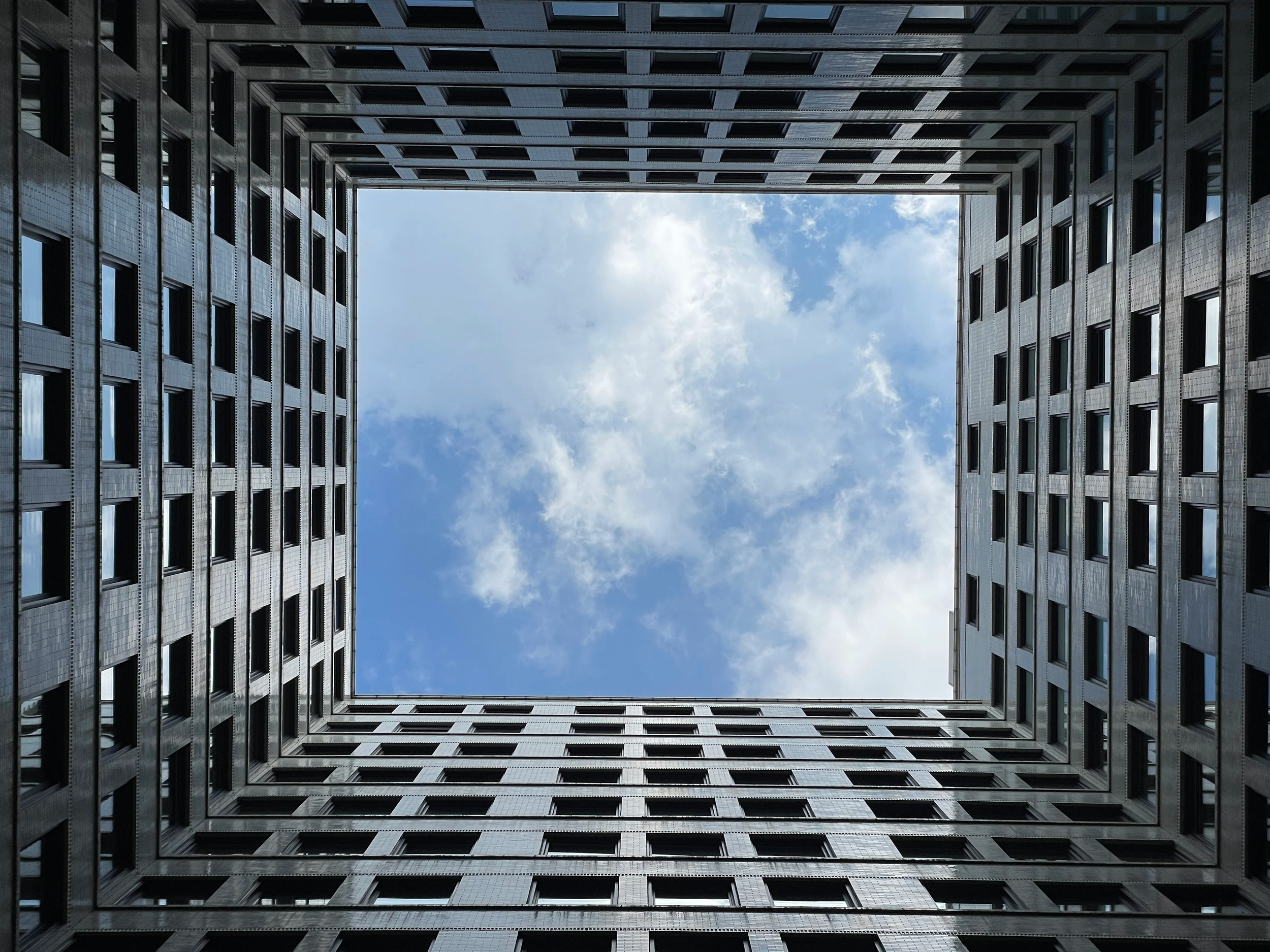
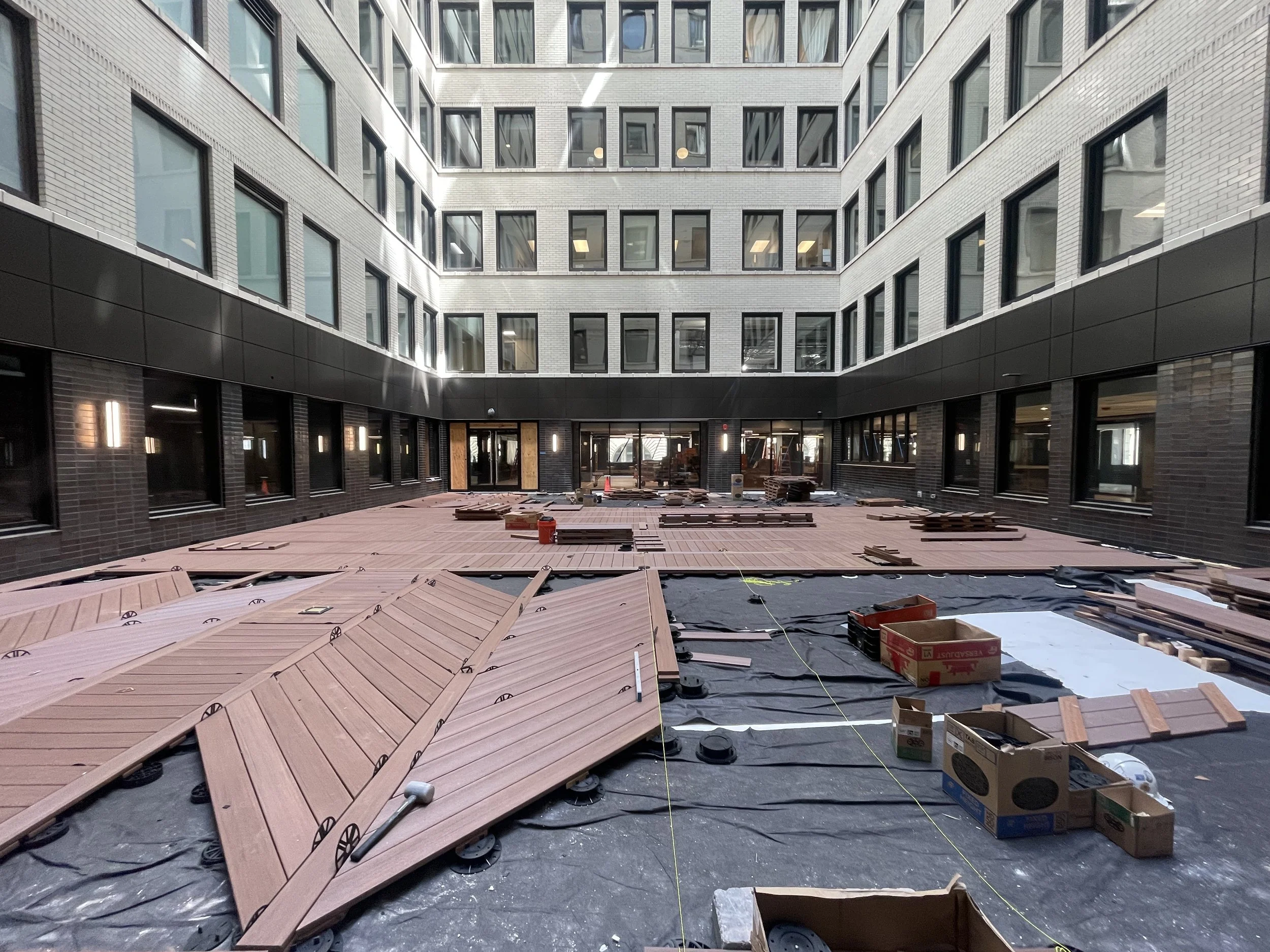
Final Execution
The completed project reflects a high level of detailed coordination, care, and shared commitment across the full project team. From early analysis through construction, architects, consultants, contractors & the building trades worked closely to resolve complex conditions, protect design intent, and adapt in real time as the building revealed itself. Decisions were tested in the field, details refined collaboratively, and execution remained focused on long-term performance and experience.
The result is an environment that feels both precise and welcoming, where historic character and modern performance reinforce one another. What was once an underutilized floor has become a destination within the building, supporting leasing momentum, tenant retention, and ongoing activation. It is Next Level Vintage - an approach that respects history while unlocking new value, ensuring the building continues to evolve with purpose and relevance.
-
Name : Atrium Club, 7th Floor Amenity
Location: 25 East Washington St, Chicago, IL
Building : Historic Beaux-Arts Landmark (1914, Daniel Burnham)
Size : 20,000sf
Role : Project Architect, Owner’s Design Lead
Program : Hospitality, conferencing, lounges, bar, outdoor courtyard
-
• Open-air courtyard integration
• Landscaping / exterior deck / pergola
• Operable exterior envelope and terrace integration
• Masonry, glazing, and material systems
• Circulation and spatial sequencing
• Interior / exterior continuity and detailing
• Structural coordination and waterproofing
• Conferencing and lounge environments
• Bar and hospitality spaces
• Acoustic and lighting coordination
• Custom millwork and finish work
-
General Contractor : Redmond Construction
MEP : IMEG
Structural : Forefront Structural Engineers
Furniture : Continua Interiors
PHOTOGRAPHY
Hall + Merrick + McCaugherty, Indoor Drone Tours, Kevin Kamien
2025